
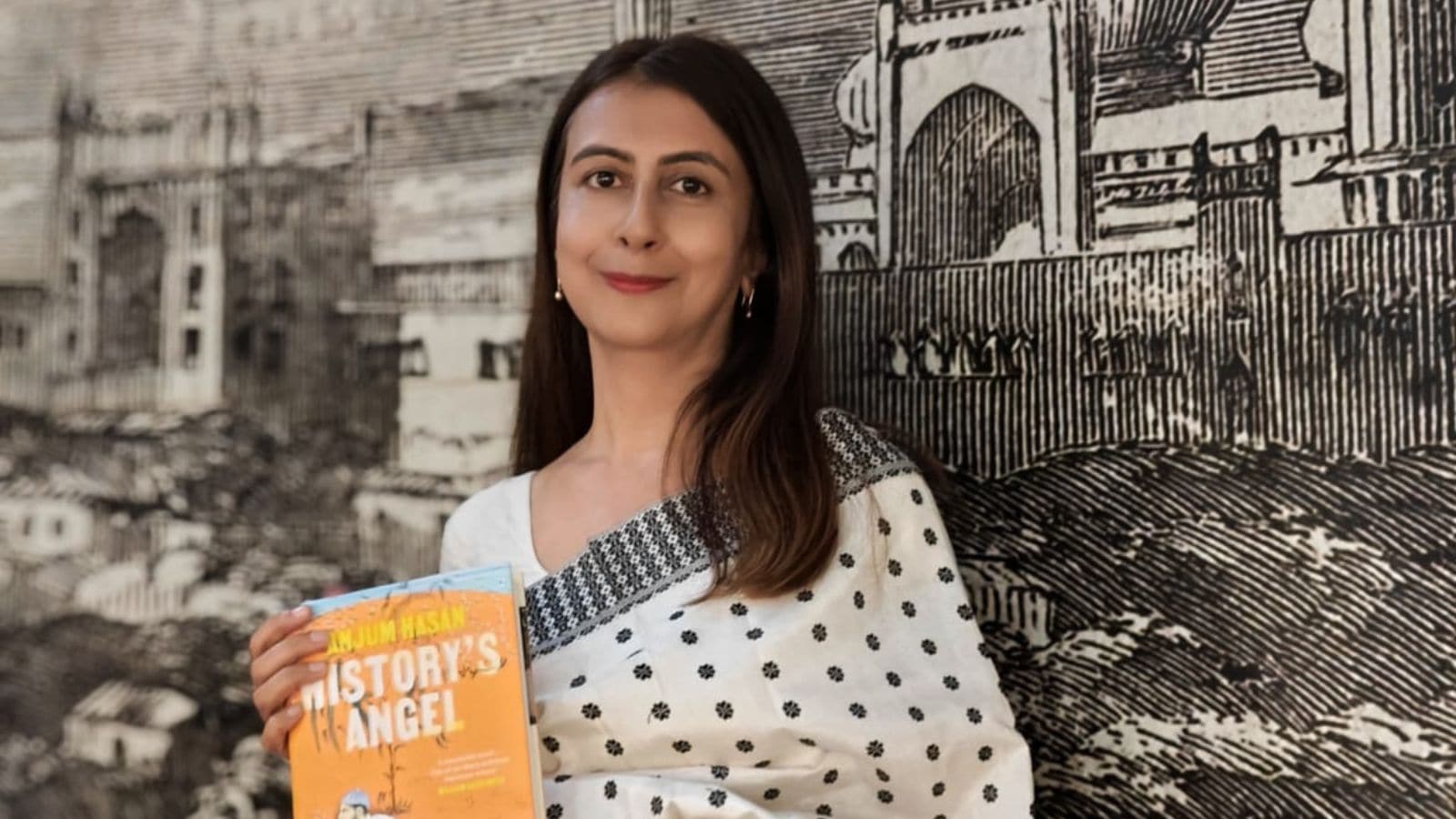
In any list of authors from Bengaluru over the past twenty years, Anjum Hasan’s work speaks for itself. Her books are fascinating examples of the common human experience; in settings as far apart as Bengaluru, Delhi, and Shillong, her characters are extraordinarily diverse yet relatable.
From collections of poems, short stories and novels, several of her publications have either won or been nominated for a slew of awards – the latest of these being History’s Angel, which won the Book of the Year award given by the Federation of Indian Chambers of Commerce and Industry (FICCI) in 2024.
As a city, Bengaluru has played no small part in that literary journey, a place that “means the world” to Hasan.
Talking to The Indian Express, she said, “It is that humane, enabling place where I became a writer of fiction. Two of my novels and several stories are set here. The characters often arrive in Bengaluru from somewhere, treat it like a blank canvas for their desires, and then discover the city’s hidden life. But that, too, can’t remain untouched by this manic new energy.”
She finds a particular fascination in the contrast between old and new in the city, adding, “I hope that balance will remain, but who knows. The pressures on the city are immense.” As far as genres of literature that might count as influences are concerned, Hasan reads almost everything, from Japanese comfort fiction to classic novels.
As she puts it, writers as influences can change all the time, as one learns from a writer and then outgrows them. Hasan said, “At the moment, I’m going back to the much older stuff from my father’s library – Daniel Defoe, William Thackeray, Thomas Hardy. The ones who created the bedrock of the novel.”
That duality is also something she sees in the experience of being a writer of this time, saying, ” I belong to two worlds – the older one in which the idea of a literature still had a certain solidity to it and the new one in which writers and their lives matter a great deal but there’s little shared sense of the literary.”
Story continues below this ad
And after the influences come the actual work of writing, which Hasan begins at her desk in the morning, accompanied by black coffee. As for what that daily writing involves, Hasan says, “Structure is critical, but that doesn’t only mean plot. One is looking for patterns, motifs, echoes, metaphors, all those literary things that life suggests if one stays attuned to it in that way.”
Husband Zac O’Yeah’s influence
Her husband, Zac O’Yeah, is another prominent writer in Bengaluru. As O’Yeah put in a previous interview with the Indian Express, she is his first reader before he publishes anything.
For her part, Hasan says that O’Yeah has been an influence on the process of editing and creating a narrative, adding, ” I would have been a writer regardless, I wanted to since I was seven, but definitely a lesser one if I was not married to him. He is also the shoulder to cry on when things are not going well in the writing.”
In good news for Hasan fans, a new book set in her hometown, Shillong, is coming out in 2026, published by Bloomsbury.
Story continues below this ad
“It is what they call narrative non-fiction – oral history, bits of personal life, the larger currents in the country and the world to which Shillong is and was connected. Amitav Ghosh says in one of his novels that even the smallest place can’t remain untouched by the flood of history, and that is what I have learnt, writing this book.”
By way of advice to new writers, she observes that with AI being used for writing, people themselves are becoming mechanical. Hasan said, “Find something to deeply care about if you want to be a writer – language, your experiences and memories, other writers who could become models and forerunners, or simply the life that is passing right under your nose.”