
RATING : 9 / 10
- The best performance of Timothée Chalamet’s career
- Exemplary film craft on display
- Exhilarating in a way few films this year have been
- The runtime becomes exhausting in a less than ideal way
- The final act doesn’t quite stick the landing
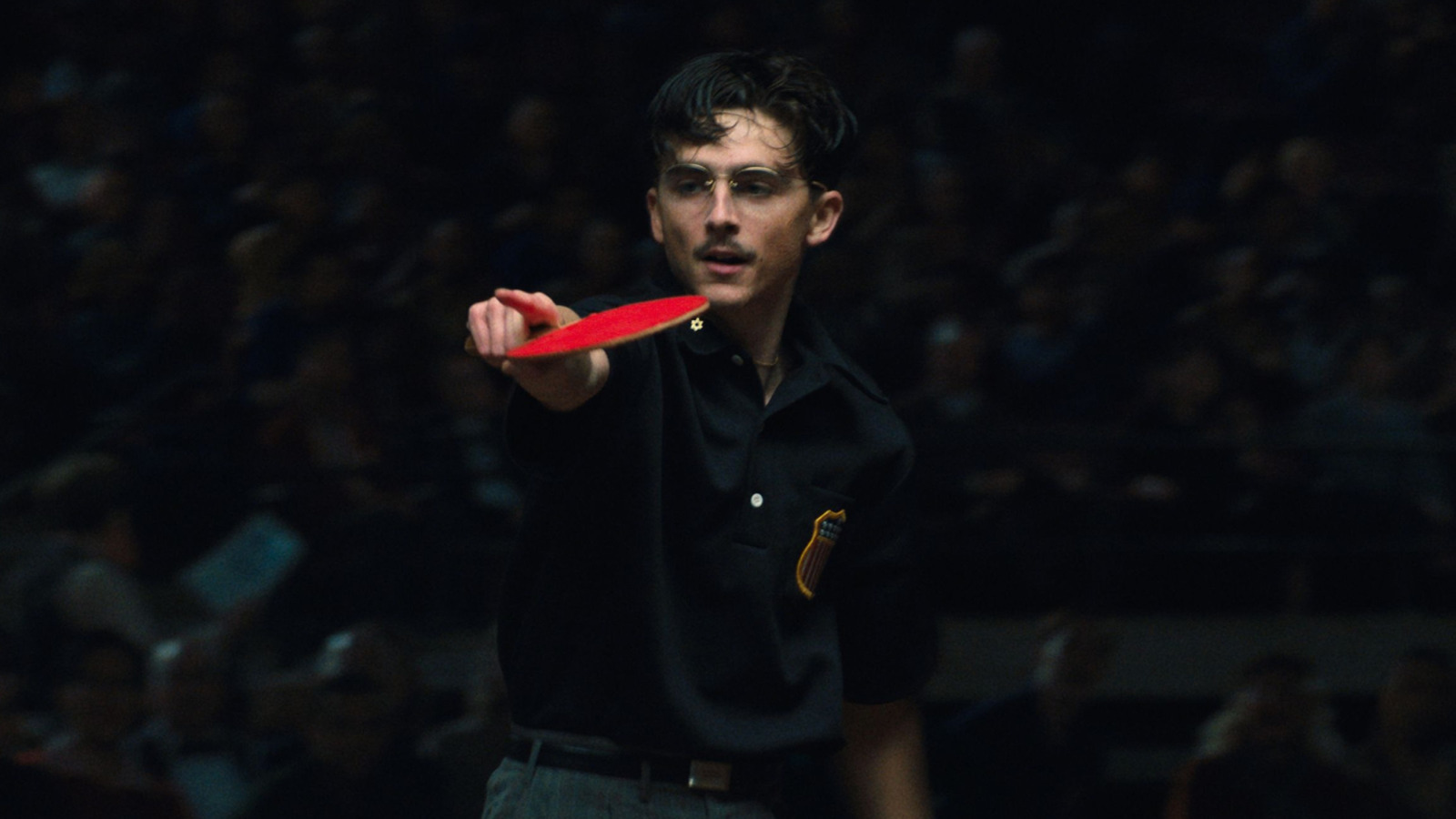
Earlier this year, accepting the SAG Award for best actor, Timothée Chalamet’s acceptance speech went viral for one specific phrase. He said that he “was really in pursuit of greatness.” It may have been true for Chalamet The Actor, but it’s now clear that the specific wording came from Marty Mauser, the character he plays in Josh Safdie’s latest effort “Marty Supreme.” It’s an epic film about a table tennis player in the 1950s singularly obsessed with becoming a world champion at ping pong and the face of the sport in the United States.
We’ve followed Chalamet from his childhood roles to being the Lisan al-Gaib in “Dune: Part 2,” but this latest role may be his best yet, the most perfect conduit for his singular talents and screen presence. Ever since the SAG strike ended, he’s been treating every new press run promoting his work the way musicians demarcate every album cycle as its own curated era. The short film masquerading as a marketing team Zoom call, showing up everywhere flanked by guards with enormous ping bong balls for heads — it’s all in service of a performance that’s somehow worth all the hype and more.
Brilliant turns in middling movies have their place in the awards season industrial complex, but “Marty Supreme” is more than just a vehicle for one of this generation’s most vital stars to ball out and push his personal brand. It is one of the most impressive films of the year, an ambitious and exhilarating effort whose biggest sin is fumbling a bit in the finale.
It feels like a supercharged version of Uncut Gems
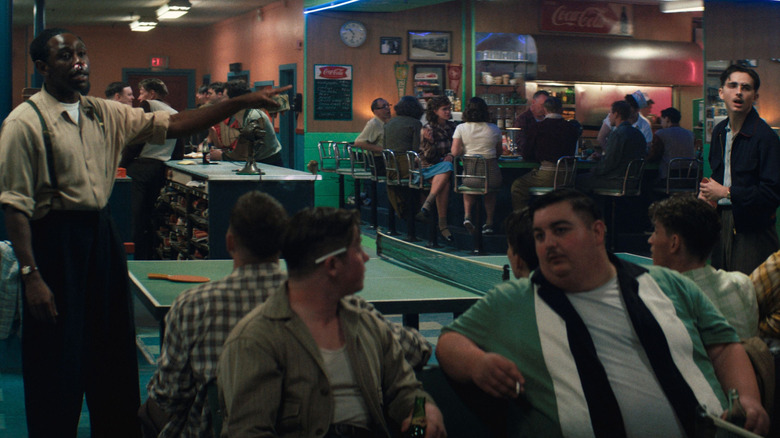
From its opening moments, “Marty Supreme” moves at a breathless pace, handcuffing us to Marty Mauser (Timothée Chalamet) as he runs around lying, hustling, and manipulating his way to achieving his dreams. It is a kaleidoscopic marathon, chock full of shocking supporting turns from a list of names that have never and will never again be grouped together. Fran Drescher steals some scenes as Marty’s toxic mother; Abel Ferrara makes a memorable appearance as a menacing gangste; Even Gwenyth Paltrow, who we don’t see on screen much anymore, pops up to deliver a memorable turn as a washed up actress who falls into Marty’s thrall. What other film can you watch that features musician Tyler, The Creator (as a fellow table tennis hustler); fashion designer Isaac Mizrahi (as a publicist); and entrepreneur Kevin O’Leary (as an ink magnate)?
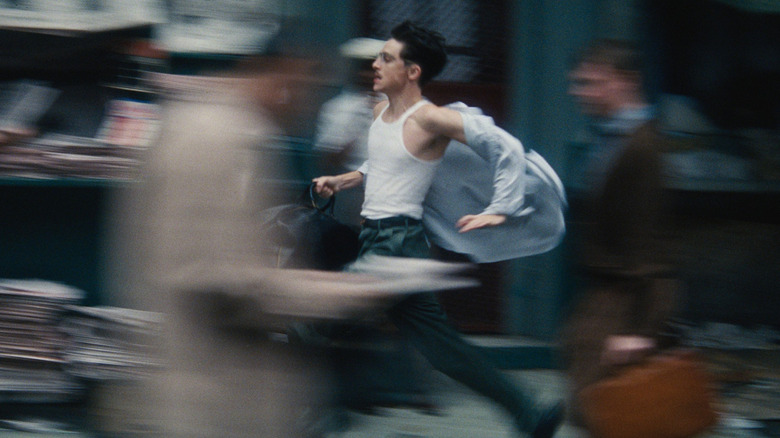
Every scene in the film is functionally one basic building block — Marty needing money or support to climb to the next rung up the ladder of success, and in those moments of lack, stretching the truth or outright misrepresenting the facts to suit whatever reality he is currently trying to project. Every obstacle requires a different gait to effectively hurdle over, and whatever human collateral damage lies in the wake of his gift for fiction will either fall by the wayside in tragedy or reappear at the most inopportune time in abject horror. Two steps forward gained through deception and selfishness will in turn lead to three steps backward in karmic justice, but Marty is in this race for the long haul, and the moral blinders he affixes to either side of his glasses will not allow him to settle for less than what he wants or subject himself to a more practical and thus lesser life.
Chalamet is a rock star in the role, in equal measure insufferable and astonishing, as charismatic as he is genuinely reprehensible. The 1950s setting is at stylistic odds with the 1980s needle drops and Daniel Lopatin’s dreamy, synth score, feeling like “Uncut Gems” if it was “The Karate Kid” or some other aspirational sports drama from that era. The drama becomes more dense and layered and convoluted, but Marty will not be deterred. His life is the crazy parlay Howard Ratner bet his soul on, and the film does not let up from the stress and stomach churning dread for even a moment.
Josh Safdie wins the break-up, but at what cost?
We may never know the real reason The Safdie Brothers broke up, but we can clearly see that Josh Safdie kept all the key collaborators for what we consider to be the Safdie Aesthetic in the divorce. Co-writer and co-editor Ronald Bronstein, who has been down since 2009’s “Daddy Longlegs” is here, and so are cinematographer Darius Khondji and the aforementioned composer Daniel Lopatin. But rather than making “Marty Supreme” feel just like a retread of “Good Time” or “Uncut Gems,” the continuity of creative care feels like a Herculean refinement, the sharpening of a blade.
The benefit is, when compared to Benny Safdie’s mixed bag “The Smashing Machine” that seems to be actively distancing itself from what has come before it, “Marty Supreme” feels so far and away an achievement whose reach doesn’t exceed its grasp. Timothée Chalamet’s performance is the engine driving the picture, but the film built around his portrait is firing on all cylinders right beside him. The themes and ideas have evolved, but Josh has seemingly perfected the paradigm of taking an audience on a complicated and stressful journey with a controversial figure they otherwise wouldn’t want to share an Uber ride with.
But the most crucial way “Marty Supreme” feels like a regression from their earlier work is in the finish. “Uncut Gems” may be the inferior film, but it possesses such a pitch perfect ending whose shocking and devastating arrival feels both heartbreaking and curiously satisfying simultaneously. David Mamet (who has a blink-and-you’ll-miss-it cameo as a theater director here) in his book “On Directing Film” says that the perfect ending should be both surprising and inevitable. Once it arrives, it should seem to come from nowhere until the viewer, once witnessing it, can only conclude that it couldn’t have ended any other way.
“Uncut Gems” builds so brilliantly to an ending like that. “Marty Supreme,” for all its other sterling superlatives, at least on first watch, doesn’t end on as fitting a note. It asks even more of its audience than “Uncut Gems” does, but when it gets Marty to his final destination, it lacks the poetry of Howard’s unique end. However, given how much the film leaves the viewer to chew on, it’s merely the kind of ending that will take more time to really click in the mind.
“Marty Supreme” hits theaters on December 25.