
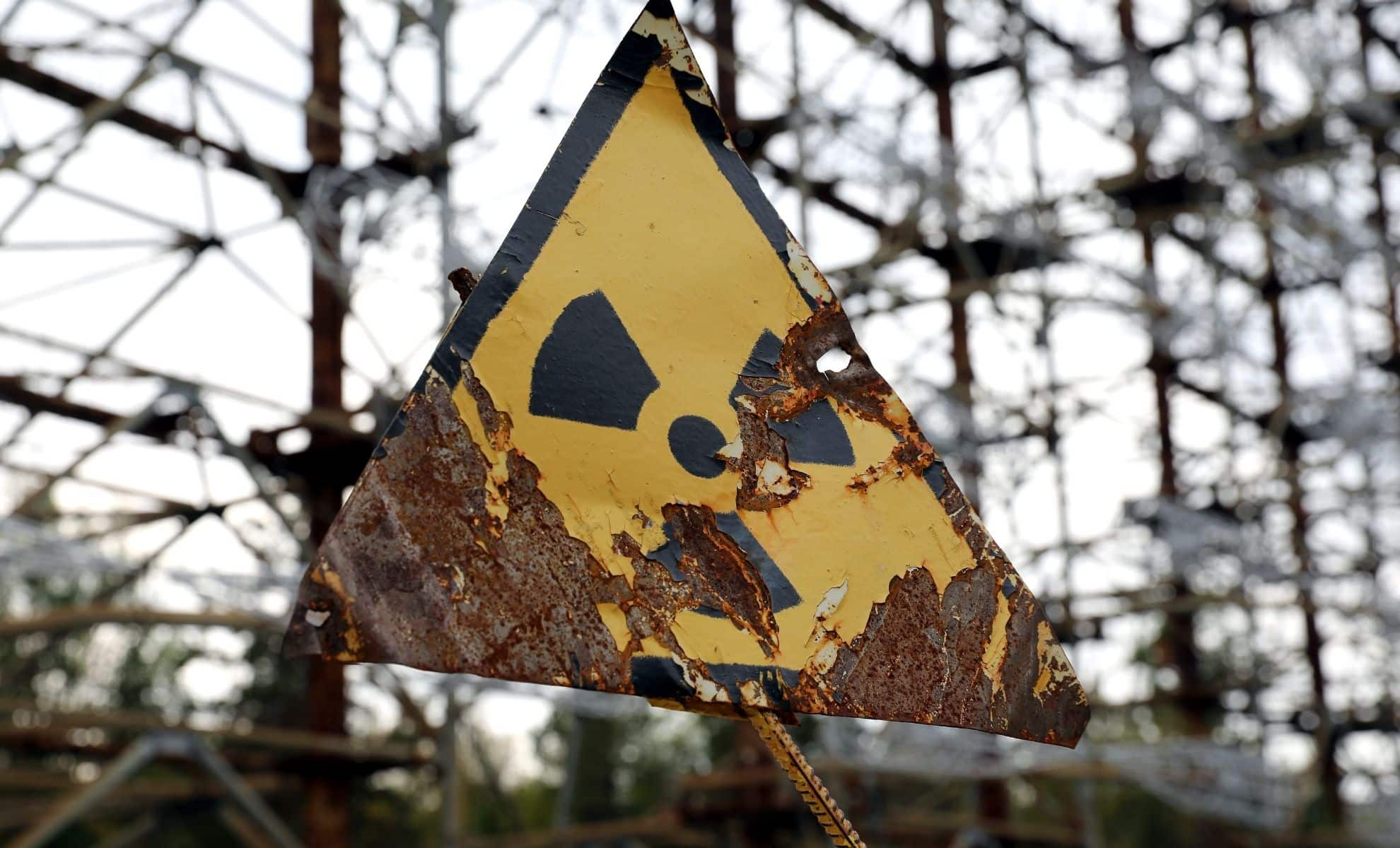
In the late 1990s, Ukrainian microbiologist Nelli Zhdanova led a research team into the Chernobyl Exclusion Zone. More than a decade had passed since the reactor meltdown and explosion of 1986, which triggered mass evacuations and caused 31 immediate deaths, followed by a legacy of radiation-linked illnesses.
While humans stayed away, Zhdanova noticed something thriving—black mold clinging to walls and structures deep inside the damaged unit. Soil surveys around the area revealed that the fungi weren’t randomly dispersed; they seemed to be growing toward the radiation source.

Among the molds discovered was Cladosporium sphaerospermum, previously considered an ordinary black fungus. Alongside it, Zhdanova documented 37 species from 19 genera, noting that those richest in melanin were most common in the areas with the heaviest radiation. This pigment, which gives the fungus its dark color, quickly became central to understanding how the organism might be interacting with radiation.
Radiosynthesis: Turning Radiation Into Energy
Zhdanova’s research suggested that the fungi weren’t just surviving despite the radiation—they were attracted to it. Ionizing radiation, the same type that damages human DNA, seemed to encourage fungal growth. That strange reaction prompted speculation about how the mold was making use of its environment.

In 2007, nuclear scientist Ekaterina Dadachova expanded on Zhdanova’s findings. As reported by the New York Post, Dadachova theorized that the fungi were performing something similar to photosynthesis—except instead of sunlight, they were using radiation. She called this process “radiosynthesis.” Ionizing radiation is roughly a million times more energetic than visible light. Dadachova suggested melanin could act as a biological energy transducer, capturing this high-energy radiation and converting it into a usable form of energy for the mold.
As Aaron Berliner, a space bioprocess engineering researcher at Weill Cornell Medicine, explained, the fungi appear to be radiotrophic—using radiation not just as a fuel, but as a nutritional resource. That theory is also supported by observations that the mold inside Reactor 4 was growing toward radiation hotspots. While researchers agree that the fungus doesn’t “eat” radiation in the literal sense—it doesn’t alter or neutralize radioactive isotopes—it does seem to use it to grow faster.
Potential Uses Beyond Earth
The unique properties of Cladosporium sphaerospermum have drawn attention from space researchers. Space is saturated with both solar and galactic cosmic radiation, which pose serious risks to astronauts on long-duration missions. According to Popular Mechanics, researchers like Berliner and University of Florida space biologist Nils Averesch believe that this black mold might help address several of space travel’s biggest challenges.
A sample of the mold was sent to the International Space Station in 2018. Scientists found it grew at an accelerated rate in orbit—though they have not yet definitively proven that radiation was the cause. In that same experiment, a thin layer of the fungus was placed above a radiation sensor. The team observed that it blocked measurable amounts of radiation, and the thicker the mold became, the better it performed as a shield.
The results suggested that even a small quantity of melanin-rich biomass could provide passive radiation protection in space. The researchers wrote that the fungus’s “profound ability” to absorb space radiation might make it useful as a type of “bioshield.” The potential applications go further. Berliner noted that producing materials in space is expensive—about $1,000 to send just a can of soda into low-Earth orbit. Growing fungi in orbit, rather than transporting materials from Earth, could significantly reduce costs.
Waste Recycling, Pharmaceuticals, And Future Missions
Beyond shielding astronauts, the mold might serve multiple roles on deep-space missions. Berliner and Averesch are exploring whether Cladosporium sphaerospermum could break down waste products like plastics and human waste, converting them into edible biomass or even pharmaceuticals. The mold can consume dead organic matter and may feed off the ambient radiation surrounding spacecraft.
Averesch emphasized that although the mold doesn’t destroy radiation, it could work as a low-cost, adaptable tool for astronauts facing space’s hazardous conditions. It could also assist in producing spare parts or biological components needed during long missions to Mars or the Moon, making crews less reliant on resupply missions from Earth.
While there’s still skepticism in the scientific community and much more research is needed, the findings so far are promising. And according to Berliner, the story of this organism is as much about human curiosity and survival as it is about science. “This speaks to something I find very human, of our desire to survive and thrive in very difficult circumstances,” he said. “And I think that’s what this organism is doing. And we want to know how it’s doing it.”