
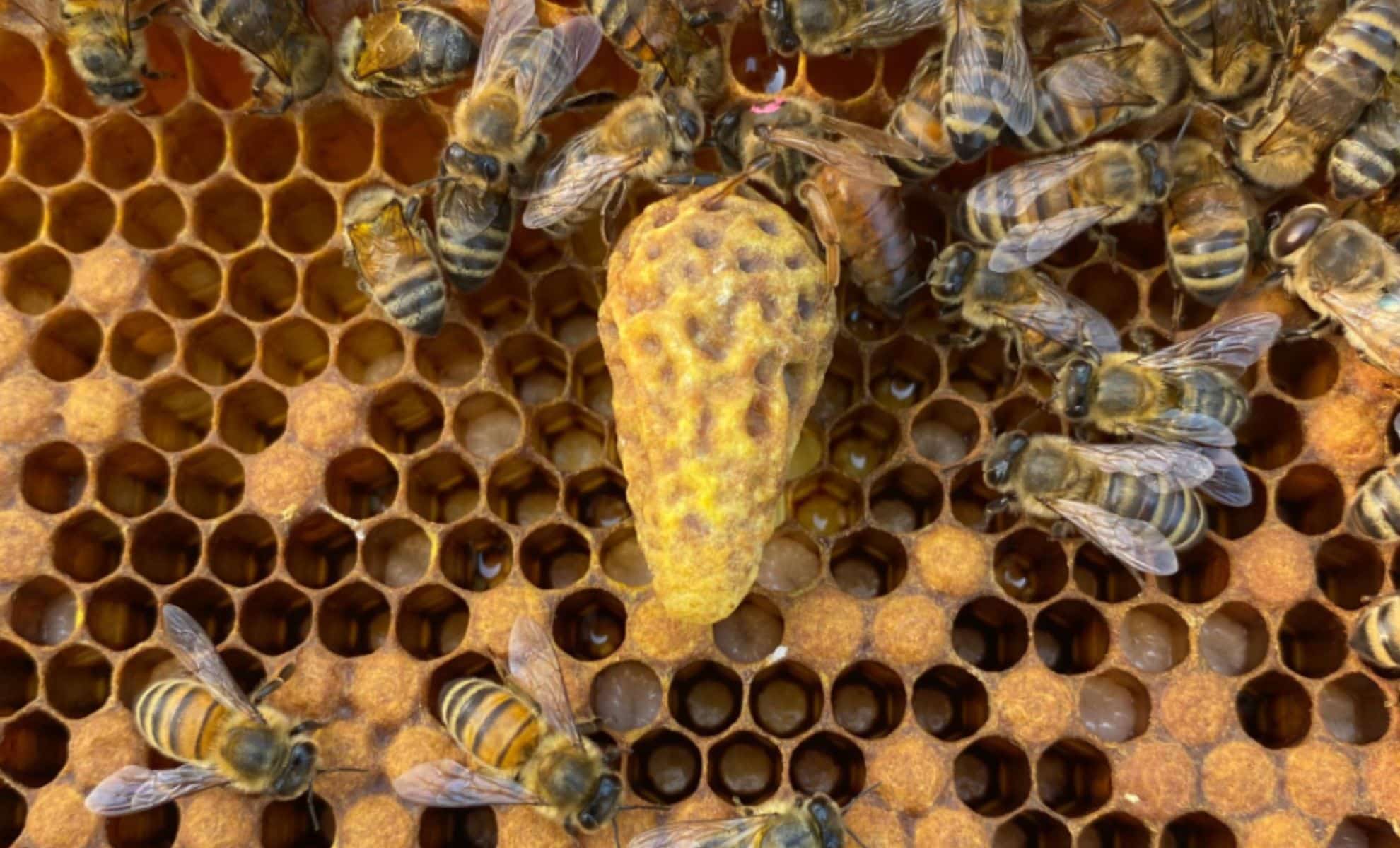
In a stunning revelation, scientists have discovered that viral infections in honey bee queens may be the hidden cause behind the frequent overthrow of their leadership. When infected, queens produce less of a crucial pheromone, triggering workers to replace them. This finding not only sheds light on the inner workings of bee colonies but also offers a potential solution for beekeepers struggling with queen failures.
Honey bee colonies are known for their complex social structures, where a single queen reigns over thousands of worker bees. However, when a queen’s ability to lay eggs declines, often due to infection, workers begin preparing a new queen, a process known as supersedure. While this adaptation helps wild colonies survive, it can create significant challenges for managed hives.
Viral Infections and Queen Decline
According to researchers at the University of British Columbia, viral infections are a major cause of queen failure in honey bee colonies. These infections cause a queen’s ovaries to shrink, significantly reducing her ability to lay eggs. In addition, the infections lower the production of methyl oleate, a key pheromone produced by healthy queens to maintain order and loyalty within the colony. As pheromone levels drop, worker bees detect the change and begin the process of replacing the queen.
“A healthy queen can lay as many as 850 to 3,200 eggs per day,” said Dr. Leonard Foster, senior author of the study, “But in our experiments, virus-infected queens laid fewer eggs and produced less methyl oleate. That pheromone reduction seems to be the signal to workers that a queen is no longer fit to continue.“
The importance of this discovery goes beyond beekeeping. Bees play a critical role in pollinating approximately one-third of the world’s crops. Queen failure, often linked to viral infections, can lead to colony instability, affecting both honey production and the vital pollination services bees provide. This makes the findings particularly relevant not just for beekeepers, but for global food systems.

Synthetic Pheromones as a Solution for Beekeepers
In light of these findings, the University of British Columbia team has proposed a new solution for beekeepers to stabilize their colonies. Field trials revealed that adding synthetic pheromones containing methyl oleate to hives reduced the likelihood of worker bees rearing a new queen. This method could prevent unnecessary supersedure and help ensure the colony’s productivity during critical periods. “Supersedure can be disruptive and costly,” said Dr. Foster, “but supplementing colonies with methyl oleate could help stabilize hives during periods when continuous productivity is most important.”

The use of synthetic pheromones in beekeeping isn’t entirely new, but the discovery that methyl oleate specifically can prevent queen replacement offers beekeepers a more targeted and potentially effective tool in managing their hives. This is particularly important during peak pollination or honey production, when losing a queen could significantly impact the colony’s output.
Varroa Mites: A Hidden Culprit in Queen Health
The research also underscores the role of varroa mites, which are parasitic pests that can spread viruses to queen bees. These mites have long been a major challenge for beekeepers, as they weaken bees by feeding on their hemolymph and transmitting harmful pathogens. In the context of viral infections, varroa mites act as a vector, exacerbating the damage caused to the queen. Dr. Alison McAfee, a co-author of the study, emphasized the importance of controlling varroa populations: “Keeping the queen healthy is one more reason why it is so critical to think ahead and keep varroa levels under control.”
Varroa mites, which are found in most managed hives, remain an underappreciated problem, with their impact often overshadowed by other challenges faced by beekeepers. However, the study suggests that by improving mite management, beekeepers can not only reduce viral transmission but also help preserve queen health, preventing supersedure and the associated risks.