
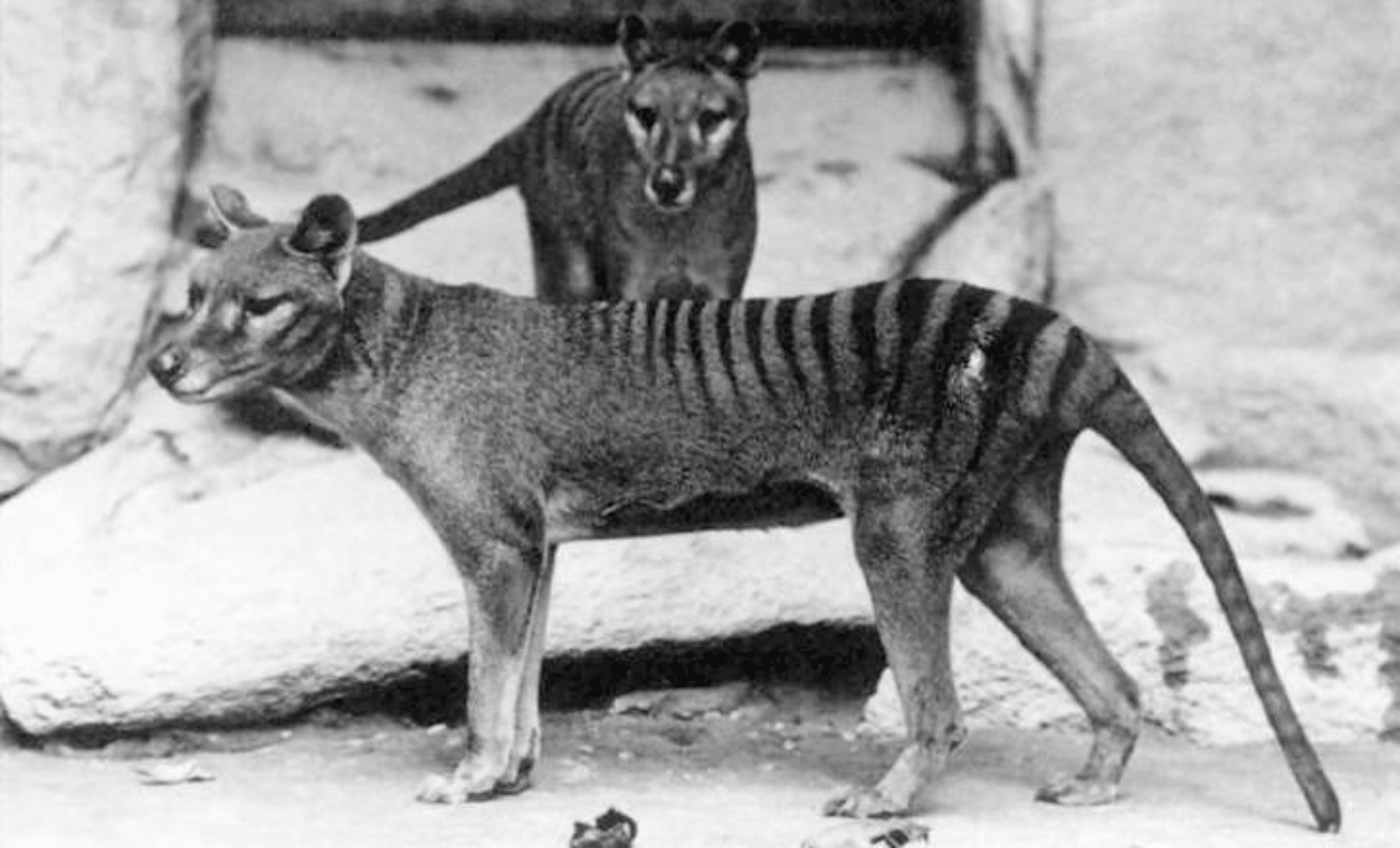
Researchers have successfully extracted RNA from the extinct Tasmanian tiger, a scientific breakthrough published in Genome Research, allowing insight into ancient gene activity for the first time.
Unlocking Ancient Gene Expression With RNA
In a pioneering effort, a Swedish research team has recovered RNA molecules from the preserved tissue of a 130-year-old Tasmanian tiger, or thylacine, which last walked the Earth in the early 20th century. While DNA has long been used to study extinct species, RNA reveals a deeper layer of genetic activity, offering a snapshot of which genes were active at the time of the animal’s death. This groundbreaking discovery, recently published in Genome Research, marks the first time RNA has been successfully sequenced from an extinct mammal.
Led by Dr. Marc R. Friedländer of Stockholm University, the team analyzed skin and muscle samples from a museum specimen stored in Sweden. The implications go far beyond the thylacine itself, opening new possibilities for reconstructing gene regulation, tissue function, and even ancient viral interactions in extinct species. Unlike DNA, which simply catalogues genes, RNA captures dynamic cellular activity and illuminates how genes functioned in life. This makes the study a landmark in the emerging field of paleotranscriptomics, which explores ancient RNA to understand lost biology.

RNA vs. DNA: A New Frontier In Ancient Genetics
Where DNA shows what genes an organism had, RNA reveals which of those genes were actually active in specific tissues at the time of death. Until now, scientists believed RNA, a far more fragile molecule, degraded too quickly to survive in long-dead specimens. But the Swedish team overturned that assumption by isolating readable RNA sequences from the preserved skin and muscle of a single thylacine.
RNA fragments uncovered in the tissue pointed to specific biological processes such as energy usage and oxygen storage in muscles, and keratin production in skin. These findings mirror what is seen in modern mammals, confirming not just the authenticity of the data but also the potential for studying physiology and cellular behavior in species long extinct. Chemical damage patterns on the RNA matched what scientists expect from ancient molecules and further supported the reliability of the material. This successful recovery of ancient RNA sets a precedent for future explorations into the real-time biology of vanished organisms.
What The RNA Revealed About The Thylacine
The recovered RNA allowed researchers to reconstruct aspects of the thylacine’s muscle composition and skin characteristics. Muscle tissue revealed strong expression of genes related to contraction, such as titin, and indicators of slow-twitch muscle fibers, particularly in the sample area near the shoulder blade. These insights suggest the thylacine may have had adaptations for endurance rather than short bursts of speed, aligning with its ecological role as a predator.
Skin samples were dominated by keratin-related RNA, consistent with protective outer layers. Interestingly, some fragments of hemoglobin RNA were also present, likely remnants of blood trapped in the tissue at the time of death. By comparing RNA expression in these tissues with those of living marsupials and dogs, researchers confirmed that the molecular signatures aligned closely with modern anatomical expectations. This cross-verification supports the reliability of RNA-based analysis, even in dried museum samples over a century old.
MicroRNAs And Molecular Time Capsules

One of the most striking aspects of the study is the detection of microRNAs, tiny RNA molecules that regulate protein production and fine-tune gene expression. These short sequences, typically about 22 nucleotides long, are notoriously difficult to preserve. Yet the team not only recovered them but identified a thylacine-specific variant, indicating that even subtle regulatory differences between species can survive across time.
These microRNAs showed distinct expression patterns in skin vs. muscle, providing another layer of confirmation that the RNA fragments were biologically authentic and came from the correct tissues. As molecular regulators, microRNAs are crucial for development and adaptation. Their presence in the thylacine adds a deeper dimension to what can be learned from extinct animals, not just what they were made of but how their biology was finely tuned.
A New Era For Paleotranscriptomics
Published in Genome Research, this study is more than a technical milestone. It marks the emergence of paleotranscriptomics as a viable scientific field. By capturing the messenger RNA (mRNA) and regulatory elements preserved in historical specimens, researchers can begin to understand extinct animals at the cellular and biochemical level.
The implications are profound. RNA can highlight missing or misidentified genes in previous DNA-only genome assemblies, offering a better reference map for comparing extinct and extant species. This is particularly useful in correcting annotation gaps, such as locating ribosomal RNA genes in the thylacine genome that were previously absent. It also helps reduce false positives in genomic comparisons and improves the accuracy of evolutionary and functional studies.
Tracking Ancient Viruses In Preserved Tissue
Beyond thylacine biology, the team’s RNA analysis hinted at the presence of ancient RNA viruses within the samples. While these signals were faint and require cautious interpretation, they suggest that RNA-based pathogens could be preserved along with host tissues. If verified in future studies, this could open a new dimension in viral archaeology, allowing scientists to trace the evolution of viruses across millennia.
Museum specimens, previously seen as mostly useful for visual or anatomical study, could now serve as reservoirs of lost virological data. But this avenue demands strict controls since modern viral RNA can easily contaminate ancient material. The prospect of comparing ancient and modern viral genomes could offer insights into how viruses mutate, adapt, and move across species. This knowledge has real-world relevance given the global focus on zoonotic threats.
Challenges, Limits, And Future Perspectives
While the findings are remarkable, the study has limitations. The analysis was based on a single specimen, which means it cannot account for individual variation in gene expression due to age, health, or seasonal changes. Furthermore, RNA fragments were short and degraded, making it difficult to reconstruct complete transcripts or detect low-abundance genes.
The preservation method also plays a key role. This thylacine had been stored dry and at room temperature, conditions that may have aided RNA survival. Future studies will need to standardize museum preservation protocols to ensure consistent data recovery. Scientists also emphasize the importance of building strict filters and reference databases to avoid misattributing short RNA reads, especially when comparing across species.
Despite these hurdles, the breakthrough opens the door to applying similar techniques to other extinct animals, from woolly mammoths to dodos, with the potential to transform the way scientists understand ancient life on Earth.