
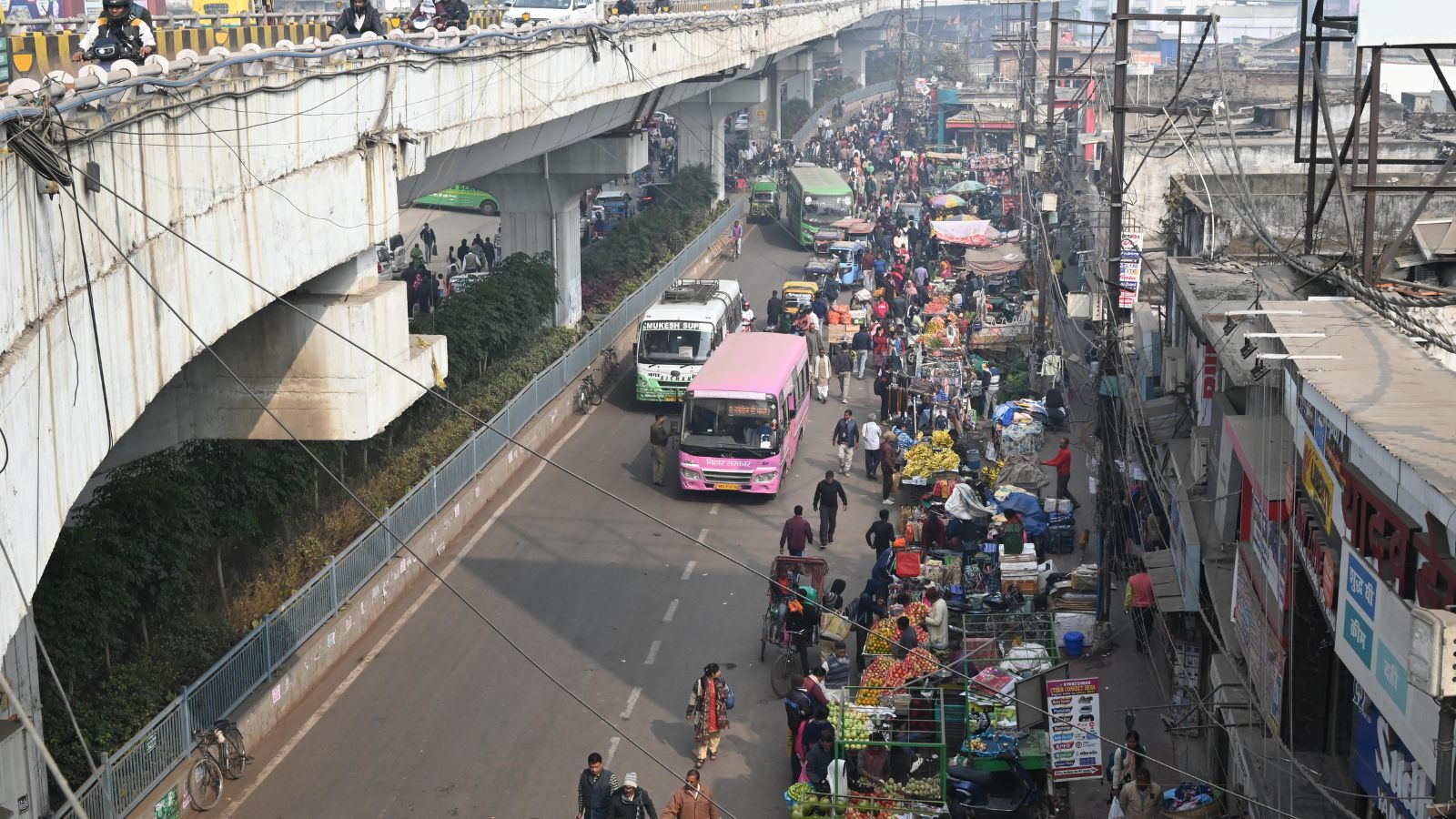
The RJD has dubbed it “the extension of Uttar Pradesh Chief Minister Yogi Adityanath’s bulldozer model”, and questioned “the lack of rehabilitation plans” for the poor who are being evacuated. NDA ally Hindustani Awam Morcha (Secular) chief and Union minister Jitan Ram Manjhi has said the state government should also target the rich encroachers and land mafia.
Questioned over the issue in the recent Assembly Session, Bihar Deputy CM and Home Minister Samrat Choudhary declared “I am Samrat Choudhary, not a bulldozer”.
While a demolition and clean-up exercise has been going on across Bihar for a while, the fact that this has picked up pace since the Assembly elections where the NDA returned to power, with the BJP stronger than before, has set off a political row.
Having begun in Patna and intensified in late November and early December, the anti-encroachment drive is now on in the capital’s adjoining urban belts such as Danapur, Phulwarisharif and Khagaul, and has extended to Muzaffarpur, Samastipur, Sitamarhi, Bhagalpur, Siwan, Lakhisarai and Bihar Sharif.
Roads, footpaths, flyover stretches and market corridors are being cleared of stalls, huts, handcarts and extensions. Across neighbourhoods, municipal teams have been coming in with chalks to mark structures, issue notices or begin demolitions.
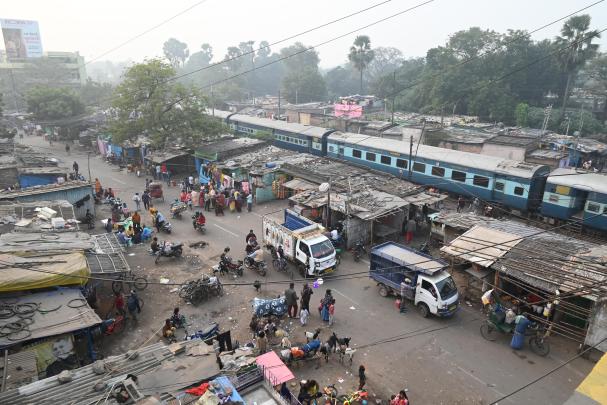 Encroached structures along railway line in Patna. (Express Photo)
But across districts, the opposition is similar: that long-standing informal settlements and small businesses are being removed rapidly, with no clear rehabilitation plan in sight.
As per the Bihar government’s Land and Revenue Department records, 18 lakh acres of land have been surveyed to identify encroachment. Of about 35,000 water bodies in the state, about 15,000 are allegedly under encroachment, while about 20,000 roads across the state are said to have been eaten into by illegal shops or residences or both.
Choudhary told The Indian Express they were only acting on court orders. “Bihar is functioning as per the Nitish Kumar model of development. It is only land mafia and encroachers who are afraid of the drive, not bona fide house and shop owners.”
Standing beside her tiny tea and grocery stall on the edge of a narrow road in Yarpur, Patna, 65-year-old Shanti Devi questions the authorities for having decided that she is neither – showing an eviction notice asking her family to vacate their stall as well as a nearby kuchcha house within three days. The stall, patched with tin sheets and wooden planks, has been the family’s only source of income for decades, Shanti says, while they have been living in their one-room hut for generations.
The family has been served the eviction notice as the land belongs to the Railways. However, Shanti says, she and other residents like her dealt with only a local contractor, who has built several such structures in the area and rented them out. Since the anti-encroachment drive began, the residents say, the contractor is nowhere to be seen. “Now, there is no one we can get answers from,” Shanti says.
She remembers a time when the Gardanibagh-Khagaul Road along which she lives had hardly any vehicles. “Now that a bridge has been built, they suddenly want to remove us… How will we eat? Where will we go with our children?”
Near Gandhi Maidan’s Gate No. 10 in Patna, Ramlal has received two eviction notices. However, he is taking his chances and continues to put up his roadside stall each morning. “If they force me to leave, I will have to go back to my village and search for work… I don’t know what I will do,” he says.
In Ambedkar Colony, the fear of displacement has led to anger. Munna Ram, 55, a Patna High Court clerk, who claims his family has lived in the area for 72 years, says the residents want development too but there should be rehabilitation before demolition.
“If you remove sanitation workers from here, who will clean your city? God gave us birth… then who has given the administration the authority to remove us?” he says.
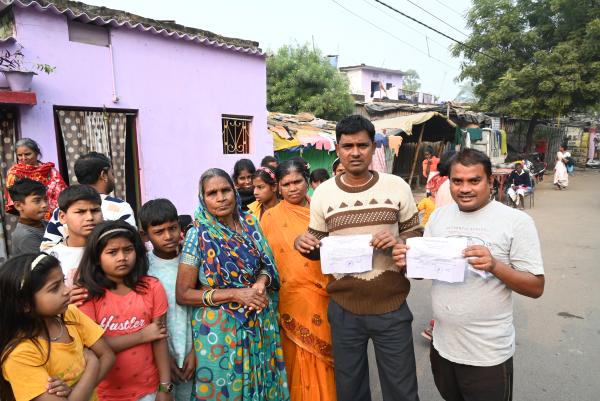 Residents show official eviction notices in Patna with regard to the Anti- Encroachment Drive. (Express Photo)
Gyanti, a fellow resident of the area, says only the poor seem to be getting targeted. “The rich get protection, we get notices.”
A bitter Gyanti adds that the eviction notices have come days after the NDA government won accolades for its Mukhyamantri Mahila Rozgar Yojana, for putting Rs 10,000 into the hands of needy women. Many took the money not realising that houses worth lakhs would be demolished in return, she says.
Lal Bai, a retired Patna Municipal Corporation employee, points to the monthly pension he gets, “a mere Rs 3,000”, after four decades of service. “This is the justice being delivered to us,” he says, adding that he has approached court but got no relief.
RJD spokesperson Mrityunjay Tiwari says they are “not against removal of illegal encroachment, but dead against such mass displacement”. “This government talks of welfare of the poor, but how many colonies has it constructed for them in the last 20 years (of Nitish Kumar’s tenure)?”
Congress spokesperson Asit Nath Tiwari points to the fact that the demolitions have gained pace right after the election results. “It is excesses against the poor. Let the government come up with a rehabilitation plan first, especially for those whose houses are being demolished on short notices.”
An Urban Development Department official says they are working on this. “Municipal corporations and councils are engaged in discussions for a long-term plan for encroachment-free roads and for providing vendors specified places.
Deputy CM Choudhary says drives against encroachment and for traffic regulation have been pending for a while and “been key areas of concern”. “Even though Patna and some other towns are putting in place smart city projects, the state government has been unable to remove illegal colonies and shops. Now, with the Land and Revenue Department compiling data of encroached, vacant and unused government land, the state government has decided to remove encroachments in a phased manner, starting with urban areas.”
Choudhary slams the Opposition for calling it “the bulldozer model”. “The anti-encroachment drive is a legal process with advance notices to encroachers. The district administration has been asked to provide temporary shelters to those whose houses are being demolished. The government is also thinking of a rehabilitation plan under its policy of providing land to the landless,” he says.
The writer is an intern with The Indian Express