
New DelhiDecember 3, 2025 04:34 PM IST
First published on: Dec 3, 2025 at 04:34 PM IST
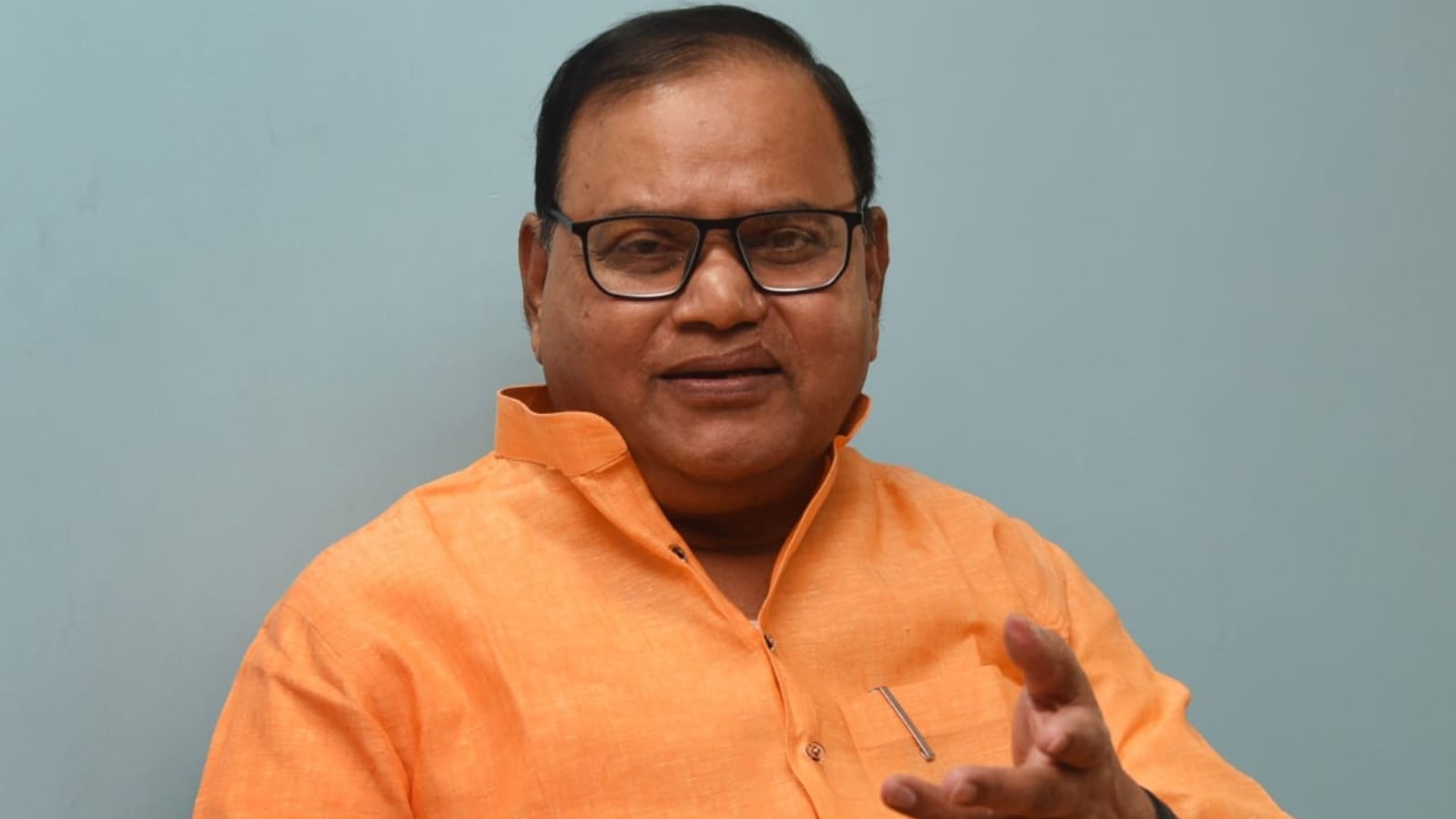
The BJP’s Rajya Sabha MP from Bihar, Bhim Singh, through a special mention in the House Monday, expressed concern over the current definition of “minority” in the country and spoke about “inequalities” arising from it.
In an interview with The Indian Express, he talks about the need for the government to decide minority identity on the basis of the state-wise or district-wise population ratio, and how he plans to push this issue. Excerpts:

* What was your position over the definition of “minority” in your Rajya Sabha speech?
The word minority has been used in our Constitution but not defined. As per the National Commission for Minorities Act of 1992, under which the Centre decides who is a minority, there are six such communities — Muslims, Sikhs, Parsis, Jains, Christians and Buddhists. But there are examples where communities considered to be minorities at the national level have reached a majority position in states.
* You said the determination of minorities is based on the proportion of the population at the national level, while the situation is different in many states. How do you say that?
Let’s look at this through an example. As per the 2011 Census, there is 14.2% Muslim population in the country and that is a big number, still they are considered as minority since they are next only to the majority community. Several states (and Union Territories) in India are Muslim-majority, exceeding 50% of its population — Lakshadweep at 96% and Jammu and Kashmir at 69%. In Assam it is 34%, West Bengal 27% and Kerala 26%. This is way above the national percentage of 14.2%. In Kashmir, for instance, Hindus are a minority, but are not getting any advantage of minority welfare schemes. Is this fair?
* So, your contention is that one community should be excluded from the definition of minority?
Not correct to say that. Even the Christian community — with a national population of 2.3% — is not a minority in several states. For instance, Christians are 88% of the population in Nagaland, 87% in Mizoram, 42% in Manipur, 30% in Arunachal Pradesh and 25% in Goa, as per the 2011 Census. So is it correct to have a sweeping national definition of a minority and extend them the benefits of various social sector and welfare schemes?
* You are implying that the benefits of the Centre’s minority welfare schemes are reaching those communities that do not actually face deprivations?
Yes. And on the other hand, communities that are genuinely weak and disadvantaged in a state or district remain outside the purview of government assistance, and this affects the equitable distribution of resources. State-specific realities definitely have to be taken into account.
I would say even district-wise data should be considered since states themselves also roll out several such schemes, for which district-wise data may be helpful. In Bihar, for instance, Muslim community comprises 17% of the state’s population, whereas in about eight districts — such as Kishanganj, Katihar, Araria and Purnia — they are somewhere between 39% and 68%.
* Are you planning to take this up further with the government? How?
I urge the Central government to conduct a comprehensive review on this subject and bring in a policy that gives priority to genuinely disadvantaged communities. I am planning to soon write to the Ministry of Minority Affairs in this regard. I would like to say that in any given region, either the local population composition be taken into account to decide who is minority and who is not, or else, the national definition should consider only those as minorities in India who are below 2% of the population — such as Sikhs, Buddhists, Jains and Parsis.