
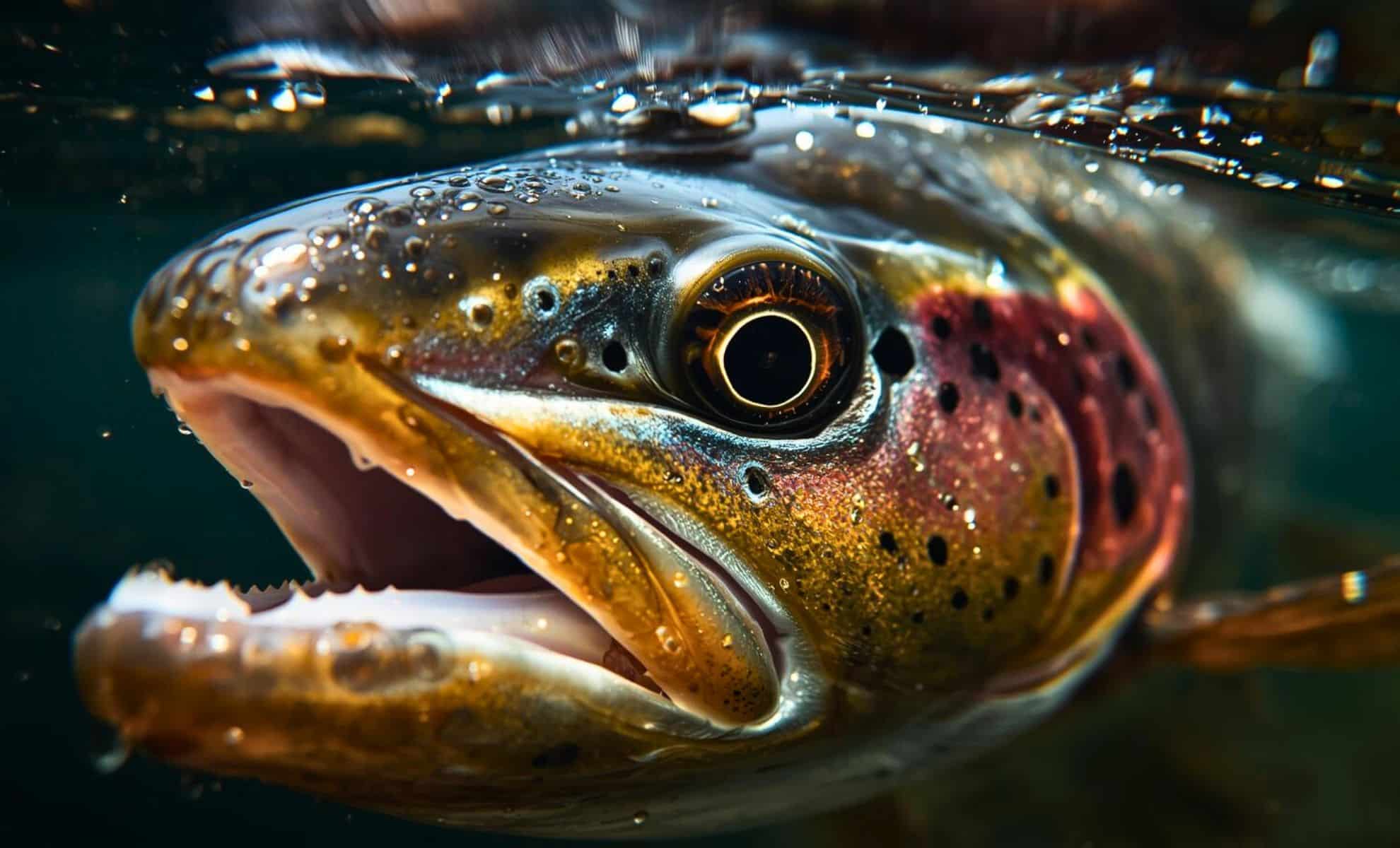
More than two trillion fish are killed for food each year—yet the pain they may experience in their final moments has been mostly overlooked by science and regulation. Now, a new peer-reviewed study offers the first clear measurement of that suffering and raises urgent questions about the slaughter methods widely used in the aquaculture industry.
The research, published in Scientific Reports, zeroes in on rainbow trout, a species central to global fish farming. It finds that air asphyxia—a common killing method where fish are removed from water and left to die—can result in prolonged pain, with individuals potentially enduring up to 22 minutes of intense suffering before losing consciousness.

This pain isn’t fleeting or marginal. The authors estimate that each trout experiences, on average, 10 minutes of moderate to extreme pain, depending on variables like water temperature and body mass. When scaled by weight, that equates to 24 minutes of pain per kilogram—a figure with far-reaching implications for both animal welfare and regulatory reform.
Scientists Measure Pain with Precision Using a New Model
At the heart of the study is the Welfare Footprint Framework—a scientific model developed to quantify animal welfare in concrete terms. Rather than relying on abstract scores or expert opinion alone, it calculates the cumulative time animals spend in specific affective states, such as fear or pain.
In this case, researchers applied the framework to trout exposed to air asphyxia, breaking the dying process into four distinct stages. These included immediate physical distress, hypercapnia (a buildup of carbon dioxide in the blood), metabolic exhaustion, and finally a decline in neuronal activity until the fish lost consciousness.
Using data from neurophysiological studies, behavioral observations, and pharmacological trials, the researchers built a time-segmented model showing when and how intensely the trout likely suffer. The resulting pain estimates range widely—anywhere from 1.9 to 21.7 minutes of high-intensity pain per fish—reflecting differences in slaughter conditions and fish size.

The study emphasizes the transparency of its approach: “The Welfare Footprint Framework… provides a standardized welfare impact measure: cumulative time in affective states of varying intensities.”
By calculating pain this way, the researchers not only shed light on the scale of suffering involved but also introduce a metric that can be used to compare slaughter techniques across species and production systems.
Humane Alternatives Offer Major Gains at Minimal Cost
Among the most practical takeaways from the study is the case for electrical stunning. When used correctly, this method induces immediate unconsciousness, drastically reducing the time fish spend in pain. The researchers estimate that between 60 and 1,200 minutes of moderate to extreme pain can be averted for every dollar invested in proper stunning equipment.
That translates to a potential 20 hours of suffering prevented per dollar—a compelling return for a relatively small capital cost.
The authors also evaluate percussive stunning, a technique involving a forceful blow to the head. While highly effective in controlled settings, it requires precise handling and is more difficult to standardize in large-scale operations.

Still, both approaches far outperform air asphyxia in welfare terms. The challenge now lies in implementation. The study notes that commercial stunning often falls short due to inconsistent equipment, misapplication, or insufficient oversight—issues that could be addressed with proper regulation and training.
Despite the scientific clarity around these alternatives, air asphyxia remains the dominant method for fish slaughter globally. Its simplicity and low cost have allowed it to persist, even in regions with otherwise high animal welfare standards.
Unseen Suffering Begins Long Before Slaughter
The report highlights that the greatest burden of suffering may not even occur during slaughter itself. Fish often endure harsh conditions in the hours—or even days—leading up to their death. Stressors such as crowding, handling, transport, and temperature shocks can trigger physiological and behavioral distress that compound their overall pain footprint.
While this specific study focuses only on air asphyxia, the authors stress that pre-slaughter conditions likely represent a larger share of cumulative pain in many cases. The Welfare Footprint Framework is being expanded to assess these stages, allowing for a full welfare audit of farmed fish throughout their life cycle.
Given that fish welfare typically falls outside the scope of national animal protection laws, producers have operated with little oversight on how fish are handled, stunned, or killed. As welfare science advances, that legal vacuum is becoming harder to justify.