
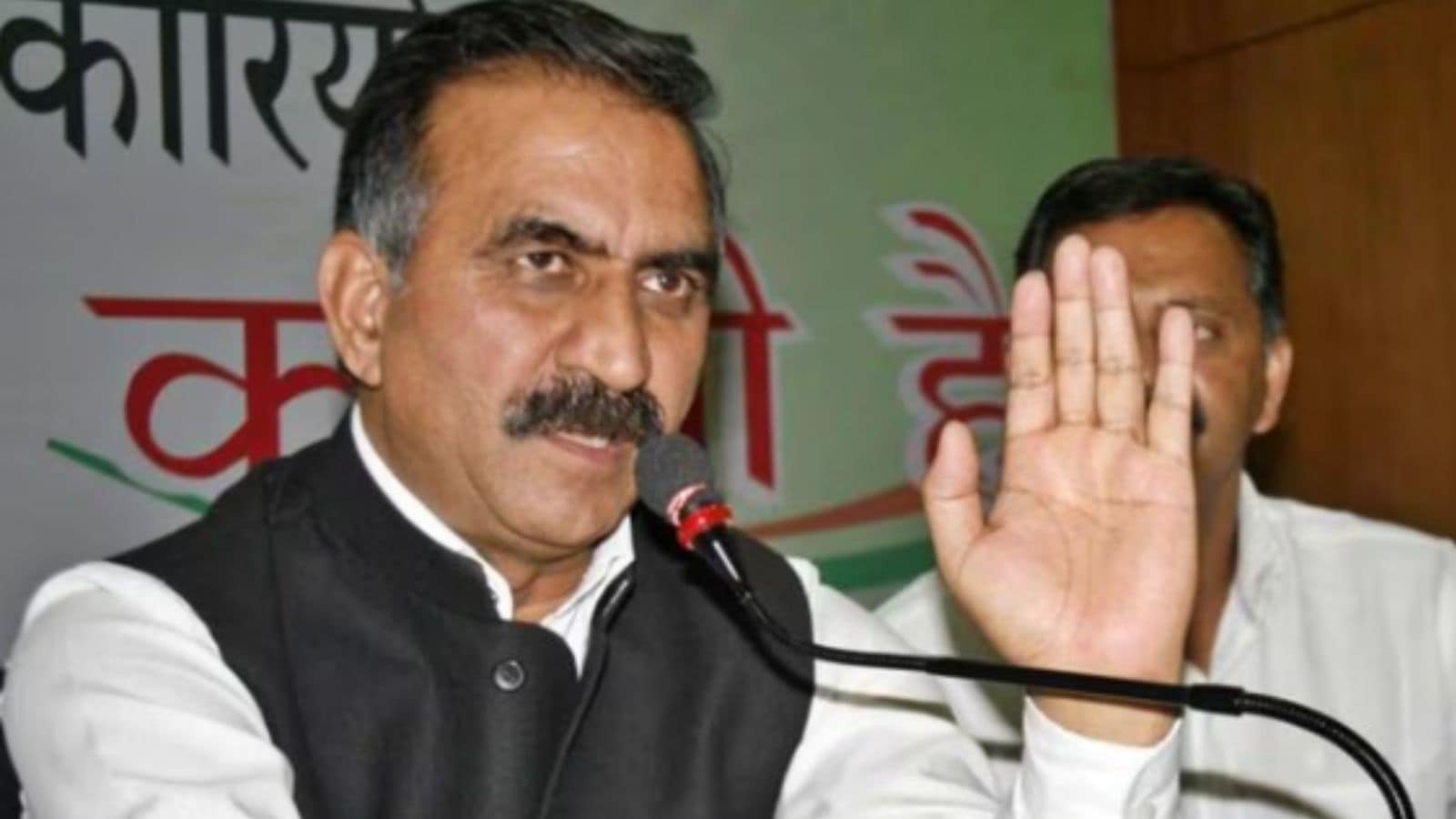
When Sukhvinder Singh Sukhu informed the Himachal Pradesh Assembly earlier this month that MLAs would have to wait for the third installment of their MLALAD funds and their hiked salaries for the next couple of months, it was another public admission by the Chief Minister of the state’s financial crisis.
Just days prior to it, the Sukhu government had pleaded lack of funds as one of the reasons for seeking the postponement of panchayat elections (though the BJP accused it of putting off the polls as it is afraid of facing them). Citing the flooding that hit Himachal this year, Rural Development and Panchayati Raj Minister Anirudh Singh told the Assembly: “Approximately Rs 100 crore is required to organise gram panchayat elections in the state, along with the mobilisation of around 55,000 government employees.”
Under the MLALAD scheme, each legislator is entitled to Rs 2.10 crore in four instalments during their five-year tenure. Himachal has 68 MLAs, and a one-time instalment would cost the exchequer Rs 35.70 crore.
Before this, the state government was left red-faced after it first announced a salary increase for state government employees, then withdrew it and, after this triggered a backlash, put this withdrawal in abeyance. The increase in salaries means Rs 100 crore extra annually for the state exchequer.
The state is fighting shy of payouts at a time when it has had to sell its government stock (securities) through the RBI to secure a Rs 300 crore loan for development projects. An order issued by the office of Principal Secretary (Finance) Devesh Kumar on November 5 said this loan of Rs 300 crore “would be paid in 15 years”.
In August too, the Sukhu government had similarly sold government stocks to raise two separate loans, amounting to Rs 1,000 crore, through the RBI to carry out developmental projects.
As a result of these fresh borrowings, in 2025-26, Himachal’s debt is projected to reach Rs 1.03 lakh crore, equivalent to 40.5% of the state’s GSDP. This exceeds the limit set under the Fiscal Responsibility and Budget Management Act, which states that Himachal government loans cannot exceed a ceiling of Rs 90,000 crore.
Story continues below this ad
A substantial portion of Himachal’s borrowings – 74.11% by 2024, for example – go towards repaying existing loans. In comparison, in 2019, 52.99% of the debt was used for such repayments.
The total fiscal deficit in 2025-26 is expected to be Rs 10,338 crore, 4.04% of the SGDP.
The reduction in capital expenditure and a minuscule increase in the budget size by a mere Rs 71 crore over last year also reflect the fiscal stress the state is facing.
Sukhu has blamed the Centre for Himachal’s finance condition, questioning the reduction of the Revenue Deficit Grant (RDG) – which is provided by the Centre to states to cover gaps in their revenue accounts after sharing Central taxes, as per Finance Commission recommendations – as well as lowering of the loan limit of the state.
Story continues below this ad
A senior Finance Department officer said: “Things are not out of control. Every state takes a loan against its securities. Even the government of India takes loans. The problem is only when the state procures loans against the wishes of the RBI… But the RDG is a major component. It has fallen from Rs 10,949 crore in 2021-22 (before the Sukhu government came to power) to Rs 3,257 crore in 2025-26… We have to wait to see what Himachal Pradesh receives as per the recommendations of the 16th Finance Commission of India in 2026.”
While earlier Himachal could take loans up to 5% of its GDP, this limit is now 3.5%, effectively bringing down the state’s annual borrowing capacity from Rs 14,500 crore to Rs 9,000 crore. The Centre has tightened norms so that a state’s borrowing limit may be reduced if it has certain liabilities such as unpaid electricity subsidies, unspent Central funds.
In terms of RDG, Himachal received Rs 40,624 crore under the 14th Finance Commission, which fell to Rs 37,199 crore under the 15th Commission. This amount is projected to fall sharply to Rs 3,257 crore by 2025-26.
Additionally, the discontinuation of GST compensation – which earlier was around Rs 3,000 crore annually – has further strained the state’s finances. In September, under the new tax-regime GST 2.0, the government abolished the compensation cess for most goods, except for tobacco and allied “sin goods”.
Story continues below this ad
Blaming the Centre, former Congress Himachal president Pratibha Singh said: “Himachal is not a wealthy state, and natural disasters have become an annual occurrence. The Central government should rise above the petty mindset of differentiating between Opposition-ruled and BJP-ruled states. It should assist Himachal in the same manner as it assists other states.”
Senior BJP leader and former Cabinet minister Vipin Singh Parmar calls the Congress allegations regarding the state’s financial mess “false”. “When the National Pension Scheme (NPS) was introduced in 2003–04, it included a condition that if any state reverted to the Old Pension Scheme (OPS), its borrowing limit would be reduced. When the Congress included OPS in its 2022 election manifesto and approved it in its first Cabinet meeting, the government was fully aware that its borrowing capacity would automatically decline. This condition applies nationwide.”
Meanwhile, the financial crunch means the Congress government has been unable to meet four of the 10 guarantees it made in the 2022 Assembly elections. The pending guarantees include providing 300 units of free electricity per household, purchasing 10 litres of milk daily from each dairy farmer, deploying mobile clinics in every village, and allowing horticulturists to fix prices for their produce.
Apart from bringing back OPS, the fulfilled guarantees include granting Rs 1,500 per month to women under the Indira Gandhi Pyari Behna Sukh Samman Nidhi Yojna, start-up funds for unemployed youth, establishing four English-medium schools in each Assembly constituency, generating five lakh government-sector jobs, and purchasing cow dung at Rs 2 per kg.