
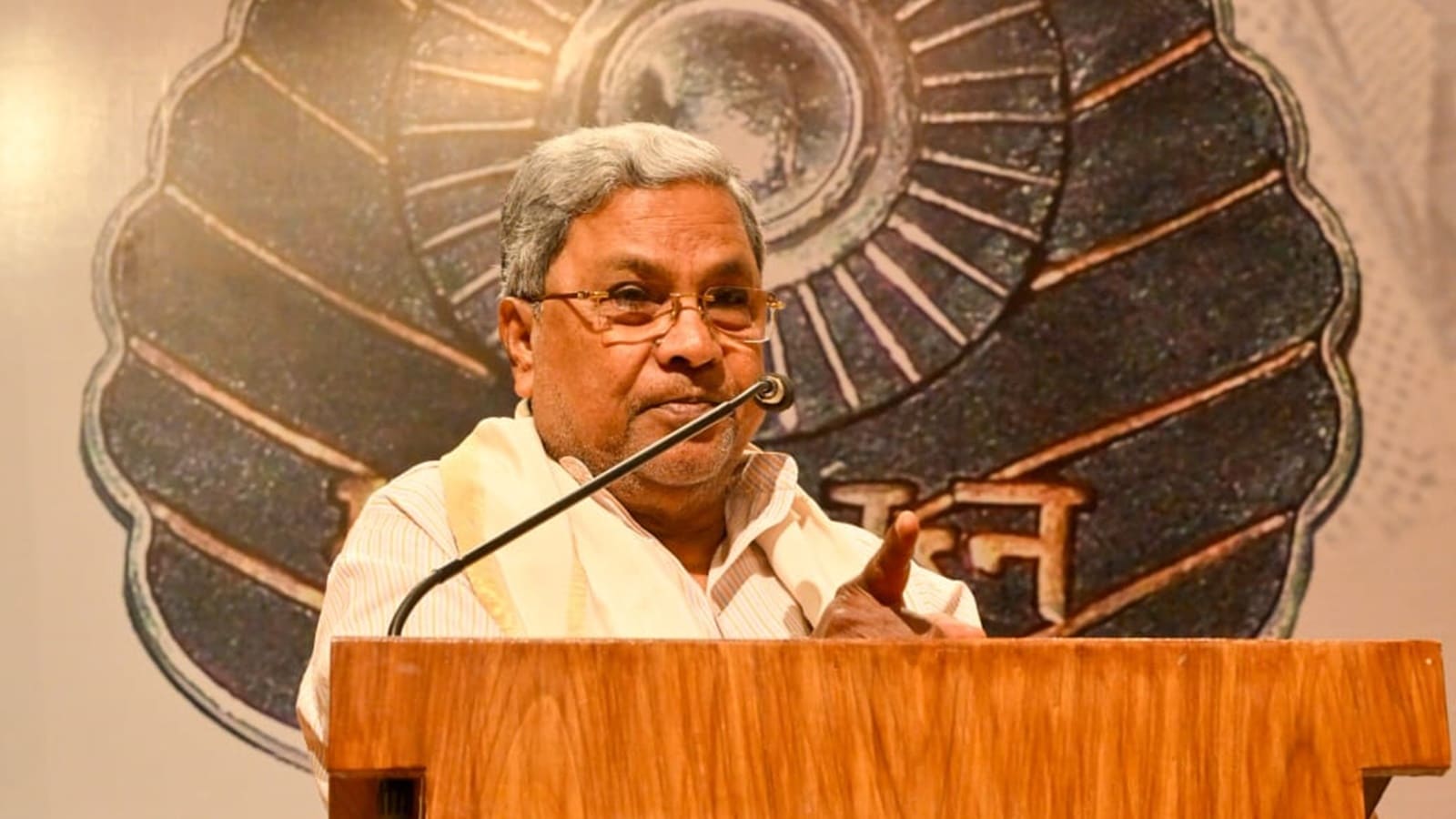
Amid a pushback, the Siddaramaiah government in Karnataka is set to introduce a Bill in the ongoing Winter Session that provides working women a monthly, paid menstrual leave for working women in both government offices and private establishments and a 2% attendance relaxation for girl students in government and private educational institutions.
“It is expedient to provide benefits during the menstrual period which is required to be evolved to help menstruating persons engaged in educational institutions, private establishments and services under the aegis of the government to cope with their menstrual symptoms such as cramps, back pain, fatigue, nausea, bleeding, etc, and to provide for matters connected therewith,” reads the Karnataka Women Well Being Leave Bill, 2025.
If the Bill is passed, Karnataka will become the first state to make menstrual leave a legal right.
A law department official said work on the Bill draft had been on for a while. At present, the menstrual leave policy in Karnataka is in force through an executive order that applies only to certain firms. The order was challenged in the Karnataka High Court on the ground that it does not fall within the ambit of any law.
The Bangalore Hotels Association and the managements of SASMOS HET Technologies, Avirata Defence Systems Limited, Avirata AFL Connectivity Systems Limited, and Fesil Aerospace Technologies Limited also approached the High Court against the Bill last week. On Tuesday, the court issued an interim stay order on the Bill after hearing preliminary submissions.
However, hours later, it recalled its order after the state’s Advocate General Shashi Kiran Shetty requested the court to reconsider it. On Wednesday, Justice Jyoti M clarified that the order would be passed only after a detailed hearing. The case will be heard next on January 20.
What does the Bill say?
The Bill, according to sources, defines “menstruating person” broadly to include girls, women, and transgender persons, ensuring inclusive coverage across all sectors of employment and education.
A transgender person, according to the Bill, means a person whose gender does not match the gender assigned at birth and includes trans men, trans women (whether or not the person has undergone sex-reassignment surgery or any therapy such as hormone therapy and laser therapy), persons with intersex variations, gender queer persons and those with socio-cultural identities such as kinner, hijra, aravani, and jogta.
If implemented, it will apply to all services under the state government as well as private establishments such as factories, shops, hospitals, hotels and all educational institutions, from primary schools and universities to training centres, tuition or coaching centres, and any institution imparting education or vocational training, whether government, aided or unaided.
It also provides women employees the option to avail of the leave “consecutively” (cannot be clubbed with other types of leaves) or intermittently.
However, the proposed legislation caps the annual limit at 12 days. If any employee prefers not to take the leave, the legislation allows them to work from home if the employer offers such facilities. While the Bill specifies that eligibility to avail of the leave ends at menopause or at 52 years of age (whichever is earlier), it does not mention a minimum age. It does not mandate a medical certificate to avail of the leave and also does not allow employees to carry forward unused leave to subsequent months.
The Bill states that a “simple request or email to supervisors would suffice, as this approach avoids delays and complications in the procedure”.
It also mandates government departments, educational institutions and private establishments to provide biodegradable sanitary products such as pads, menstrual cups and tampons, as well as proper waste disposal facilities, at their own expense. It further requires establishments — both government and private — to observe May 28 every year as “Menstrual Hygiene Day” by holding workshops and awareness programmes.
The Bill proposes the establishment of a Karnataka Women Well Being Authority, chaired by the head of the Karnataka State Commission for Women, to oversee the implementation and redress of grievances. It also proposes appointing district labour officers as enforcement authorities for private establishments.
According to the Bill, violations, including intentionally denying menstrual leave or discriminating against employees who take it, would attract a penalty of Rs 5,000 for each violation.
Definitions, as per the Bill