
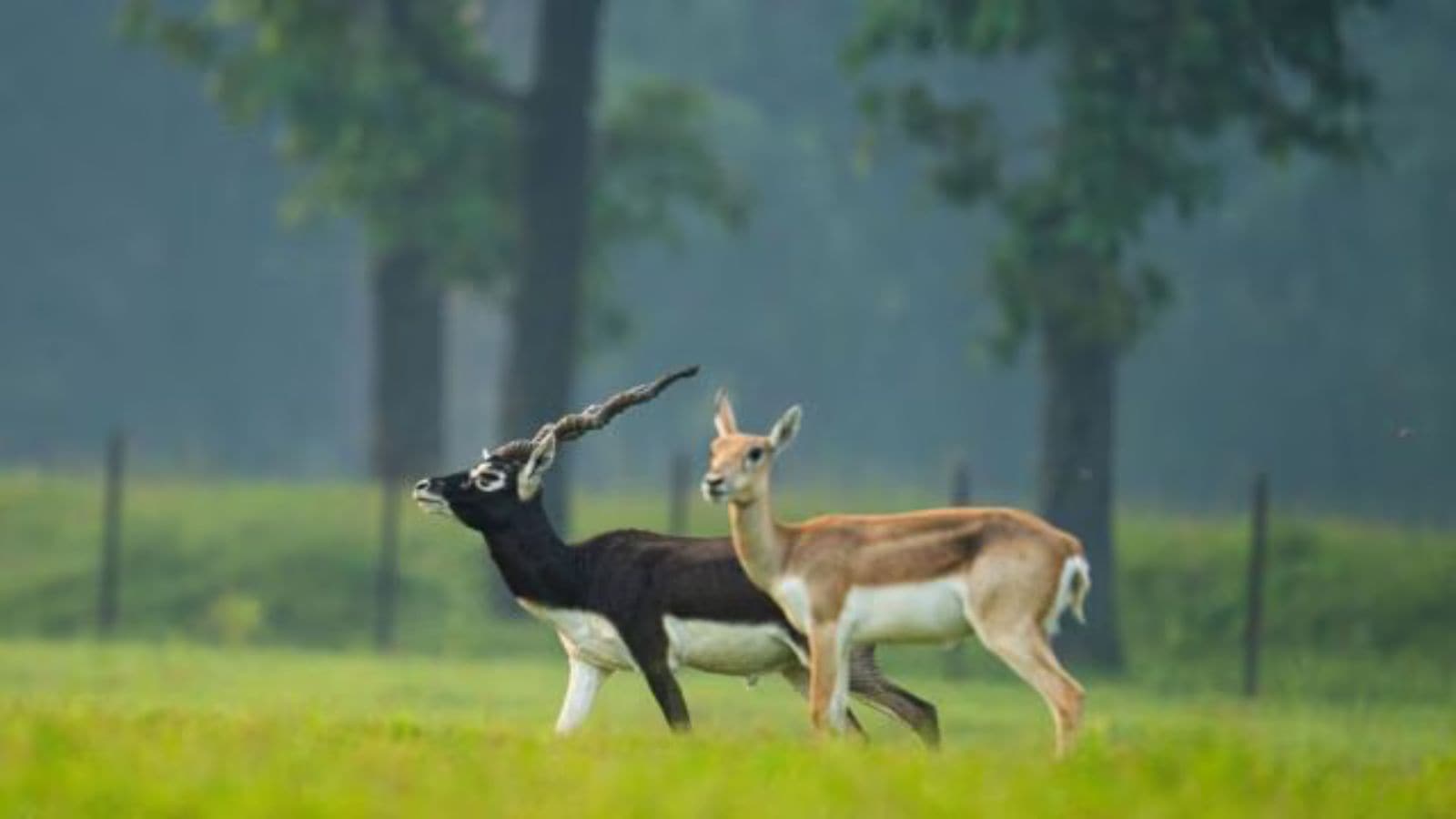
Belagavi, December 8: Responding to a starred question raised by MLC Talawar Sabanna, Karnataka Forest Minister Eshwar Khandre Monday informed the Legislative Council that the deaths of 31 blackbucks at the Kittur Rani Chennamma Mini Zoo last month were owing to a bacterial infection.
Story continues below this ad
He, however, added that the mortality rate of wild animals in Karnataka zoos has significantly reduced over the years.
Khandre said the post-mortem of the blackbucks was conducted by Animal Husbandry Department officials.
Story continues below this ad
“The samples were sent to the Veterinary Biological Institute. Laboratory reports later confirmed haemorrhagic septicaemia as the cause of death,” he added.
Khandre said a total of 38 blackbucks suffered the bacterial infection, and seven could be saved. “The officials who have analysed the situation have imposed quarantine protocols to prevent infection in other animals. There is no negligence of any officials to the prima facie. Across Karnataka, there are 322 blackbucks in nine zoos, and even in other facilities, precautions have been taken. The animals in the zoo have been vaccinated,” he further said.
The minister said the bacteria could spread through water, air, food and even during grazing. Citing the recent deaths of cattle in Koppal district and 10 blackbucks in a biological park in Jharkhand due to the same bacterial infection, Khandre said that blackbucks are very sensitive to the bacteria.
Giving out the zoo mortality figures in Karnataka, Khandre said the mortality rate was 6.2 per cent in 2021-22, 4.5 per cent in 2022-23, 4.76 per cent in 2023-24, 3.25 per cent in 2024-25, and 2.42 per cent in 2025-26.