
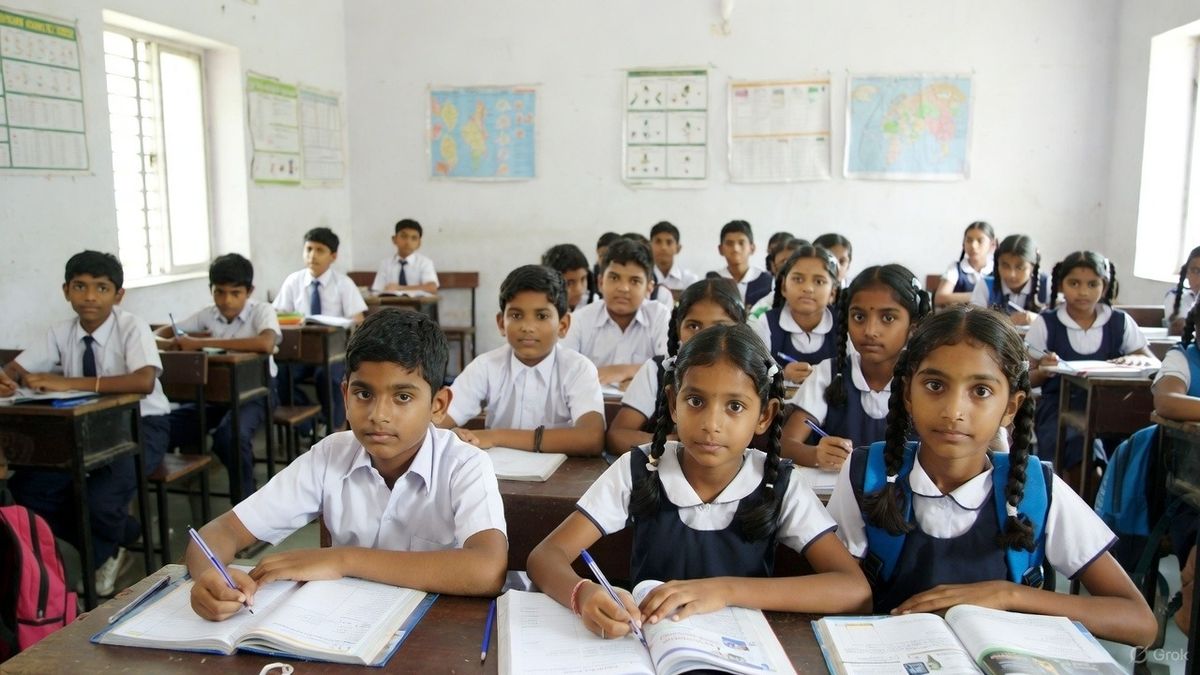
Government prepares to shift from National Education Policy to a fully state-driven framework, with SEP rollout expected from next academic year.
Karnataka is preparing for a major shift in its education framework as the State Education Policy (SEP) reaches its final stages of approval. The move signals a clear departure from the National Education Policy (NEP), which had a stronger presence across institutions over the past years. With the state choosing to return to a state-centric education structure, a complete transition to SEP may begin as early as next year.
According to the latest updates, the government has fixed the schedule for submitting the final SEP report. The expert commission tasked with drafting the policy has already handed over a detailed document to the state. Following directions from the Chief Minister, the higher education department has prepared the key points of the report to be placed before the Cabinet. Approval is expected during one of the upcoming Cabinet meetings, setting the stage for statewide implementation.
Also Read:Majestic set for complete transformation as B’luru plans ₹1,500-crore redevelopment of KBS
Although the SEP was initially planned for rollout last year, full-scale implementation has been delayed. This has caused uncertainty for students studying under the state curriculum, especially in government and aided institutions. The new push is intended to resolve this gap and restore a stable education pathway.
Under the revised framework, SEP will be mandatory in all government and aided schools and colleges. These institutions will no longer be permitted to follow the NEP structure. However, ICSE and CBSE schools will not be forced to adopt the state curriculum, though the state aims to strengthen the presence of its own syllabus across most institutions.
The SEP model retains several traditional state curriculum features while also introducing major reforms. The structure includes a three-year undergraduate programme, a two-year postgraduate course and a four-year duration for professional degrees. A key feature is the emphasis on bilingual instruction at the higher education level, which aims to improve accessibility and comprehension for students across linguistic backgrounds.
Also Read:Bengaluru’s 50 new ‘Safety Islands’ offer immediate police access across the city
The policy also provides flexible learning opportunities, including open schooling options for working individuals and those who have discontinued studies. These inclusions are expected to broaden access to education and support students from diverse circumstances.
As Karnataka positions itself to adopt a fully state-aligned education policy, the long-term impact on learning outcomes and student growth will unfold in the coming years. Stakeholders now await the Cabinet’s decision, which will determine how soon the SEP becomes a reality across the state.