
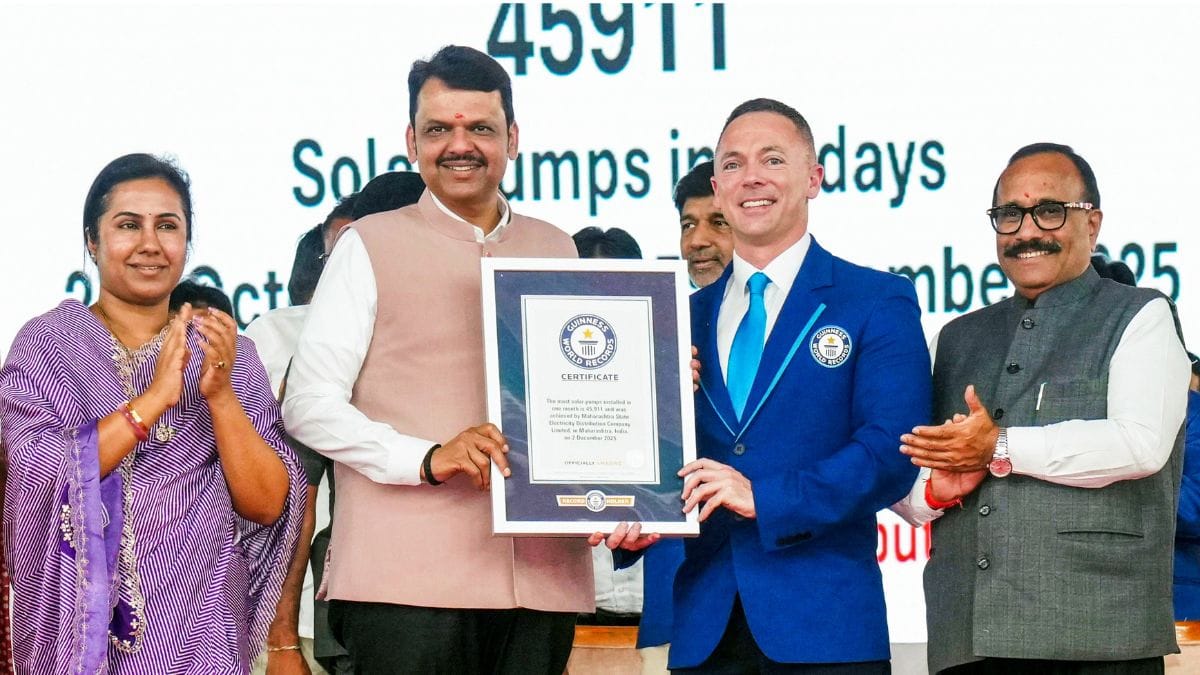
Fadnavis was sworn and became the chief minister for the third time on 5 December 2024. In his first term as CM, when the BJP shared power with the undivided Shiv Sena from 2014 to 2019, Fadnavis’ focus was more on development and boosting infrastructure. His second term as CM lasted for an embarrassing 72 hours as he tried to form a government with a splinter group of the NCP led by Ajit Pawar.
Now, in his third term as CM with an unprecedented mandate of 235 of Maharashtra’s 288 seats for the Mahayuti, with 132 just from the BJP, Fadnavis has only emerged stronger, keeping his allies—the Eknath Shinde-led Shiv Sena and the AJit Pawar-led Nationalist Congress Party (NCP)—in check, and pushing his agenda more assertively and aggressively.
While his first year did see differences with allies despite a steady government and a historic mandate, infrastructure projects got a boost despite a strain on finances as the government tried to juggle populist schemes like Ladki Bahin and axing certain such schemes and firefighting controversies around ministers.
Speaking to the media on the occasion of one year of the government, cabinet minister Chandrashekhar Bawankule said, “The vision of development that our chief minister Devendra Fadnavis saw… I am proud to say that we have looked after all the small to big elements in the state. From Gadchiroli to Mumbai, we have given justice to every person in the state.”
Political analyst Abhay Deshpande told ThePrint that this one year has been a mixed bag. “Because of the landslide mandate, on the political front, there won’t be any problem on the opposition front. But there is no communication or coordination inside the government and so they had to face lot of irritation and no smooth functioning,” he said.
“They had to follow the old signal rule, look left, look right and go. Politically they are okay but they have a financial crisis,” he added.
Fadnavis 3.0 and his run-ins with allies
The first year of his third term has seen Fadnavis govern with an iron fist. Just like his first term, he brought back the war room where he monitored the progress of major infrastructure projects across the state directly.
Eknath Shinde, still smarting from having to let the chief minister’s job go, was frequently absent, frequently visiting his native Satara. When he was in Mumbai, the cold war with Fadnavis was palpable.
Fadnavis has made it mandatory to obtain his approval for all major schemes and projects under the Urban development department, headed by Shinde, effectively cutting him to size.
Early on in his term, he axed a contract of around Rs 3,000 crore that was given during Shinde-led government. The then health minister Tanaji Sawant had initiated a project for mechanised cleaning services in government-run hospitals. But Fadnavis ended it.
He also issued an official notification on 17 February citing irregularities in the minimum support price schemes for crop procurement, as well as a review of the Ladki Bahin beneficiaries as many given the money were found to be ineligible. He expressed displeasure over the urban development department’s poor performance.
So far, he has discontinued at least eight schemes started by his predecessor Shinde, including the Anandacha Shidha, Mukhyamantri Sundar Shaala, the one rupee crop insurance among others.
The current CM and his predecessor have clashed politically too.
Immediately after taking over, tensions between the Sena and BJP became visible to all when Fadnavis announced Girish Mahajan (BJP) and Aditi Tatkare(NCP) as guardian ministers of Nashik and Raigad, respectively. Shinde and Sena were so upset that Fadnavis put the appointments on hold indefinitely.
Shinde and his ministers have often complained to Delhi about being snubbed by the BJP and Fadnavis. Last month, Shinde’s ministers boycotted the cabinet last month over reports of BJP poaching the Shinde-led Shiv Sena’s leaders, especially from Shinde’s home turf of Thane and his son MP Shrikant’s constituency of Kalyan Dombivali.
When Shiv Sena ministers brought this up with the CM, Fadnavis said it was the Shiv Sena which was poaching BJP leaders, and if the Sena stopped, the BJP would stop too.
Fadnavis’ style of governance & a push for infra
One of the first things Fadnavis did as CM was launch a 100-day programme where every department was asked to set specific targets for ongoing schemes and define measures to improve delivery of services and governance. The CM even engaged the Centre’s Quality Council of India to evaluate the performance of departments.
The report said, of the 48 departments, 12 had completed 100 percent of the tasks assigned, while 18 had done more than 80 percent of the job. The three departments—General Administration Department, Urban Development Department and Food and Civil Supplies Department—that had performed most poorly, were ironically led by the three top Mahayuti leaders, CM Fadnavis, Deputy CM Eknath Shinde and Deputy CM Ajit Pawar, respectively.
After this, Fadnavis launched another 150-day improvement programme, that ended in October. All departments were asked to prepare a road map in three phases—till 2029, till 2035 and till 2047. One of the immediate tasks is to go 100% online. The report card on this programme is yet to come.
Also read: After 100-day governance programme, Fadnavis’ new challenge for civil servants—a 150-day programme
In his first term, Fadnavis initiated Metro projects in the Mumbai Metropolitan Region. He also conceived the plan for a Nagpur-Mumbai expressway, known as the Samruddhi (prosperity) Mahamarg. Now in his third stint as CM, most of these Metro projects are in advanced stages of construction. The year was also marked by the inauguration of the first fully underground Aqua line and the completion of the 701-km Nagpur Mumbai expressway.
Other than this, eight metro lines are in the pipeline in Mumbai, and 32 km of the phase 2 of the Pune Metro and 44 km of the phase 2 in Nagpur are being planned.
The Navi Mumbai airport, the plan for which was conceived in 1997, was also inaugurated in the first year of the Mahayuti government, with operations at the first of the four terminals scheduled to begin this month.
Besides, the Fadnavis government is working on the ambitious Vadhvan Port, and Shaktipeeth (Nagpur to Goa) expressway. Despite staunch opposition from farmers as well as politicians from the Kolhapur district, the CM has vowed to take the Shaktipeeth project ahead.
Law and order
Helming the home department, which he had kept with himself even during his first stint as CM, Fadnavis attempted to become the face of the Maharashtra government’s crackdown against Naxalism in the Gadchiroli district, a move that has earned him accolades even from the rival Uddhav Thackeray-led Shiv Sena.
In line with Union Home Minister Amit Shah’s call to end Naxalism in the country by March 2026, Fadnavis personally took up the role of the guardian minister of the district and started the new year in 2025 by traveling to Gadchiroli.
Senior Maoist leader Mallojula Venugopal Rao alias Sonu Bhupati surrendered in October and Fadnavis himself went to Gadchiroli for it.
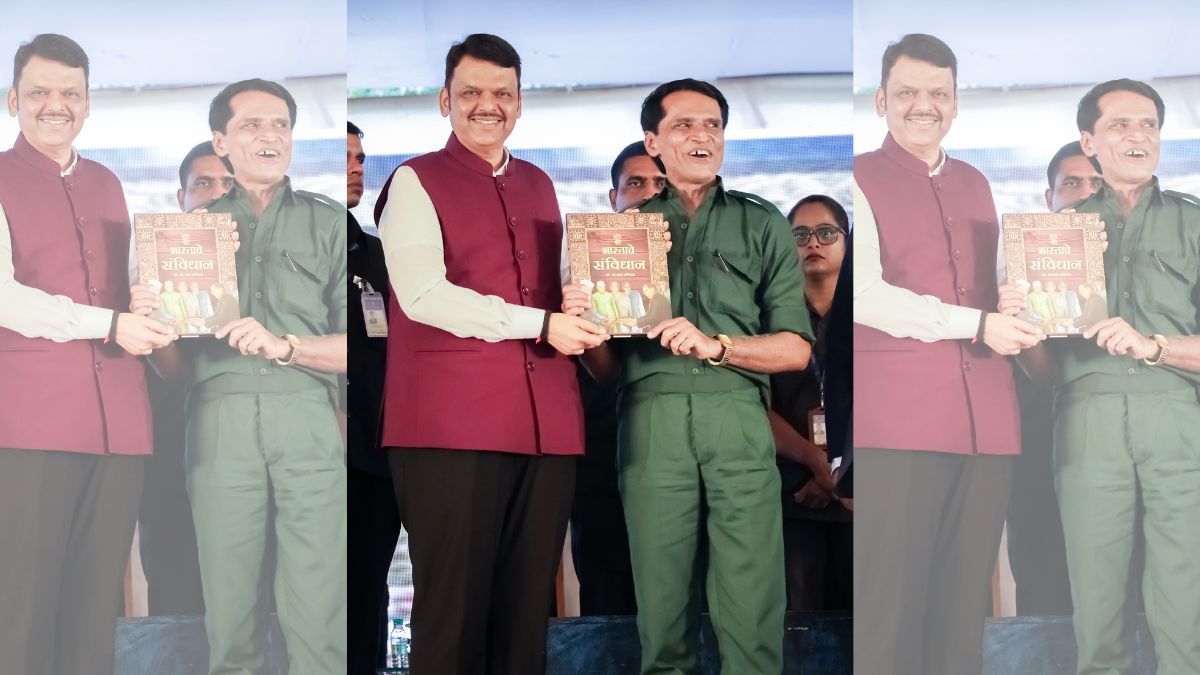
Speaking to reporters in Gadchiroli, Fadnavis said, “It was his wish to surrender in the presence of the CM. When our seniors told me, I said even if he calls me to the jungle I am willing to go, but it will be better if he surrenders here. So I cancelled all my other programmes and immediately came here.”
Fadnavis has been keenly interested in Gadchiroli since the Mahayuti government came to power for the first time. Since 2022, when the Maha Vikas Aghadi government collapsed and the BJP-led Mahayuti took charge of the state, 47 projects and investments worth Rs 1.23 lakh crore have come to the Vidarbha region.
The Kalyani Group has invested Rs 5,000 crore in the area in defence, steel, and EV batteries. Lloyds Metals has invested Rs 40,000 crore to develop steel plant and other units over the next five years in Gadchiroli.
However, there were several law and order issues that rocked the Mahayuti government in its first year. In the very first month, the government found itself at the centre of a controversy over the murder of BJP sarpanch Santosh Deshmukh in Beed district. Thickening the plot, NCP minister Dhananjay Munde’s wide Walmik Karad was arrested in the case for alleged involvement. Munde was eventually asked to resign as cabinet minister in March 2025.
Last month, Ajit Pawar himself was in trouble over a Pune land deal involving his son Parth Pawar. Though Fadnavis later gave his deputy a clean chit, Ajit Pawar was forced to give an explanation regarding his no association in the deal.
Amadea Enterprises, co-owned by Parth Pawar, bought land in Mundhwa for Rs 300 crore, allegedly below the market value of Rs 1,800 crore, without paying the stamp duty in May this year.
Other then Munde and Parth Pawar, there were corruption allegations against ministers too. Shiv Sena ministers Sanjay Shirsat, Yogesh Kadam, Sanjay Gaikwad were accused of corruption and misconduct.
A video went viral with Sanjay Shirsat next to a bag of cash, Yogesh Kadam’s mother had alleged links to an illegal dance bar, while Sanjay Gaikwad was involved in a fist fight over stale food served at the state guest house.
Manikrao Kokate, again from the NCP, had to resign as agriculture minister after he was caught playing online card game inside the assembly. He also made controversial statements on farmers, saying even a beggar does not take Re 1 as alms, but here, the state was giving crop insurance at Re 1. He was eventually shifted to the sports ministry.
Financial constraints
One of Fadnavis’ biggest challenges was the state’s balance sheet because of the financial constraints.
The outgo for Ladki Bahin scheme, started before the assembly elections, where eligible women would get Rs 1,500 monthly, has put pressure on other schemes. To pay the SC beneficiaries of the Ladki Bahin scheme, Rs 500 crore was diverted from the social justice department, which left Shiv Sena leader and social justice minister Sanjay Shirsat fuming.
Moreover, the government is yet to increase the amount to each Ladki Bahin beneficiary to Rs 2,100 per month, as promised in the manifesto.
There have also been delays in payments to contractors leading to chaos and stalling of certain schemes like the Shiv Bhojan thali, a Shiv Sena manifesto promise.
Compounding the situation, the floods during the monsoon and unseasonal rain have led to farmer distress in the state, with over 800 farmer suicides in one year, according to the government data. The government has announced a Rs 31,268 crore relief package for farmers, which is currently waiting for the Centre’s nod.
(Edited by Viny Mishra)
Also read: More ally vs ally drama ahead of local polls: All Sena ministers except Shinde skip cabinet meet