
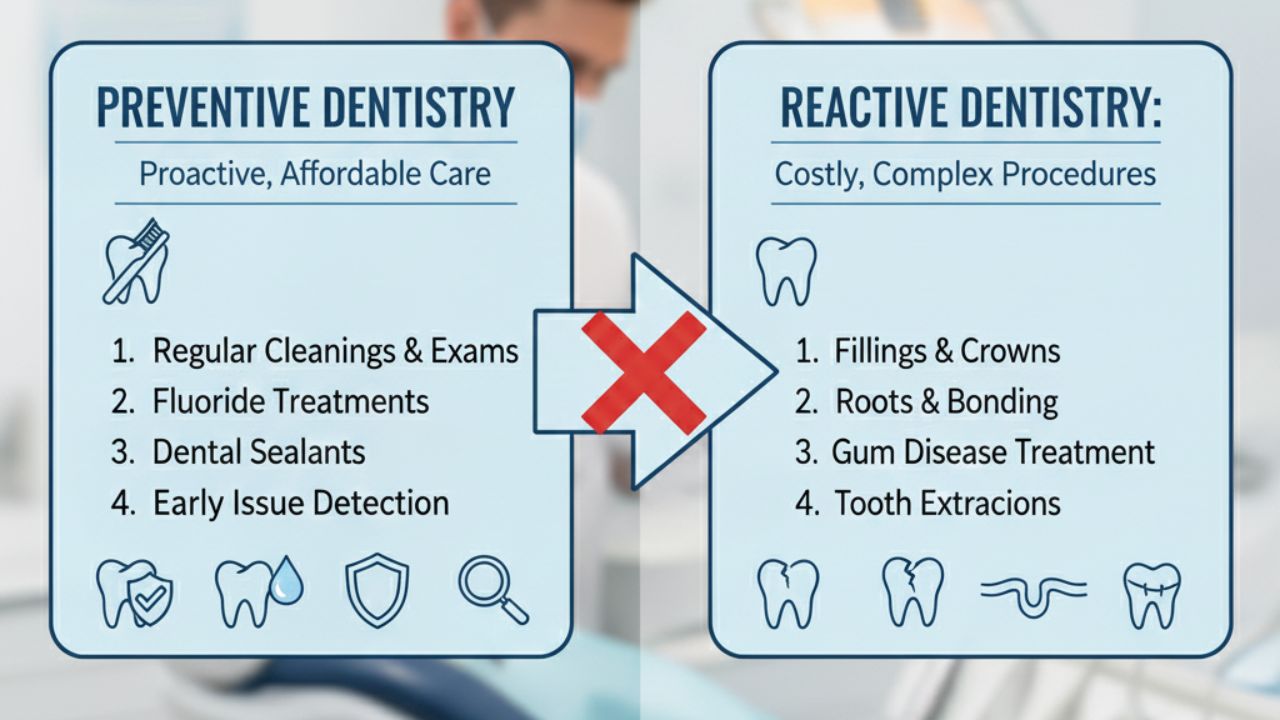
Preventive dentistry protects your mouth and your wallet. When you keep up with cleanings, exams, and simple repairs, you avoid painful problems that cost much more later. You stop small cavities before they reach the nerve. You treat gum infection before you lose bone and teeth. You avoid emergency visits that wreck your budget and your plans. Instead, you spread out low routine costs over time. You also keep your teeth strong so you can eat, speak, and work without fear. This guide explains how regular checkups, cleanings, sealants, and fluoride treatments reduce the cost of long term care. It also shows how dental Care in Gates & Rochester, NY supports you with practical steps you can start now. You deserve a mouth that feels calm and steady, not stressed and broken. Preventive care gives you that control.
Why small problems cost less than big ones
Tooth decay and gum disease start small. A soft spot in the enamel. A little bleeding when you floss. At that stage, treatment is simple and low cost. A quick filling. A deeper cleaning. A short visit.
Later, the same problem can turn into nerve damage, infection, or tooth loss. Then you face root canals, crowns, extractions, or implants. Each step up in treatment means more time, more pain, and more money.
You cut those risks when you do three things.
- Brush twice a day with fluoride toothpaste
- Floss once a day
- See a dentist every six months or as advised
The science backs this up. The Centers for Disease Control and Prevention explain that fluoride and regular care lower decay and save costs for families and communities.
How preventive visits save money over time
Think of your mouth like a car. You change the oil and check the brakes so you do not need a new engine. Dental care works the same way. You pay a modest amount now so you avoid a large bill later.
Here is a simple comparison of common services. These are sample ranges, not exact prices, and they can vary by location and insurance. The pattern stays the same. Early care costs less than late care.
| Type of visit or treatment | Purpose | Typical timing | Relative cost level |
|---|---|---|---|
| Routine exam and X rays | Check for early decay and gum disease | Every 6 to 12 months | Low |
| Professional cleaning | Remove plaque and tartar | Every 6 to 12 months | Low |
| Fluoride treatment | Strengthen enamel and prevent cavities | Every 3 to 12 months as needed | Low |
| Sealants for back teeth | Protect chewing surfaces from decay | Mainly for children and teens | Low to moderate |
| Small filling | Treat early cavity | As needed | Moderate |
| Root canal and crown | Save tooth with deep decay | When decay reaches the nerve | High |
| Extraction and implant or bridge | Replace lost tooth | When tooth cannot be saved | Very high |
First, you see that the lowest cost services are exams, cleanings, fluoride, and sealants. Second, you see that the highest cost services treat problems that started small but were not caught early. Third, you see that once you lose a tooth, costs do not stop. You pay to replace and maintain it for years.
Benefits for children, adults, and older adults
Preventive dentistry helps every age group in a different way. Yet the money saving pattern stays steady.
Children and teens
- Cavities form faster in young teeth
- Sealants and fluoride cut the risk of decay
- Early orthodontic checks can shorten later treatment
The American Dental Association explains that sealants can prevent up to 80 percent of cavities in back teeth for two years. You can read details at the ADA resource on sealants at MouthHealthy Sealants. That protection lowers treatment costs during childhood and into early adult life.
Working age adults
- Stress, smoking, and diet can strain gums
- Regular cleanings cut the risk of gum disease
- Early care reduces missed work from dental emergencies
You also protect your job and income when you avoid sudden tooth pain that forces you to call out or visit an emergency room. Those indirect costs add up over years.
Older adults
- Many medicines cause dry mouth
- Dry mouth raises the risk of decay and infection
- Preventive visits protect both natural teeth and dentures
Good oral health also links to heart disease, diabetes control, and nutrition. When you can chew well, you eat better. When your gums stay healthy, your body handles other health problems with less strain. That can reduce medical bills too.
Daily habits that lower your dental costs
Your home care routine is the first line of defense. You control it every day. You do not need special tools. You need three simple steps.
- Brush twice a day with fluoride toothpaste for two minutes
- Floss once a day to clean between teeth
- Limit sugary drinks and snacks between meals
You can add a fluoride mouth rinse if your dentist suggests it. You can also drink tap water if it is fluoridated. The CDC explains that community water fluoridation saves money by preventing decay in children and adults. That means fewer fillings and fewer extractions over a lifetime.
Planning your preventive visits
Many people skip dental visits because of cost fear. That choice often leads to a larger bill later. A simple plan can help you stay ahead of problems.
- Check your dental insurance for covered preventive visits
- Ask your dentist about payment plans for cleanings and exams
- Schedule the next visit before you leave the office
Next, keep a simple list of questions about any tooth or gum changes. Then bring that list to your visit. That short step helps your dentist catch concerns early. You save time and money because you avoid repeat visits for the same issue.
Finally, teach children that checkups are a normal part of life. When they grow up with routine care, they face fewer emergencies and lower costs as adults.
Taking control of long term oral costs
You cannot control every health problem. You can control how often you seek preventive dental care. Each cleaning and exam is a small investment in comfort, confidence, and lower bills.
When you choose regular checkups, you help your family avoid many painful surprises. You keep teeth in your mouth and money in your pocket. You also protect your ability to smile, eat, and talk without worry.
Start with one step today. Call your dentist. Schedule a checkup. Then keep that promise to yourself. Your future self will feel grateful every time you chew without pain and every time a big bill never shows up.