
Before the abrogation of Jammu and Kashmir’s special status in August 2019, the reservation in government jobs and education was largely a settled issue in the erstwhile state, drawing barely any dissent from any quarter.
While 43% of seats in government jobs were reserved for different groups, open merit candidates competed for the remaining 57%.
The only notable demand then was raised by the Pahari community, which had long been seeking the Scheduled Tribe (ST) status. This demand, however, was opposed by Gujjars and Bakerwals, which were among the primary beneficiaries of the ST quota.
The situation changed in the wake of an amendment to the J&K Reservation Act, 2004, which was announced by Lt Governor Manoj Sinha in March 2024, barely a month before the Lok Sabha elections. The amendment tilted the balance against open merit candidates, whose communities form the bulk of the population. It raised vertical reservation to 60% and added a 10% horizontal quota, leaving only 30% of seats open for merit-based competition.
Barring the BJP, the political parties in J&K viewed this amendment as an alleged attempt by Sinha to “confer political advantage” on the BJP ahead of the 2024 parliamentary elections which were followed by the Assembly elections later in the year. Though the move did not yield electoral results in favour of the BJP, it was seen as sowing the seeds of quota politics in the region, sharpening social fault lines among various communities.
In their manifestos for the September-October 2024 Assembly elections, the two principal parties — the National Conference (NC) and the Peoples Democratic Party (PDP) — promised to revisit the quota issue. However, wary of its potential electoral fallout, both stopped short of calling for a rollback of the new quota regime, and instead framed their stance as “rationalisation of reservation” — a term used to align quotas with population share.
The BJP, on the other hand, hoping to reap political dividends, promised additional reservation in government jobs for Agniveers and reservation in promotions for employees from different reserved groups.
Amid this flare-up of quota politics, open merit or general category students said they had been “sidelined and disempowered”, announcing an agitation.
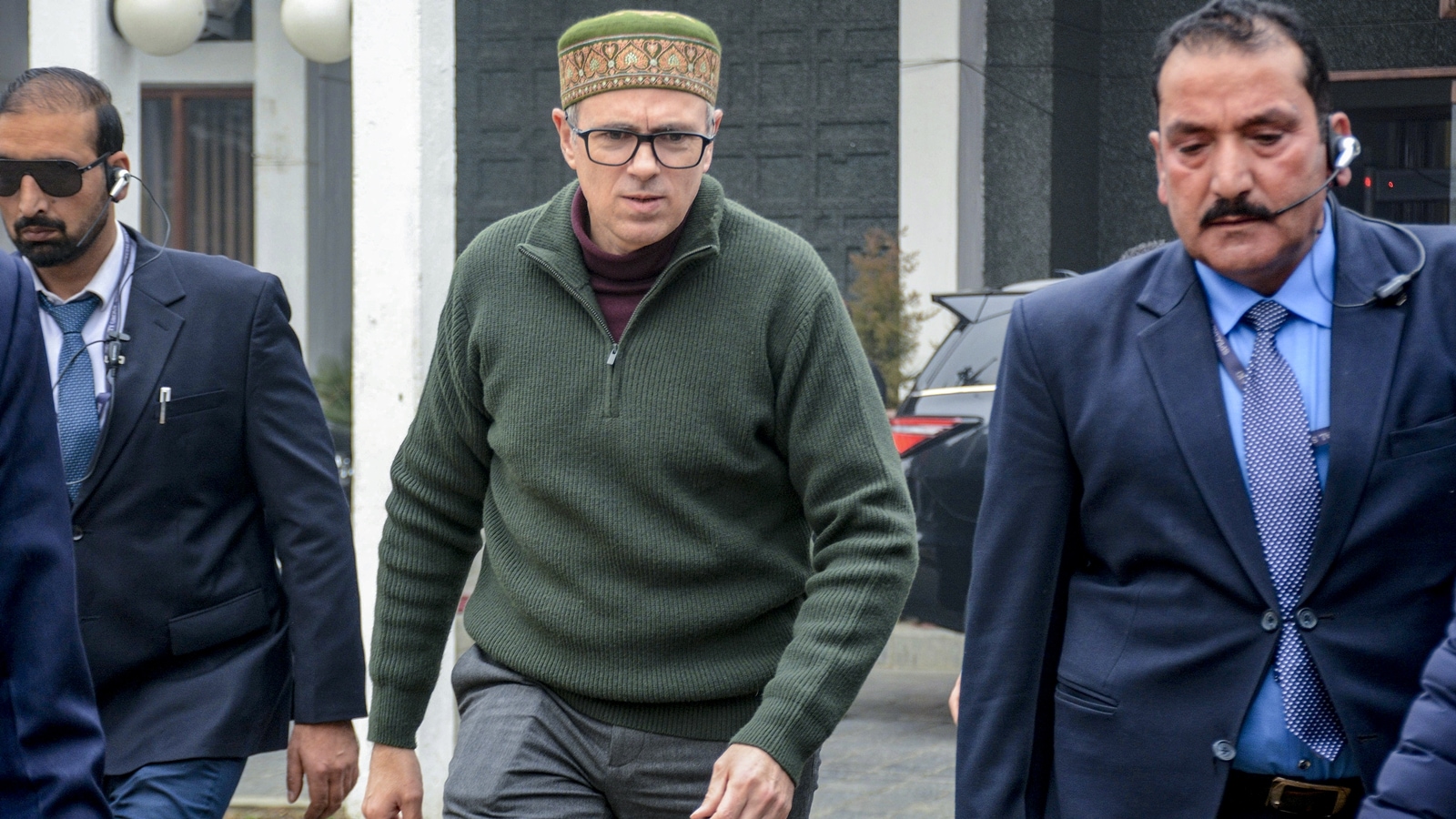
The Omar Abdullah-led NC government has been treading cautiously on the quota issue, aware of the political cost of any “missteps” — especially in a political landscape where the reserved groups are considered to be electorally crucial.
The PDP, too, has adopted a cautious approach, pitching for a similarly careful, population-based and equitable reservation policy.
For the NC government, the pressure to address the issue came from within. The party’s Srinagar MP Aga Ruhullah Mehdi openly took up the cause of open merit students, challenging the party high command over it. When Ruhullah held a sit-in outside Chief Minister Omar Abdullah’s residence in Srinagar along with protesting open merit candidates last year, the NC government was compelled to constitute a Cabinet sub-committee to examine the issue. Although the three-member panel was mandated to submit its recommendations within six months, it did so only last month.
Recently, Omar said that his Cabinet, after approving the recommendations of its sub-committee, has sent the file to Lok Bhawan for clearance. The government, however, has remained tight-lipped about the contents of the recommendations and has refrained from making them public so far.
The reservation row snowballed following revelations that a bulk of reserved category certificates over the past three years were issued in the Jammu region, effectively leaving a large section of Kashmiris out of it.
Now, more than a year after the Omar government marked its first year, open merit candidates, frustrated by the prolonged delay, announced another round of protests. They were backed by Ruhullah as well as PDP leaders Waheed Para and Iltija Mufti.
Although the police foiled their protests Sunday by placing several political leaders under house detention and sealing the venue, the episode highlighted rifts and confusion within the NC over the quota affair.
While Ruhullah has, throughout the stir, stood by open merit candidates, NC president Farooq Abdullah accused the backers of the protesters — an apparent reference to Ruhullah and Para — of “creating chaos”, warning that the government will “not let it happen”.
NC leader Tanvir Sadiq, on the other hand, said the students have a “legitimate democratic right” to protest and that the Omar government will “not abandon them simply because their peaceful protest is directed at Lok Bhawan”.
The principal Opposition BJP has remained largely non-committal, seemingly content to let events play out in the hope that any move by the government will bring it political dividends in the future.