
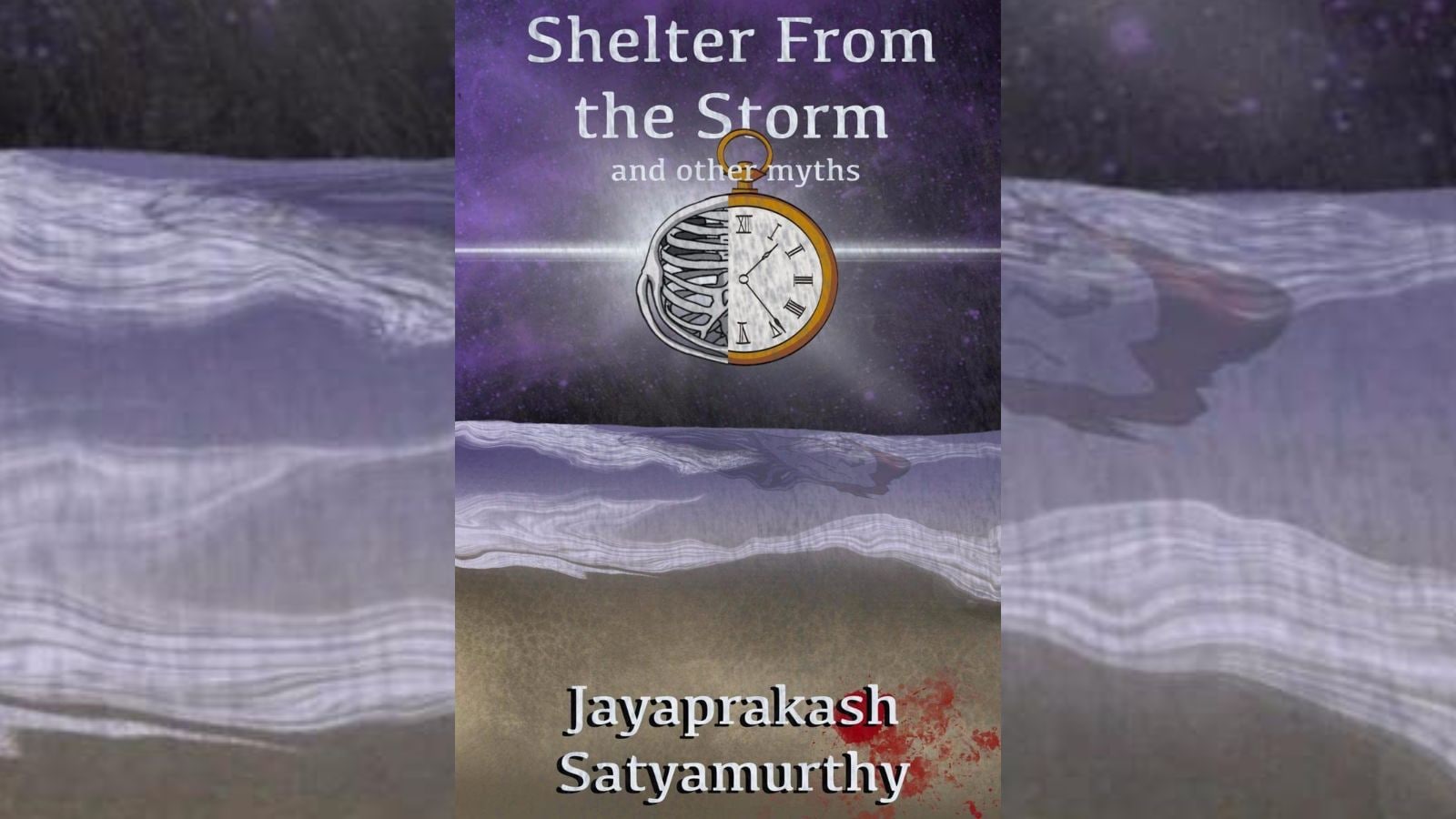
Bengaluru might not be stereotypically the first place to look to for horror literature – either as a setting for a ghost story, or as a place to find a target audience. But author and musician Jayaprakash Satyamurthy has done exactly that – in three separate collections of horror short stories — Shelter From The Storm (2023), Come Tomorrow: and other tales of Bangalore Terror (2020), and Weird Tales of a Bangalorean (2015).
A key marker of Satyamurthy’s writing is that his work does not at any point feel like the city is a mere window dressing for the story – it fits smoothly into the setting, in the way that one can only do while truly knowing the city.
“I’ve lived here since I was 12 or 13; my schooling, college, and entire adult life have been here. My stories are deeply based in the places I know and the bits of folklore that I’ve heard. The city is almost a character in the stories,” he told The Indian Express.
He added, “Horror is an interesting way to explore the layered aspects of life; past, present, and so on, coming into play. In a city like Bengaluru, you can see buildings from 100 years ago near new buildings towering up into the sky. Stories of the uncanny are a very natural way to explore that.”
Aside from the city itself, Satyamurthy counts M R James, the early 20th century British ghost story writer, as a major inspiration; as well as writer Peter Ackroyd – the former for his sense of hauntings from the past, the latter for his vision of past and present coming together in London.
On his writing habits, he says, “I try to do a bit of writing on something or the other every day, whether I have an ongoing story or not – it is good to stay in practice. You can’t just wait for inspiration to strike; you have to keep yourself in form, so to speak.”
Supernatural fiction and novel format
According to Satyamuthy, the format of short stories is something that is particularly central to the genre of horror. He said, “Horror or supernatural fiction can get very diluted in the novel format. Part of the appeal is a very vivid and memorable sense of place and certain incidents. Ambiguity is also important for good horror. When you have the length of a whole novel, it gets difficult to sustain that. You end up having to set up too much, it becomes less singular.”
Story continues below this ad
For all that, horror itself does not have a major footprint in Indian books. Satyamurthy opines that the major interest from the publishing side is more oriented towards bestsellers and the perception of what “literary” fiction is. He adds, “Until that changes, it is going to be just a few people here and there.”
By way of advice to new horror writers here, Satyamurthy says, “You should only write what you feel you have to write, what you would love to read. There is no money or glory in any of this – so don’t try to sell out, just be yourself.”