
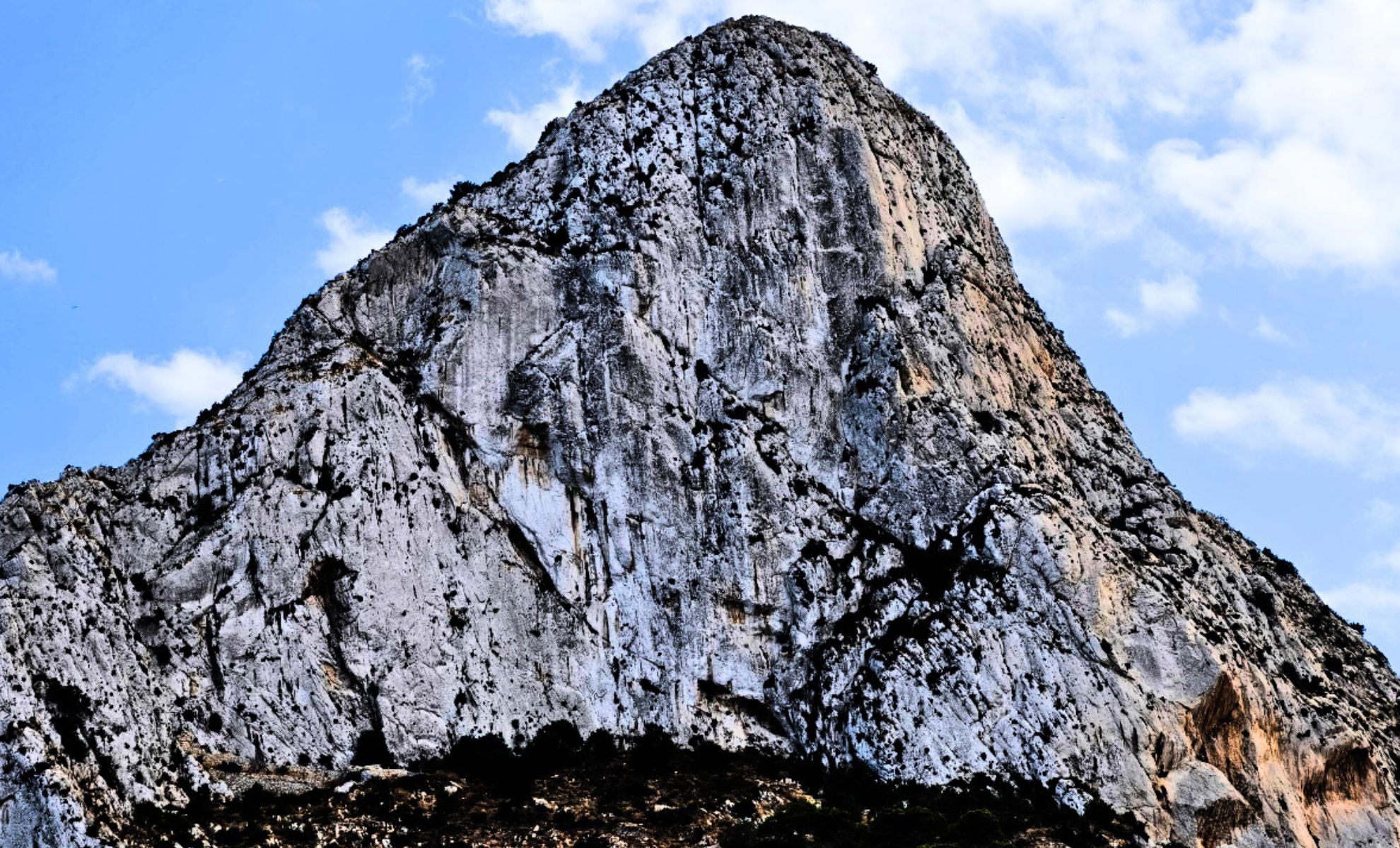
Across stretches of marble and limestone in some of the world’s driest landscapes, researchers have uncovered patterns that challenge accepted models of geological formation. At first glance, the stone appears typical of arid regions shaped by erosion and time.
Closer inspection reveals something unexpected: narrow, finely spaced channels arranged with striking consistency across exposed rock faces. These formations have now drawn attention from geologists and microbiologists studying ancient interactions between life and the solid Earth.
The tunnels, just visible under magnification, are not scattered randomly but appear to follow deliberate, recurring paths through rock that has remained untouched for millions of years. The implications are currently under review by experts in multiple disciplines.
Micro-Scale Tunnel Systems Identified in Carbonate Rock
The formations were first observed in Namibia’s desert marble outcrops more than a decade ago during fieldwork led by Professor Cees W. Passchier of Johannes Gutenberg University Mainz. Similar structures have since been found in limestone in Oman and black marble in Saudi Arabia, supporting the possibility of a widespread phenomenon.

In each case, researchers documented micro-tunnel bands measuring around 0.5 millimetres wide and up to 3 centimetres deep, arranged in parallel formations aligned vertically along rock fractures. These bands, sometimes extending ten metres or more, differ significantly from features typically caused by weathering or tectonic shifts.
The findings, detailed in the peer-reviewed Geomicrobiology Journal, show that the tunnels are filled with white calcium carbonate, chemically distinct from the host rock. Elemental analysis revealed significant depletion in iron, manganese, and rare earth elements, suggesting selective mineral processing not attributable to known geological mechanisms.
Isotopic and Chemical Data Indicate Biological Transformation
Researchers conducted multiple laboratory tests, including stable isotope ratio measurements, Raman spectroscopy, and electron microscopy, to better understand the tunnel composition and structure. The carbon and oxygen isotopic profiles within the tunnel infill differed measurably from surrounding material, which points to biochemical alteration.
Carbon-based compounds were identified within the tunnel linings using non-negative matrix factorisation Raman imaging, supporting the presence of degraded organic material. Additional elemental mapping revealed localised concentrations of phosphorus and sulphur, both key components in cellular structures such as membranes and proteins.

These signals suggest an active chemical process, possibly microbial, that altered the carbonate host rock at a microscopic level. Some tunnels also contained internal layering consistent with phased mineral deposition, a feature often associated with biological growth cycles.
The research team also documented these observations in a detailed university press statement, which confirmed the absence of DNA or protein remnants, likely due to the age of the structures and harsh desert conditions. Nonetheless, the combined isotopic, mineralogical, and structural data provide strong circumstantial support for a biological origin.
Organised Spatial Patterns Imply Colony-Level Behaviour
Beyond chemical signatures, the physical arrangement of the tunnels presents further clues. The formations avoid overlapping, maintain regular intervals, and often continue uninterrupted across folded or eroded rock layers. This spatial regulation suggests behavior more consistent with coordinated microbial activity than random mineral dissolution.

The study proposes that a colony of endolithic microorganisms—organisms that live within solid rock—may have advanced through the substrate by secreting organic acids that dissolved the host mineral. Waste material was then deposited behind, leaving behind the white carbonate infill now visible in fossil form.
Some of the tunnels contain growth ring structures, visible under magnification, which may reflect periodic changes in nutrient availability, temperature, or humidity during active phases of microbial movement. This aligns with known processes in modern chemotactic bacteria, which adjust their collective behaviour in response to environmental cues.
The study’s authors call this a possible example of “chemical intelligence,” a term used in microbiology to describe self-regulated, responsive activity in simple life forms. While not evidence of cognition, the concept reflects a level of spatial coordination rarely associated with fossil structures.
Potential Impact on Carbon Cycling and Subsurface Biospheres
Limestone and marble are two of the Earth’s most significant carbonate rock formations, storing large quantities of carbon in the form of CaCO₃. If microbial life once played a role in breaking down these rocks to access embedded nutrients, it could have contributed to natural CO₂ release in ways not previously included in long-term climate models.

The research suggests that even small-scale microbial erosion, if repeated across large surfaces over geological timescales, could represent a measurable factor in global carbon cycling. These findings align with recent studies highlighting biogeochemical feedback loops between microbial activity and carbon reservoirs in the lithosphere.
Because the tunnels are found in exposed desert regions, the potential for large-scale distribution exists. If similar structures are confirmed in other carbonate environments, they may require a revision of existing assumptions about abiotic vs. biotic weathering in geochemistry.
Geologists and microbiologists working in carbonate-rich zones are encouraged to re-examine archived rock samples. Field evidence, laboratory data, and specimens from the study are being curated and made available for analysis through JGU Mainz.