
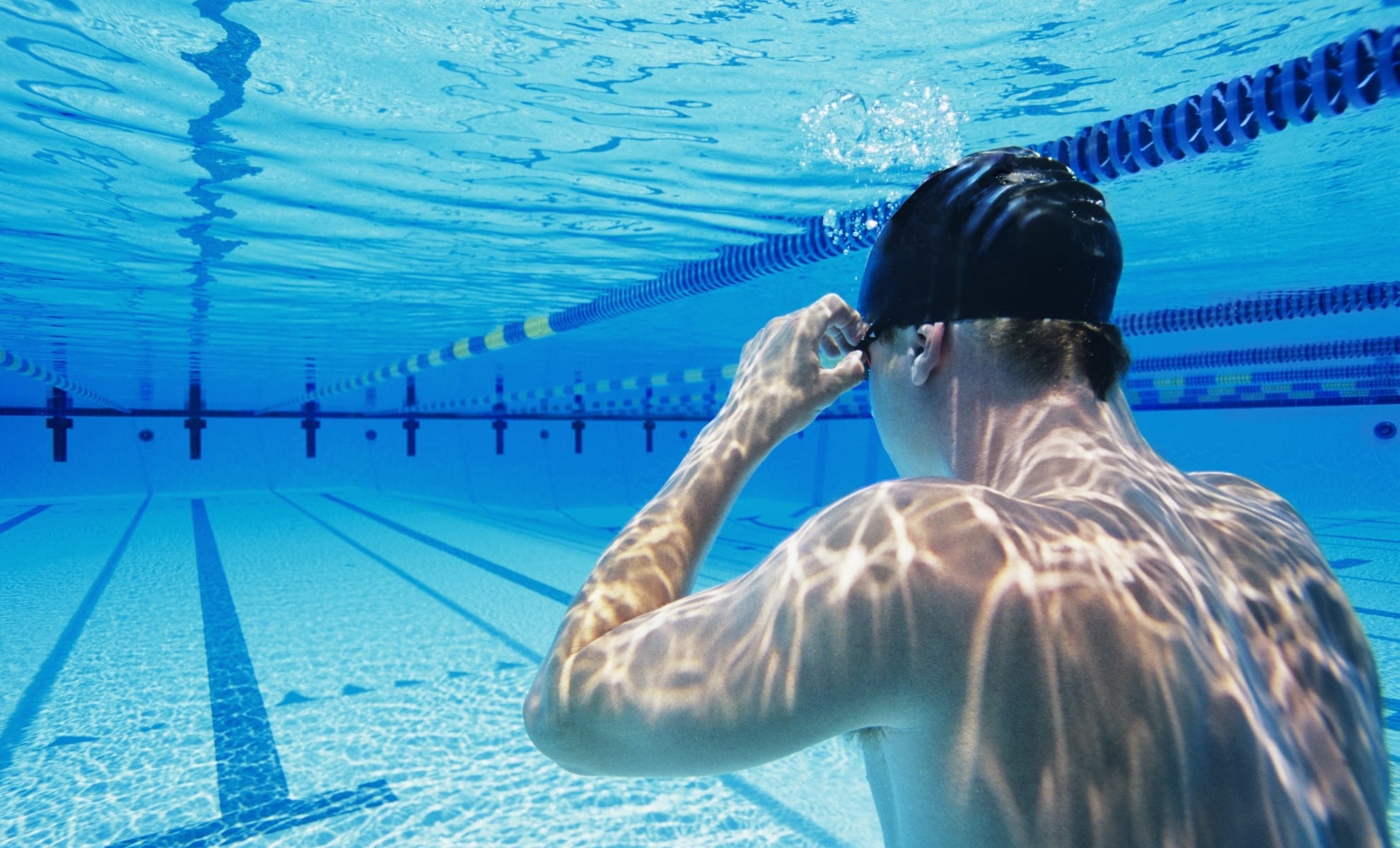
Croatian freediver Vitomir Maričić has set a new world record by holding his breath for 29 minutes and 3 seconds in a stunning oxygen-assisted attempt. The feat, which took place on June 14, 2025, in a hotel pool in Opatija, Croatia, shattered the previous record by nearly five full minutes and pushed the physiological limits of human endurance.
Maričić’s achievement wasn’t only a personal milestone, it also drew attention to the rarely spotlighted discipline of static apnea and highlighted the extreme physical and mental conditioning required to reach such depths. The attempt was conducted in front of a crowd of about 100 people and served a dual purpose: breaking a record and raising awareness for ocean conservation.
Back in March 2021, fellow Croatian freediver Budimir Šobat held the same record with a breath-hold of 24 minutes and 37 seconds. Like Maričić, he used pure oxygen before the attempt, a method that distinguishes these records from unaided ones. Maričić’s recent dive wasn’t just a modest improvement, it was a near-complete rewrite of what was previously thought possible.
Precision, Oxygen, and Control
The new world record is classified as oxygen-assisted, meaning Maričić breathed pure oxygen for several minutes before starting the breath-hold. In this case, he inhaled pure oxygen for 10 minutes before submerging himself in a three-meter-deep pool at Opatija’s Bristol Hotel. This pre-breathing process saturates the body with oxygen and delays the buildup of carbon dioxide, extending the amount of time a person can stay underwater without breathing.
According to Popular Mechanics, this shift in oxygen-carbon dioxide balance is what allows trained individuals to extend breath-holds far beyond the typical 30 to 90 seconds managed by untrained people. Without oxygen assistance, the longest confirmed breath-hold is a significantly shorter 11 minutes and 35 seconds.
Maričić is a member of the Adriatic Freediving group, and the attempt was witnessed by a local audience. Speaking after the record, he told Divernet that “after the 20-minute mark, everything became easier, at least mentally,” although the physical strain continued to increase. “It got worse and worse physically, especially for my diaphragm, because of the contractions. But mentally I knew I wasn’t going to give up,” he said.

The Biology Behind the Record
Breath-holding at this level isn’t just about lung capacity, it’s a complex interaction between biology, training, and mental focus. The human body is equipped with chemoreceptors in the brain and neck that monitor blood oxygen and carbon dioxide levels. As CO₂ rises during a breath-hold, the brain responds with an increasingly urgent signal to breathe.
These rising levels trigger involuntary diaphragm contractions, a phase that typically forces untrained individuals to abandon the attempt. In elite freedivers like Maričić, years of practice help override this autonomic reaction, extending the breath-hold into dangerous territory.
The physical sensations during a long breath-hold can become intense. Maričić described the contractions becoming more painful the longer he stayed submerged, a common experience at the upper limits of apnea. Yet, he maintained his composure, using focus and training to complete the nearly half-hour feat.
Matching Marine Mammals but Not All
According to ScienceAlert, Maričić’s record more than doubles the maximum breath-hold of bottlenose dolphins, known for their impressive underwater endurance. It also comes close to matching the harbor seal, a marine mammal that regularly dives for extended periods.
Still, humans are far from rivaling the top performers in the animal kingdom. The Cuvier’s beaked whale, for example, can remain submerged for over three hours without surfacing. That comparison puts even Maričić’s extreme feat into perspective it’s exceptional for a human, but still modest in the broader biological scale.
Despite these differences, the fact that a human can approach the capabilities of seals and outperform dolphins under controlled conditions remains remarkable. Maričić’s performance shows just how far training and science can push human physiology.
Beyond the numbers, Maričić approached the challenge as a statement. According to Divernet, he saw the attempt as “a personal challenge and a way to raise awareness for ocean conservation.” The record was not pursued simply for its own sake, but as a moment to bring attention to the health of the oceans.