
Contains spoilers for “Avatar: Fire and Ash”
Now that we’re all caught up on the “Avatar” films again, “Avatar: Fire and Ash” is a movie about your mom. It’s also about space magic, colonialism, and doing the exact same hour-long climax as the last movie. But mostly it’s about grief, and how your relationship with your mother can change everything for better or worse.
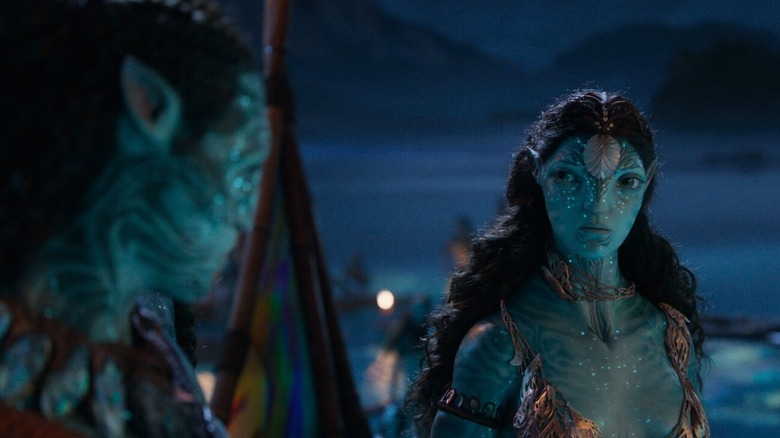
These core themes are present in nearly every storyline in the latest “Avatar,” but they come out extra vividly in the death scene of Ronal (Kate Winslet), queen of the Metkayina. As Pandora’s eclipse casts the massive battle between the Na’vi and Colonel Quaritch’s (Stephen Lang) human/Mangkwan alliance into darkness, Ronal pulls herself out of the depths of her watery home with a mortal wound and a baby demanding to be born. Fortunately, the wounded matriarch is found by Neytiri (Zoe Saldaña), who helps deliver the child just moments before Ronal passes away.
Ronal is the most central character to die in “Fire and Ash” (we all know Quaritch is still alive), so it’s appropriate that her death is also a moment that encapsulates the entire film. The core themes of grief, tragedy, motherhood, and rebirth are all packed into this single scene, where Ronal and Neytiri, who’ve never really gotten along, come together with a pure understanding between them.
Avatar: Fire and Ash is about grief and motherhood
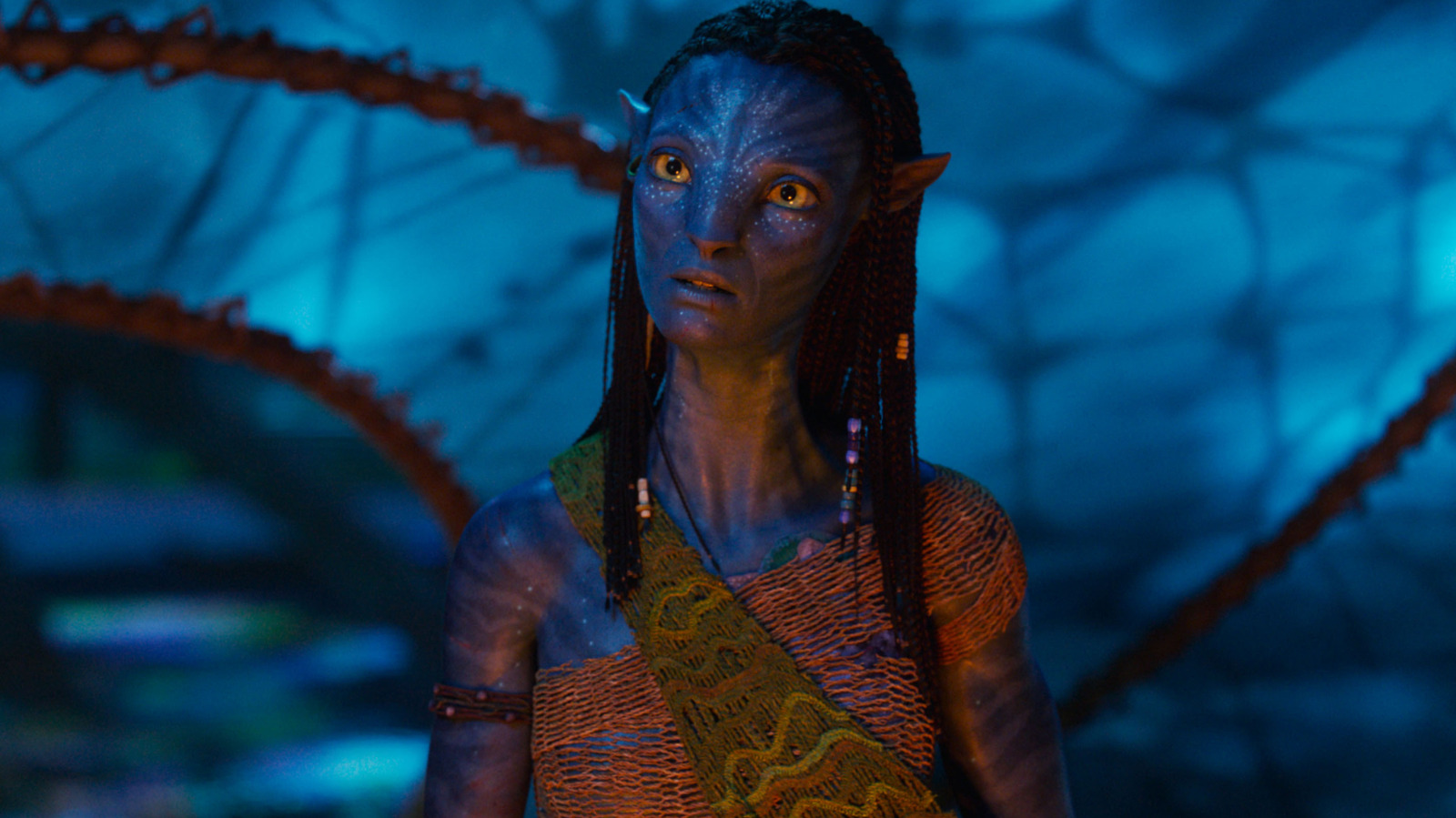
“Avatar: Fire and Ash” opens in a moment of mourning. The death of Neteyam (Jamie Flatters) at the end of “Avatar: The Way of Water” pervades every part of the first act, as his younger brother Lo’ak (Britain Dalton) narrates how every member of the family is grieving in different ways. Neytiri, he explains, prayers for Neteyam every day during the eclipse, “because the light always returns.” This symbol of darkness followed by light, death followed by birth, is the central image of “Fire and Ash,” and Neytiri, the mother of the family, carries a great share of the grief.
Her all-consuming rage at the death of her son is like a fire, mirrored by Varang (Oona Chaplin, who you may remember from “Game of Thrones”), leader of the Mangkwan clan, who live in the ashy shadow of an active volcano. Varang shows the endgame of desperation, having lost so much that she’s given up any moral ground and become the force of destruction herself. In Neytiri’s various face-offs with Varang, she sees the thing she might become if she lets her own grief consume her.
In the end, it’s Neytiri’s devotion as a mother that allows her to break free of her rage and begin the process of healing. When it’s revealed early on that Spider (Jack Champion) can breathe the air of Pandora mask-free, Neytiri considers killing him to prevent other humans from learning the secret. And yet, when Jake (Sam Worthington) considers the same grim plan later in the movie, Neytiri races to stop him. She has lost a son, as Spider has lost a mother, but there’s a renewal of hope and life in the family they share.
Eywa, Avatar, and calling your mom

Motherhood is everywhere in “Avatar: Fire and Ash.” Varang counts herself motherless, having denounced Eywa, while Neytiri, in her own mourning as a mother, tells Jake at the start of the movie that her own faith in Mother Eywa is the only thing keeping her sane. When Lo’ak’s Tulkun brother Payakan convinces the others of his clan to fight back against the humans, it’s the Matriarch — the mother of the whale-like community — who leads the charge. And of course, when the humans hunt the massive creatures, they target mothers and children, knowing that the adults will not abandon their slower young.
Is the emphasis on motherhood overbearing? Your mileage may vary. There have long been critiques of Neytiri’s character being portrayed as an accessory to Jake, and you could craft a similar case against motherhood being presented as a supreme, divine purpose. At the same time, Neytiri gets plenty of her own material in “Fire and Ash,” from wrestling with questions of faith to her pivotal role in the larger war.
Regardless, the film ends with little uncertainty: When you’re in trouble, call your mom. Kiri’s (Sigourney Weaver) pleas to Eywa, bolstered by her relationships with her family, end up turning the tide. At the same time, through the character of Varang, the film shows the devastation of realizing that your mother may have turned her back on you.