
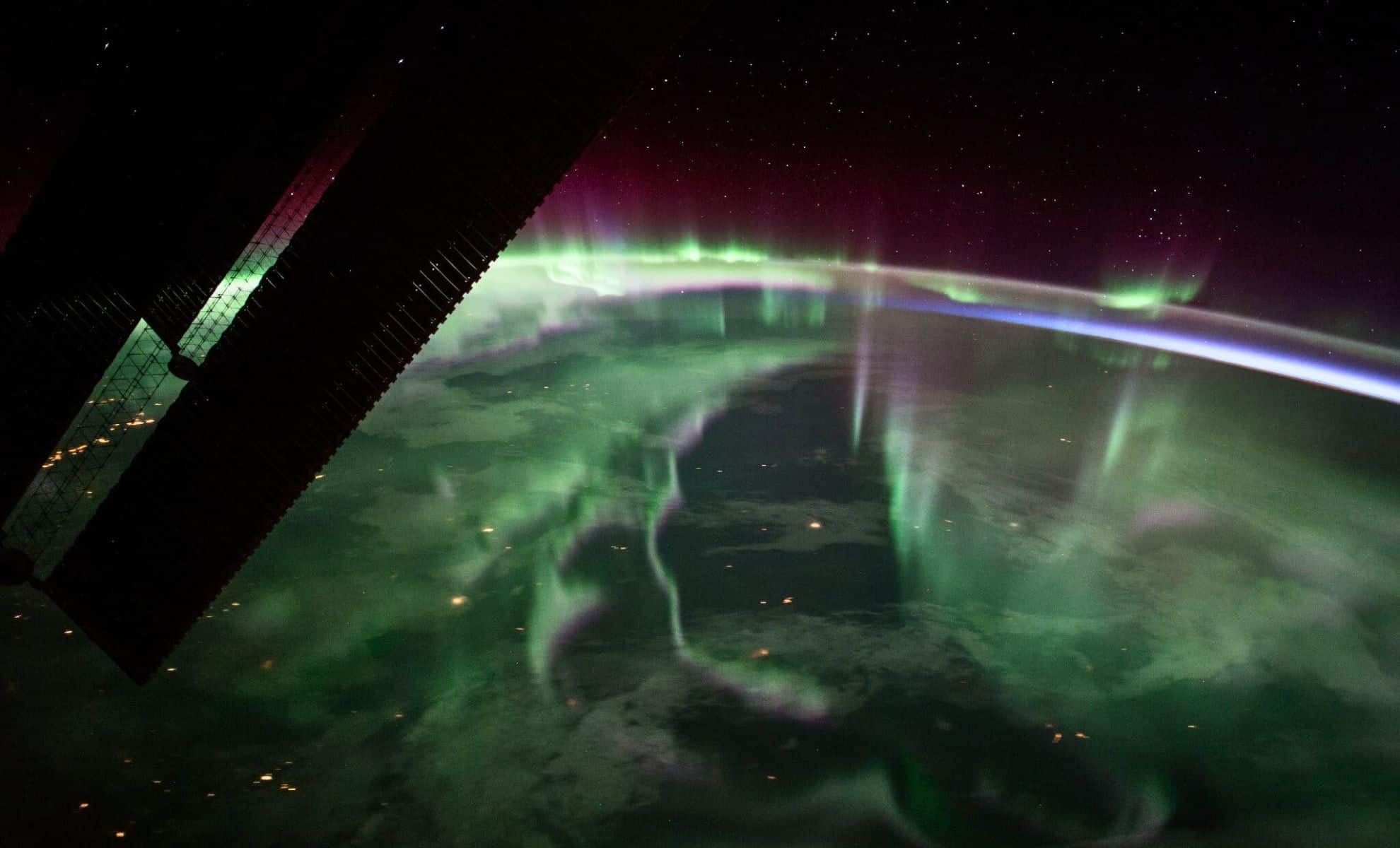
For over 190 years, Earth’s magnetic north pole has been migrating. Once situated in the high Canadian Arctic, it’s now edging ever closer to Siberia—a journey spanning more than 2,200 kilometers. It’s a shift that’s quietly redrawing how the world navigates everything from global flight paths to smartphone compasses.
This month, scientists at the National Centers for Environmental Information (NOAA) and the British Geological Survey (BGS) released the latest edition of the World Magnetic Model, the global benchmark for monitoring shifts in Earth’s magnetic field. The 2025 update reveals a new official position for the magnetic pole and confirms that although its pace has slowed slightly, its long-term drift continues toward Russia.
The data is vital. From military systems and undersea navigation to GPS, civil aviation, and digital mapping, countless technologies rely on an accurate model of Earth’s magnetic field. Without regular updates, even a few degrees of error could cause significant problems in high-precision environments like Arctic airspace or submarine routes.
A Restless Magnetic Pole Nearing Russia
Magnetic north has always been different from geographic north. Instead of being a fixed point, it’s defined by the dynamic flow of molten iron in Earth’s outer core. This movement generates electric currents that produce the planet’s magnetic field, which is in constant flux.
Since the 1990s, the magnetic pole has been accelerating, moving as fast as 60 kilometers per year across the Arctic. In recent years, its speed has decreased slightly to around 35 kilometers per year—still fast compared to historical norms.
The new pole position places it closer to northern Russia than to Canada, marking a major geographic milestone. This eastward shift has moved the pole across international lines, pulling it into a region that hasn’t hosted magnetic north in modern recorded history.

The shift is driven by internal geodynamic processes, but what’s surprising researchers is the rate of change. The WMM2025 release notes that this is the largest deceleration in pole speed ever measured, prompting increased scientific scrutiny of Earth’s interior.
Navigation Technology Depends on Magnetic Accuracy
The magnetic field may be invisible, but it plays a visible role in daily life. Every commercial flight, naval vessel, satellite, and smartphone navigation system depends on it. The World Magnetic Model serves as a digital compass used by defense agencies, civil aviation authorities, and GPS-based tools.
To support this ecosystem, NOAA and BGS also released a high-resolution version of the model—WMMHR2025—offering much greater spatial detail. It improves resolution from 3,300 kilometers to just 300 kilometers at the equator, allowing for more precise geomagnetic navigation.
With magnetic north continuing to move, declination—the difference between magnetic and true north—changes as well. If uncorrected, this can lead to navigational errors. Aircraft and shipping systems must recalibrate frequently to avoid drift, especially near polar regions where magnetic interference is strongest.

The new model also updates the location of magnetic blackout zones, areas near the poles where compass readings become unreliable. These shifts affect polar aviation routes and Arctic science expeditions that rely on magnetically guided tools.
The model is actively used by NATO, the U.S. Department of Defense, and the UK Ministry of Defence, along with organizations like the International Hydrographic Organization and smartphone manufacturers who embed magnetic corrections in mapping apps.
No Reversal, but Constant Change
Earth’s magnetic field isn’t just moving—it’s evolving. Changes in strength and direction occur over time due to core dynamics, solar activity, and other factors. These variations are why the model is updated every five years, or sooner if movement accelerates.
Despite the pole’s speed and trajectory, experts say there’s no sign of an imminent geomagnetic reversal, where Earth’s magnetic poles flip. These rare events, which have occurred roughly every several hundred thousand years, are not forecasted based on current trends. Still, the irregular behavior of the magnetic field continues to be closely monitored by researchers around the world.
The WMM2025 will remain valid until the end of 2029, assuming no major unexpected shifts. Yet scientists acknowledge that Earth’s magnetism remains difficult to forecast long term. Its movements are shaped by deep processes nearly 3,000 kilometers below the surface—far beyond the reach of direct observation.