
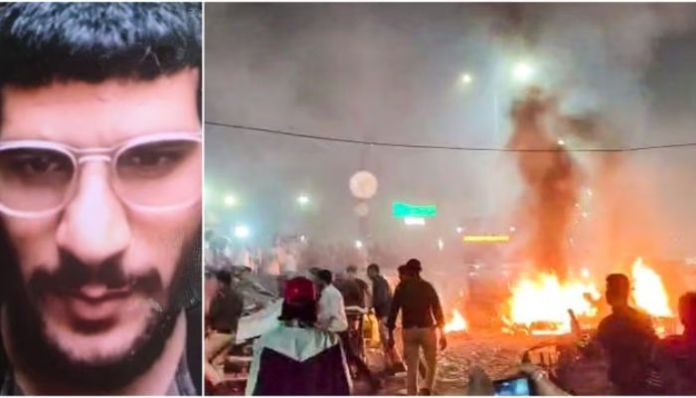
A DNA test has now confirmed that the man behind the deadly explosion near Delhi’s Red Fort was Dr Umar Un Nabi, a doctor from Kashmir. His body was so badly damaged in the blast that the police couldn’t identify him at first. It was only after matching DNA samples from his family in Kashmir’s Pulwama district with body parts found at the scene that investigators were sure Dr Umar was the bomber.
The explosion happened on Monday (10th November) and tore through a crowded street close to the Red Fort, killing at least 13 people and injuring nearly 2 dozen. The blast was so strong that it destroyed nearby shops and caused chaos in one of the busiest parts of Old Delhi.
DNA confirms the identity of the bomber
Police had suspected Dr Umar from the start, especially since they discovered that he had bought the white Hyundai i20 car used in the attack just 11 days earlier. The car became a key piece of evidence. After the explosion, investigators found remains inside it and took DNA samples from Dr Umar’s family to confirm his identity.
They say Dr Umar had disappeared the day after police raided a warehouse in Faridabad and found nearly 2,900 kg of ammonium nitrate, a chemical used for making explosives. Dr Umar had also turned off all five of his mobile phones and had stopped showing up at work since 30th October, which made officials even more suspicious.
The secret terror module of doctors
As police dug deeper, they discovered that Dr Umar was part of a larger group linked to the banned terrorist group Jaish-e-Mohammed (JeM). This group reportedly had nine to ten members, including about five or six other doctors.
These highly educated people used their professional positions to quietly collect chemicals and materials needed to build bombs. The police say they operated between Faridabad, Lucknow, and parts of South Kashmir. Their medical expertise made it easier for them to get chemicals without raising suspicion from suppliers or authorities.
Doctor and fake IDs in the terror network
Dr Umar and several members of his group relied on fake identities. For example, police seized a red Ford EcoSport, registered under Dr Umar’s name, in Faridabad. But the Home Ministry later confirmed that the Delhi address listed was fake. Besides Dr Umar, other doctors, including Dr Muzammil Ahmad Ganai and Ajamul Ahmed Malik, were also arrested.
Police also arrested Dr Shaheen Shahid, a former lecturer from Faridabad’s Al Falah University, who they say was a member of the new women’s wing of Jaish-e-Mohammed for the first time in India. This new group, called Jamaat-ul-Mominat, aimed to recruit women for the outfit’s operations.
From a quiet doctor to a terrorist
People in Dr Umar’s hometown of Koil village in Pulwama described him as a quiet and introverted person who mostly kept to himself, spending hours reading and rarely talking to others. But police say that in the months before the attack, Dr Umar started behaving differently.
He began making frequent trips between Faridabad and Delhi, especially visiting mosques near Ramleela Maidan and Sunehri Masjid. On the day of the blast, CCTV cameras caught him parking near a mosque around 3 pm, staying there for about three hours before driving toward the Red Fort, where the explosion happened.
International links and radical plans
The investigation also found that Dr Umar and Dr Muzammil Ahmad Ganai had travelled to Turkey. Officials believe their handlers, who guided and supported them, are based there. The two doctors had gone to Turkey soon after joining secret Telegram messaging groups, where radical content was shared.
According to officials, their handlers from JeM instructed them to spread out across different cities in India to carry out attacks. Investigators even discovered that they had originally planned to attack crowded places during the Diwali festival similar to the 2008 Mumbai terror strikes, PTI reported.
Police say the whole network, which became known as the “doctors’ module,” was radicalised online by handlers in Pakistan. The aim was to organise attacks similar to the 2008 Mumbai terror attacks, which caused massive loss of life and damage. Telegram groups reportedly run by JeM members played a key role in this radicalisation process and helped with planning and logistics.