
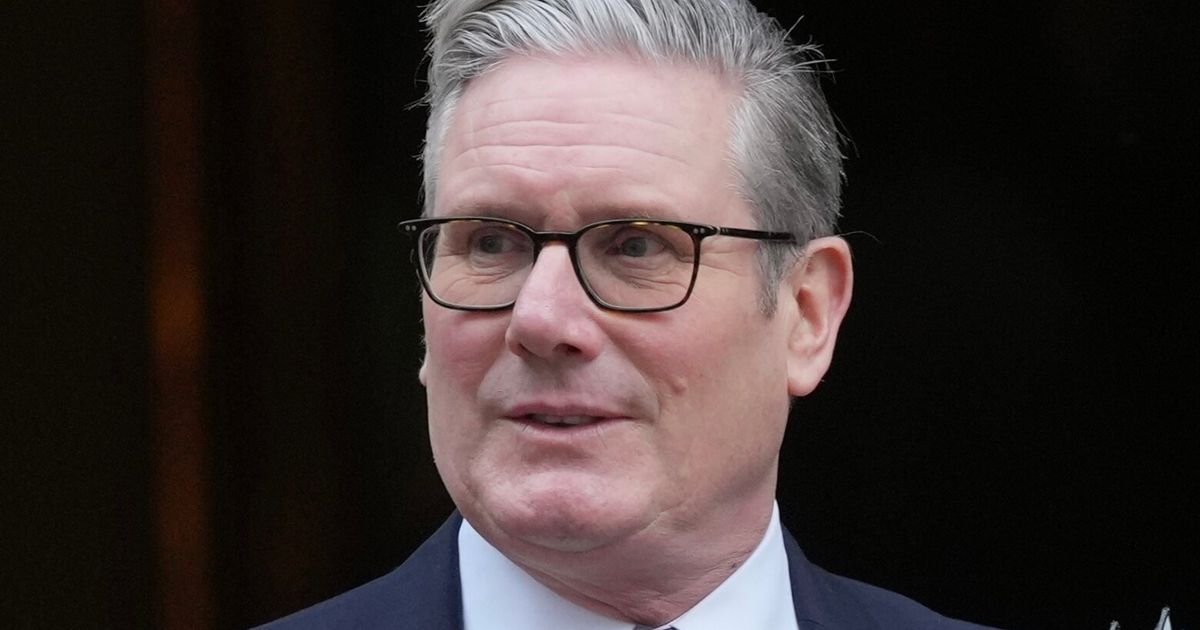
LONDON — The 61-second video of Prime Minister Keir Starmer of Britain would be shocking, if it were true.
“The United Kingdom is set to introduce a nationwide curfew, beginning at 11 p.m. each night,” he appears to say on one of thousands of TikTok videos of him posted in the past six months. “Under this new rule, no one will be permitted to leave their home after 11 p.m. without official authorization.”
Starmer never made any such policy or announcement. But thanks to rapidly advancing artificial intelligence technology, the prime minister in the short video sounded eerily like the real one, with his nasal lilt. The fake video attracted more than 430,000 views and inspired similar posts on the social platform X and Facebook.
That video, and other similar ones, appears to have been taken down by the Chinese-owned social media company, which officially prohibits “fake authoritative sources or crisis events, or falsely shows public figures in certain contexts.”
But the clip was just one of 6,042 such videos, most featuring Starmer, identified by NewsGuard, a company that tracks online misinformation, between May and December. In a recent report, the company said the videos were posted by accounts with names of fake, British-sounding news organizations like “BBB UK News” and “Daily Britain News.” Together, the accounts had more than 1 million followers when the report was issued.
“It consistently emulates Starmer,” said Eva Maitland, the senior analyst for Russian influence at NewsGuard. “It produces false or baseless claims that look bad for the Starmer government, and they’re kind of created to create a strong response from people so that they’ll click on it.”
Maitland said the videos do not appear to be part of a coordinated effort by foreign adversaries like Russia or the prime minister’s domestic political opponents to damage him in the eyes of voters. Rather, she said, they are likely being created by content producers whose primary goal is to make money by making videos that go viral.
“That’s partly due to the kind of lower quality of content, the kind of the scale at which they pump it out,” she said, adding that the videos were “kind of spammy, clickbait type content, with a lack of any clear political motivation.”
On the TikTok platform, creators are paid once their accounts gain a certain threshold of followers and a video exceeds a certain number of views. That can encourage them to produce an enormous number of explosive videos in the hopes that some will catch on and be widely shared.
TikTok does not reveal exactly how much money each video generates. But the curfew video alone could have generated as much $3,500 for its maker, said Philip N. Howard, a professor at the University of Oxford and president of the International Panel on the Information Environment.
“If there’s no link to a particular issue that People’s Republic of China cares about or the Russian government cares about, then it often is just about making a little money,” he said.
The widespread adoption of easy-to-use AI video generation tools, like OpenAI’s Sora, has dramatically increased the number of fake videos on TikTok and other social media platforms.
Starmer’s office didn’t reply to requests for comment.
It is not clear how many people in Britain have viewed the videos. Maitland said that NewsGuard is not able to identify where someone is when they click on a TikTok video, largely because the company does not share that data.
But the fake videos come at a particularly difficult time for the prime minister, who is already suffering from very low polling numbers. In some surveys, Starmer has the lowest approval ratings of any British leader since the surveys were first conducted.
In addition to the video claiming to show Starmer announce a nationwide curfew, other clips seized on equally dramatic — and equally false — claims that could upset British voters.
In one video, the prime minister seems to announce new driver’s license laws that could strip many British people of their ability to drive legally in the country. The headline reads: “Breaking: DVLA’s Shocking New Rules Could Cancel Your License Overnight.”
Another video has Starmer’s faked voice declaring that new rules will allow authorities to access any British person’s phone, along with its private data.
In the immediate days after NewsGuard published its report Dec. 9, many of the videos of Starmer remained available on TikTok. By Dec. 19, most appeared to have been removed from the platform.
But Howard said the use of artificial intelligence in politics is increasing rapidly, especially as a way for political consultants and campaign managers to test out how issues will play with the public.
“These are how bad actors learn,” he said.
Howard’s organization, which is based in Switzerland and researches AI bias and disinformation, recently issued a study indicating that similar political content had spread across the globe.
“We know it’s internationally pervasive now,” he said. “Four of every five elections around the world now have AI-generated political junk that is unattributed and clearly misleading.”