
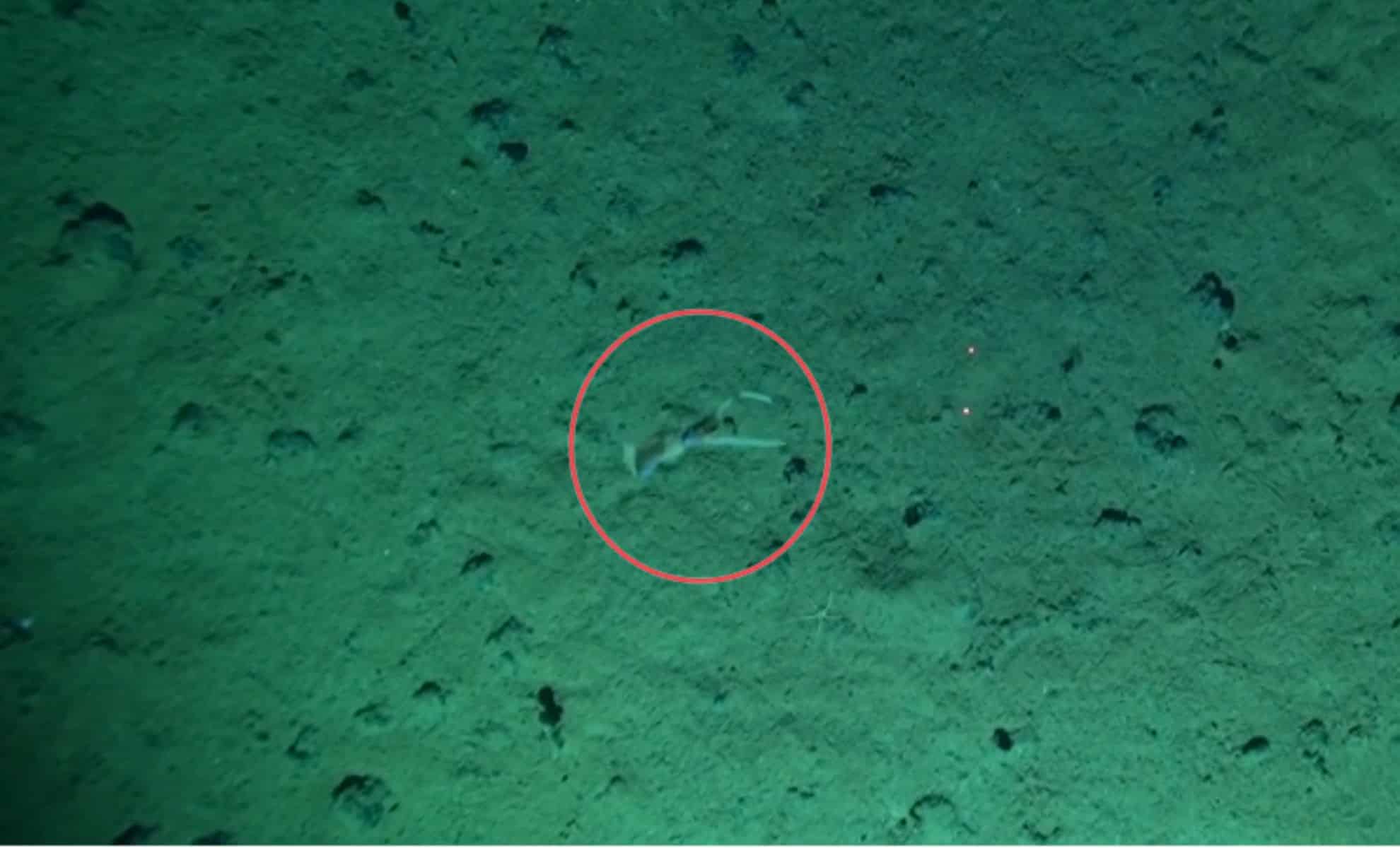
The discovery took place during a survey of the Clarion-Clipperton Zone, an area of the Pacific seafloor that has been targeted for deep-sea mining. Researchers from the National Oceanography Center in Britain were using remote cameras to study the biodiversity of the abyss. They stumbled upon a squid, which they suspect might belong to the whiplash species, known for its long, sticky tentacles. The behavior, however, was something entirely new to science.
A Squid Like No Other
At a depth of about 13,500 feet, the squid appeared motionless,buried upside down in the seafloor. When researchers rewound the footage, they realized the squid’s tentacles had been extended upwards, almost as though it were mimicking a sea sponge or coral stalk, blending into its surroundings. This remarkable behavior hadn’t been observed in other squids, making it a groundbreaking discovery in deep-sea research, according to Alejandra Mejía-Saenz, the lead researcher of the study published in the journal Ecology.
The researchers speculated that the squid could have been imitating other life forms in the abyss, a tactic often used by deep-sea animals to survive. By camouflaging itself, the squid may have been hiding from predators such as beaked whales, or it could have been attempting to lure prey by mimicking non-threatening organisms. Such behavior is crucial for creatures living in the abyss, where food is scarce, and survival often depends on clever adaptations.

The Role of Camouflage and Mimicry
In the depths of the ocean, survival tactics are key. Researchers believe that the squid’s strange behavior, posing as something harmless or even enticing to prey, could be an example of “masquerade.” This form of mimicry is common in shallow waters, with creatures like the mimic octopus using their body shape to impersonate other animals. However, this behavior had not been documented for deep-sea squids before.
According to the study, other cephalopods in the region have also shown the ability to mimic other organisms. For example, some young squid use their long tail to resemble siphonophores, a colony of stinging organisms. This discovery of a squid mimicking biogenic stalks could be a novel form of adaptive behavior. Mike Vecchione, a retired curator of cephalopods at the U.S. National Museum of Natural History, suggested that this mimicry may help the squid avoid detection by predators or assist in its hunting strategy.
The Impact of Human Activity on the Abyss
While the unusual behavior of the squid is remarkable, it is also a reminder of the growing threats facing the deep-sea ecosystem. The region where the squid was discovered, known as the Clarion-Clipperton Zone, is under scrutiny for seabed mining. These polymetallic nodules, which the squid may have been hiding among, are rich in nickel, copper, and cobalt and have been identified as critical resources for technology manufacturing.
The discovery of the squid’s unique behavior adds urgency to the need for conservation efforts in the abyss. As human activities like mining and climate change continue to threaten these remote ecosystems, researchers are racing to understand how such life forms adapt to the harsh environment. The squid’s ability to mimic its surroundings could be a sign of the incredible, untapped complexity of life on the ocean floor, which remains largely unexplored. The unusual behavior of the squid is a rare glimpse into the unknown world of the abyss, reminding us how much there is still to learn about the deep-sea creatures that inhabit it.