
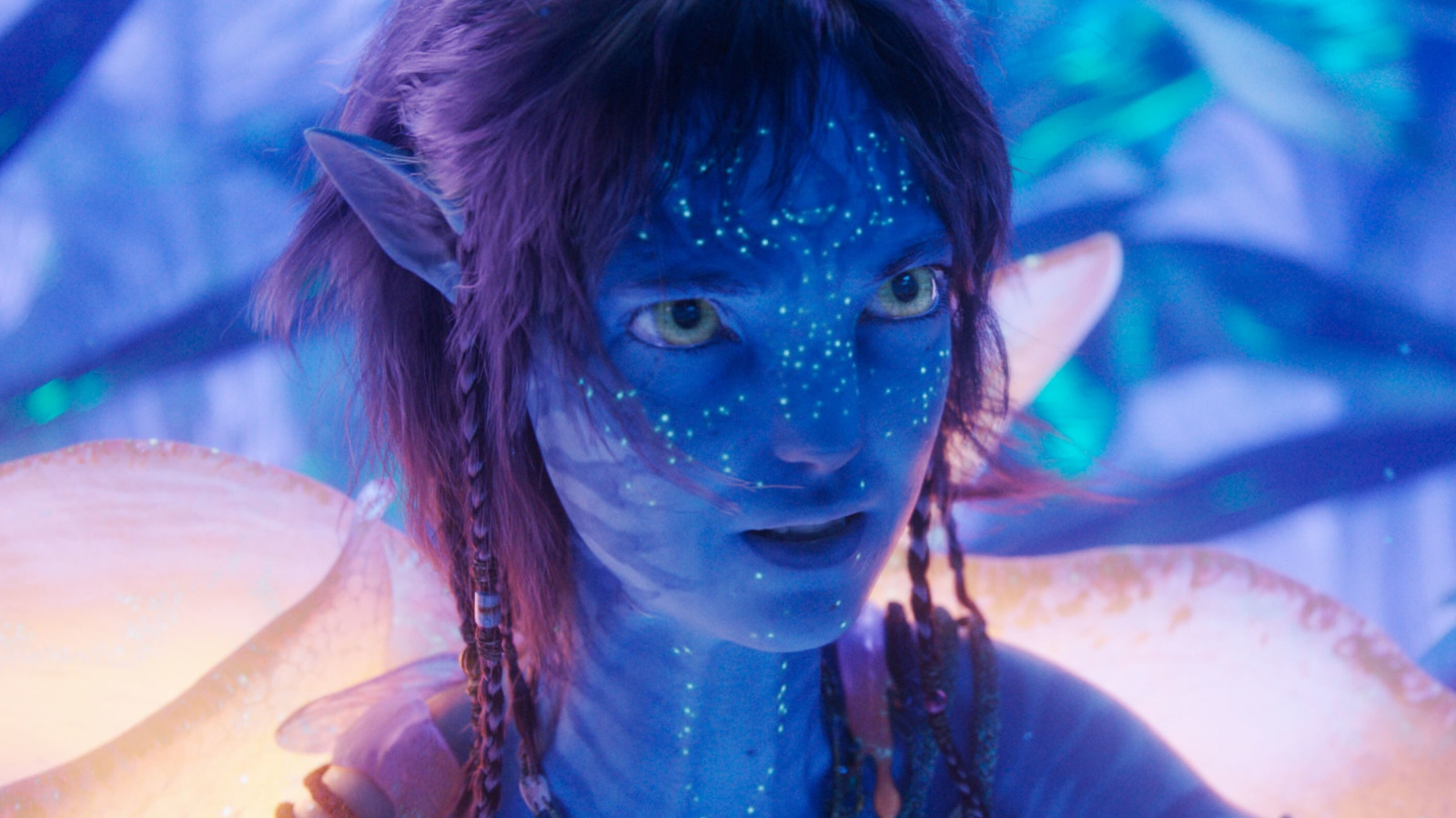
RATING : 3 / 10
- There is a memorably fun villain, and a few moments of inspired weirdness …
- But those are few and far between in a movie that feels indistinguishable from the last two
- Cultural appropriation accusations are more valid than ever
- The action sequences look like a TV with motion smoothing on
The “Avatar” franchise is defined by its contradictions. The first two films are in the top five highest grossing in history; neither lingered in the cultural conversation for long once they had left theaters. They are anti-war blockbusters that aim to spread a broad, peaceful message against prejudice, made by a die-hard vegan pacifist; each one has faced accusations of cultural appropriation, if not outright racism. But most importantly, they are downright weird, with “Avatar: The Way of Water” reintroducing Sigourney Weaver as a teenage girl, on top of a tragic arc revolving around a heartbroken orphaned whale; these films are somehow never interesting despite their many eccentricities.
After the sequel ended with a destructive aquatic action sequence that was James Cameron doing a diminished-returns retread of “Titanic,” it doesn’t take long for the three-quel to announce itself as a carbon copy of a movie already coasting on former glories. This might be the other major contradiction; “Avatar: Fire and Ash” is one of the most expensive movies of all time, where every scene looks like it cost five times more than it actually did, and yet the sheer visual spectacle looks indistinguishable from either of the movies that came before it. Cameron has spent the press tour waxing lyrical about how no generative AI was used in the production of these films — it’d certainly look cheaper, but on a pure storytelling and worldbuilding level, it’s hard to think of much that would be different if it were created by simply adding the first two films into Chat GPT as a prompt.
No life left in this Avatar
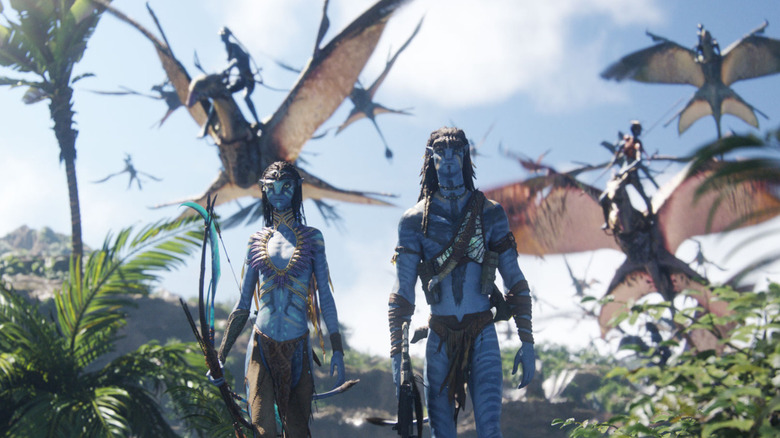
Picking up a few weeks after “Avatar: The Way of Water,” Jake Sully (Sam Worthington), Neytiri (Zoe Saldaña), and their family are still reeling from the death of son Neteyam (Jamie Flatters), with tensions particularly high around adopted human son Spider (Jack Champion) considering the death and destruction caused by his biological father, the military colonizer Miles Quaritch (Stephen Lang). It’s agreed that he should depart the family to live with the “Wind Traders,” a clan who lives in the skies, but on their journey with Spider before saying their final goodbyes, they’re attacked by the Ash People, led by the ruthless Na’vi Varang (Oona Chaplin). Outcast from other Na’vi clans with many unresolved grudges, tensions on Pandora flare back up — and that’s before Varang enters a very unlikely alliance with Quaritch to help him capture Jake once and for all.
Storytelling isn’t the strong point of the “Avatar” franchise, with the continued success attributed almost entirely to the groundbreaking visual spectacle, but “Avatar: Fire and Ash” continues the trend of these sequels feeling like James Cameron and his team of writers are just making it up as they go along. The first film was a sensation because of a simple good vs evil plot, reimagining “Dances With Wolves” for the age of environmental activism. “The Way of Water” subsequently got lost in the weeds of its own lore, with the myriad convolutions of the worldbuilding making another seemingly simple story of good vs evil near incomprehensible, and “Fire and Ash” only doubles down on that particular brand of nonsense.
After a near death experience after the Ash People attack, Spider is brought back to life via a voodoo spell that makes him able to breathe the air of Pandora unaided, and even grow a Queue, the hair appendage the Na’vi have on the back of their necks (yes, I had to look up what that was called). It’s admirably weird in the moment, but is one of several moments where no deeper thought has been given to the implications this means for the wider world — it feels like something Cameron thought was cool and nothing more, a cute idea his laziness never gave him a reason to justify including. Are we surprised that he never originally envisioned “Avatar” as a franchise, when so little thought has been put into the finer details?
Like an old fashioned Western (not in a good way)
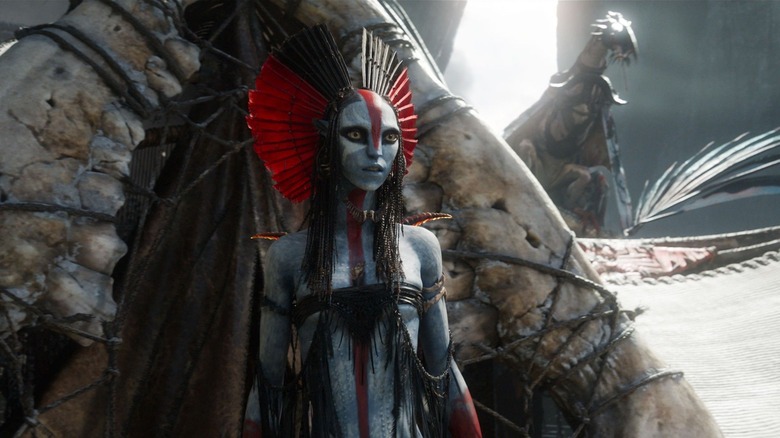
The first “Avatar” drew criticism for cultural appropriation due to lifting heavily from the Western genre, with the Na’vi seen as stand-ins for Indigenous communities terrorized by settlers. “Avatar: Fire and Ash” is the first time it feels like those very conscious analogues have become horribly misguided, with the portrayal of the Ash People — described openly as “savages” — lifted directly from the most racist depictions of Native Americans in classic Westerns. Oona Chaplin’s Varang is the most captivating new character in a world where everybody has the charisma of cardboard, but the tribe she leads and the ruthlessness with which she attacks anybody in her way isn’t a subversion of an outdated trope so much as a modern update, smothered in blue paint so it won’t leave a sour taste in quite as many mouths. Her flirtatious, surprisingly kinky relationship with Quaritch is the movie’s most daring aspect, but having a genocidal American military man teaming up with a racist stereotype of an Indigenous person from an age-old Western (where they were routinely portrayed as the genocidal ones) is not the subversive trope anybody involved with this project likely thinks it is.
The armies of visual effects teams at James Cameron’s disposal struggle to hide the fact he’s now on autopilot, expanding the world of Pandora without offering anything that feels particularly fresh. Even the set pieces failed to arouse much excitement; my screening was in IMAX 3D in the higher frame rate, and every battle, flight, or fast camera movement looked like a TV with the motion smoothing left on. This is Cameron’s personal preference for how you should see the movie — his obsession with technological innovation has gotten in the way of caring about how this looks to spectators. And none of this would matter if the drama was at all involving, but no advances in 3D technology can make these characters three-dimensional. The two villains are the most colorful characters, but even Quaritch is yet to grow into a more complex character three movies in; no character develops beyond the one note they were introduced on.
“Aliens” and “T2″ Judgement Day” rightfully earned Cameron a reputation as the King of Sequels, able to flip a familiar formula on its head while increasing the stakes. “Fire and Ash” is the same movie for a third time in a row, only longer and duller in ways even casual audiences will begin to see through.
“Avatar: Fire and Ash” premieres in theaters on December 19.