
New DelhiDecember 20, 2025 08:30 PM IST
First published on: Dec 20, 2025 at 08:30 PM IST
A couple of days after Parliament passed the new rural job guarantee law, VB-G RAM G Bill, to replace MGNREGA, Congress Parliamentary Party (CPP) chairperson Sonia Gandhi on Saturday said the UPA-era law was bulldozed in Parliament and that she was ready to “counter this attack”.
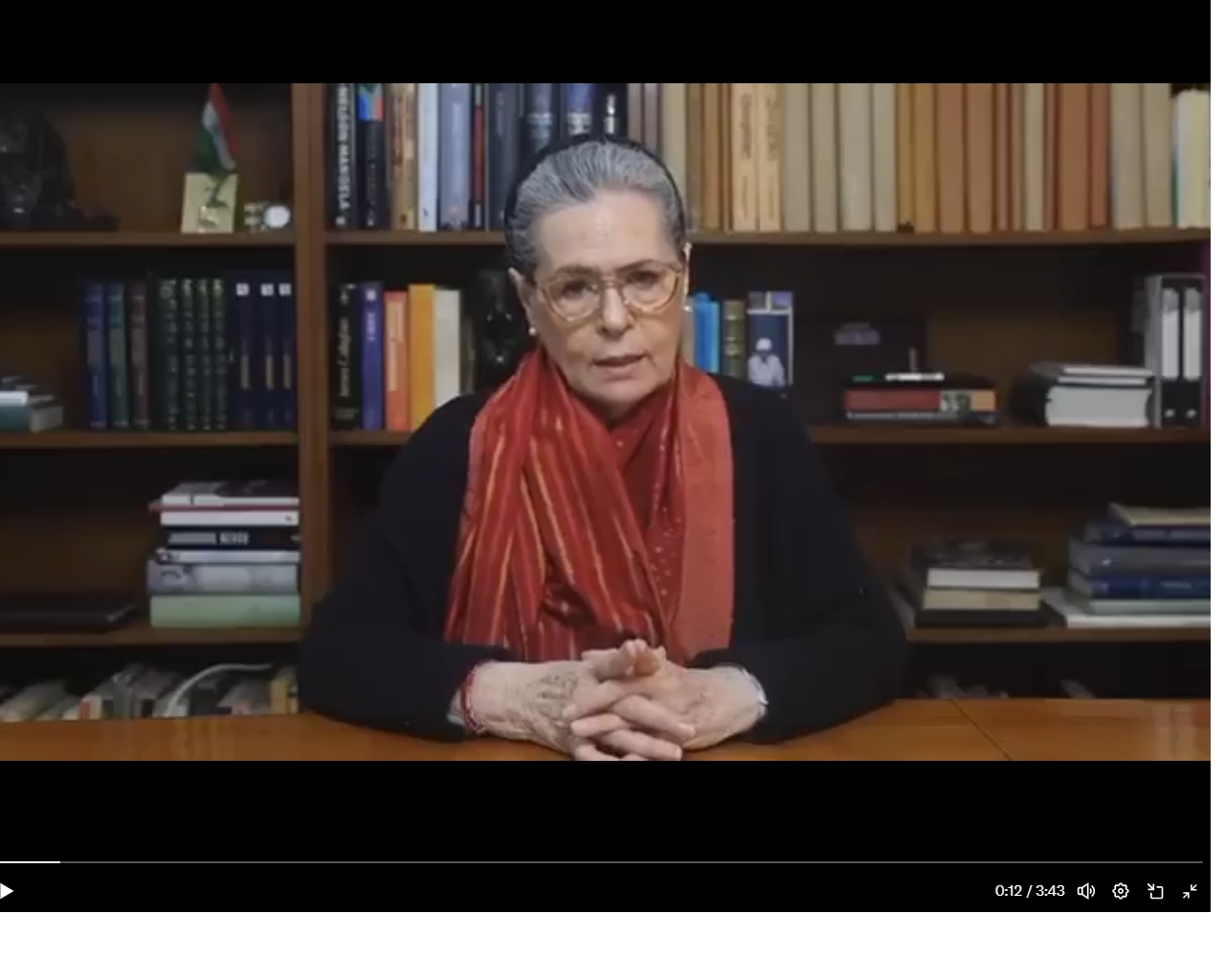
In a video statement, Gandhi said that in the last 11 years, the BJP-led government at the Centre made every effort to weaken MGNREGA by ignoring the interests of the unemployed, the poor, and deprived people.

“Through MGNREGA, a concrete step was taken towards realising the dream of an India based on Mahatma Gandhi’s vision of Gram Swaraj … But it is a matter of great regret that just recently, the government ran a bulldozer over MGNREGA. Not only was Mahatma Gandhi’s name removed, but the form and structure of MGNREGA was changed arbitrarily without any deliberation, without consulting anyone, without taking the opposition into confidence,” said the Congress leader.
Under the new law, decisions regarding “who will get employment, how much, where and in what manner, will be taken by the government in Delhi — away from the ground reality”, Gandhi said, adding that Congress had made a major contribution in bringing and implementing MNREGA, but it was never a party issue.
“This was a scheme that served the national and public interest. By weakening this law, the Modi government has attacked the interests of millions of farmers, labourers, and landless rural poor,” said Gandhi.
“We are all ready to counter this attack. Twenty years ago, I fought to secure employment rights for my poor brothers and sisters. Today, I remain committed to fighting against this draconian law. All Congress leaders like me and lakhs of workers stand with you,” said the CPP chief, pointing out that MGNREGA had proved to be a “lifeline for the poor” during the Covid-19 pandemic.
The Bill increases the number of days of guaranteed employment from 100 to 125, but changes the funding pattern that places a bigger burden on the states. Under MGNREGA, the Centre entirely funded wages and three-fourths of the material costs, with states providing one-third of the material costs, administrative costs, unemployment allowance, and compensation. Under the new law, the Centre will provide 60% of all the costs and the states 40%. Under VB-G RAM G, the Centre will also decide state-wise normative allocation each financial year and states will bear any excessive expenditure over and above this.
Though the Congress still intends to keep up the pressure on the BJP government over the Special Intensive Revision (SIR) of electoral rolls and allegations of “vote chori (theft)”, the Bihar election results showed they did not yield the expected political returns. In such a scenario, shifting its focus to attacking the Narendra Modi government over the revamp of the rural job guarantee scheme makes political sense for the Congress. One, it is an issue several other Opposition parties are also likely to support, especially since the new law shifts the financial burden to states. The Trinamool Congress (TMC), which has had its differences with the Congress over the years despite both being in the INDIA bloc of Opposition parties, has renamed the West Bengal government’s Karmashree programme — under which it claims to provide up to 75 days of work to beneficiaries — after Mahatma Gandhi.
Second, the Congress believes that the BJP government may be more vulnerable to a well-articulated critique on a core livelihood issue and that a campaign on rural livelihoods and income, which have previously been the BJP’s talking points, has a bigger chance of striking a chord with people.
The Congress has already started work on chalking out a plan to hold nationwide protests against the VB-G RAM G Bills, announcing a meeting of its highest decision-making body — the Congress Working Committee — on December 27. Sonia Gandhi’s strong remarks signal the party’s intent to nullify the BJP’s attempts to take away one of its marquee achievements, something which helped it earn goodwill in rural India.