

For decades, the construction of Egypt’s pyramids has remained one of archaeology’s most enduring enigmas. From long ramps to large labor forces, prevailing theories have leaned heavily on physical manpower and basic tools. But a new peer-reviewed study is now proposing a radically different explanation: that water power—specifically, a sophisticated hydraulic system—was central to building the Step Pyramid of Djoser.
Published in PLOS ONE, the research led by French civil engineer Xavier Landreau presents detailed evidence that the pyramid’s construction involved the use of hydraulic lifts to raise massive stone blocks. Rather than relying on external ramps or cranes, the builders may have used floodwaters from the desert to power a system of vertical shafts and chambers, allowing them to float stones upward with buoyancy and precision.
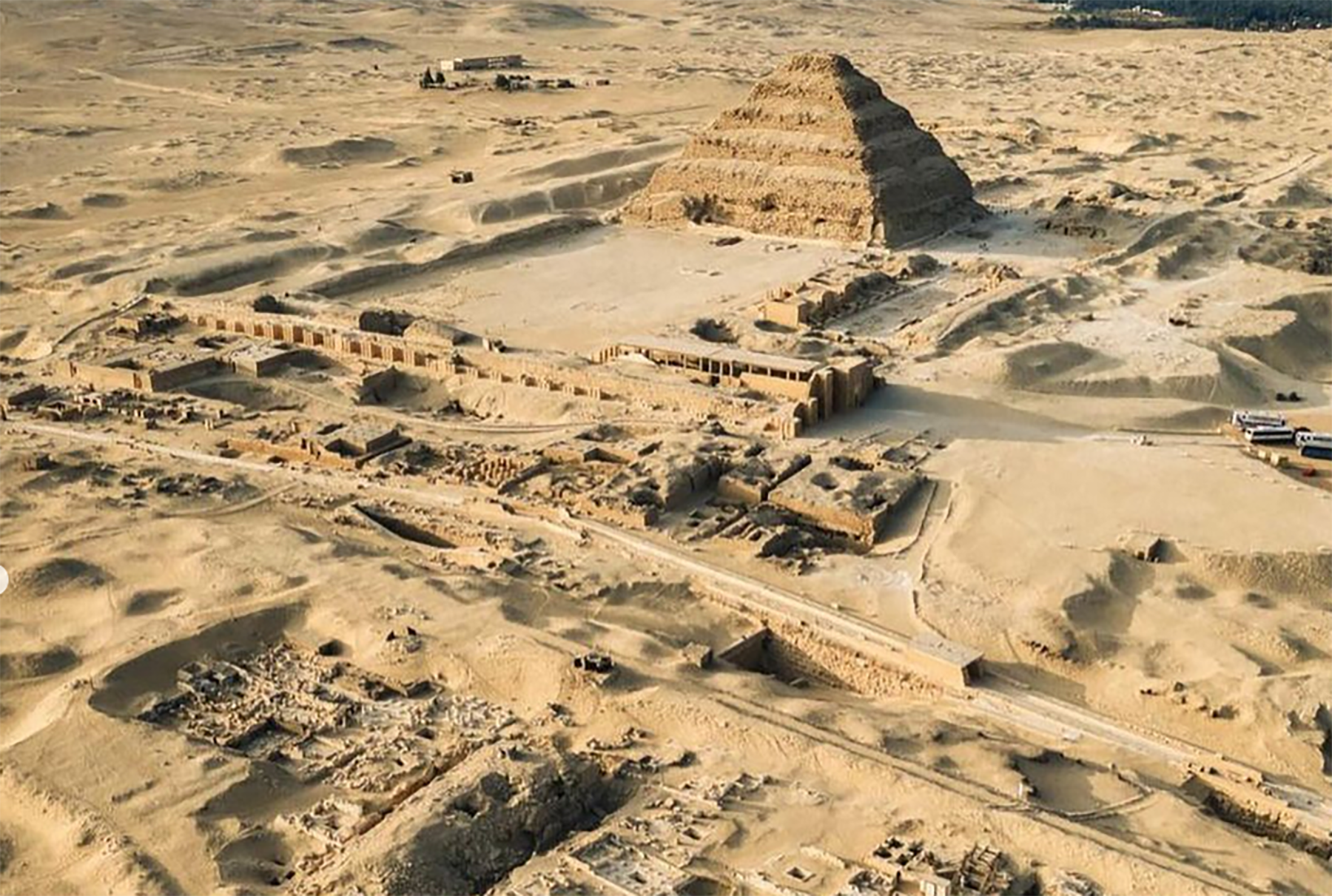
The theory centers on the Step Pyramid at Saqqara, Egypt’s first large-scale stone structure, built over 4,600 years ago during the reign of Pharaoh Djoser. The pyramid’s internal design has long puzzled researchers, with deep shafts, sealed chambers, and large-scale subterranean compartments that defy typical interpretations of tomb architecture. The new study argues these were not symbolic elements, but the mechanical heart of an ancient hydraulic construction system.
hydraulic technology at the dawn of civilization
The researchers identify a sequence of interconnected features on the Saqqara plateau that point to a large-scale water management system. Central to the theory is the Gisr el-Mudir, a massive rectangular stone enclosure west of the pyramid. Long regarded as ceremonial or unfinished, it’s now interpreted as a check dam—built to collect and slow desert runoff from the Abusir wadi, a seasonal stream bed.
Using satellite imagery, elevation data, and field surveys, Landreau’s team reconstructed the hydrological profile of the region. Their findings suggest that water from flash floods was diverted into a series of manmade channels and reservoirs. This network led toward what’s commonly referred to as the “Dry Moat”—a deep, rock-cut trench that surrounds the Djoser complex.
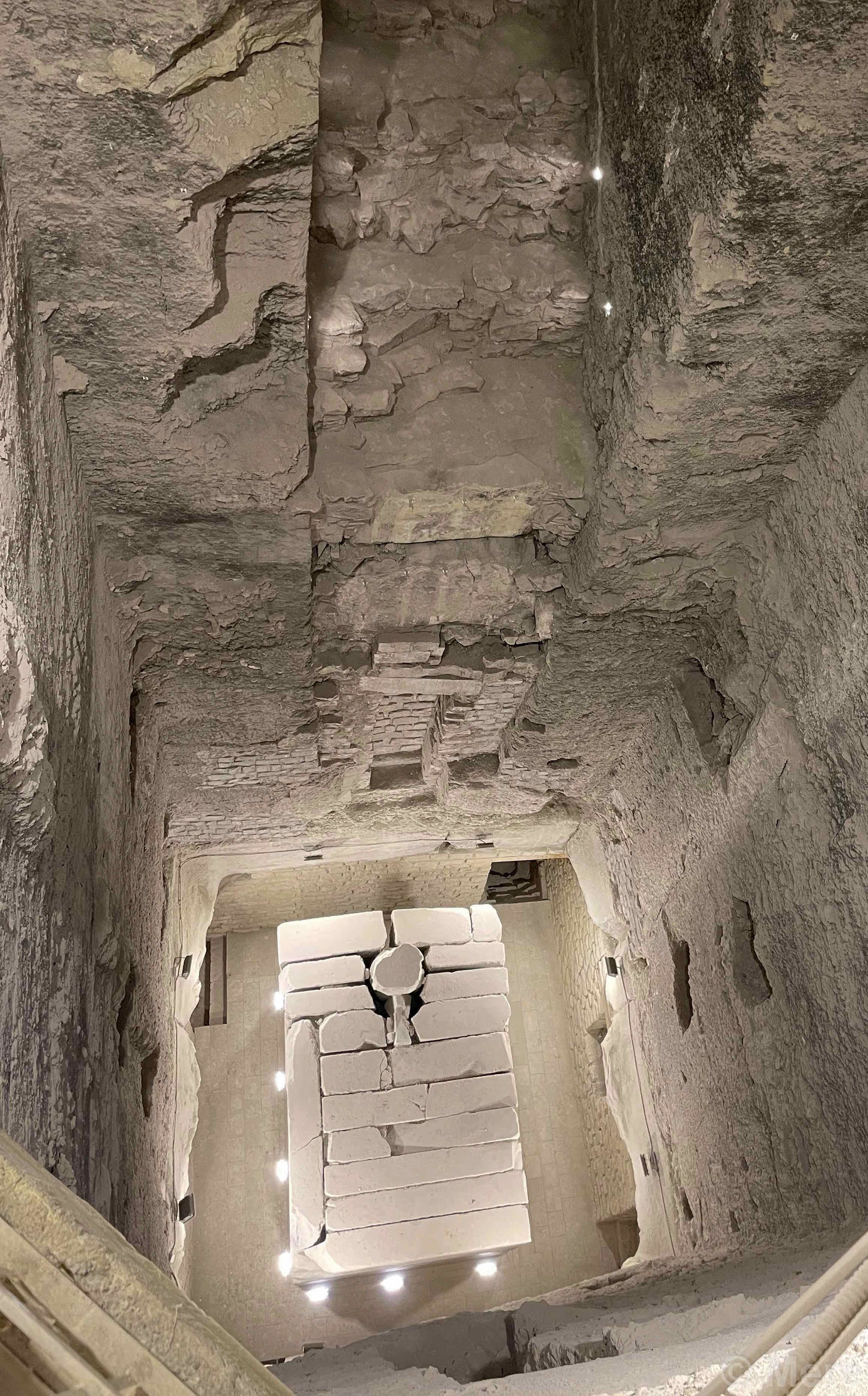
Within the moat’s southern section, researchers documented a set of vertical shafts and subterranean chambers with features resembling ancient water treatment infrastructure. Sloped inlets, flow guides, retention compartments, and sediment basins mirror the hydraulic designs used in Mesopotamia and South Asia millennia later. The study’s model proposes that these systems cleaned and stored water before it entered the central shaft network.
Most significantly, two vertical shafts—one directly under the pyramid and another roughly 200 meters to the south—appear to have functioned as hydraulic elevators. A 200-meter tunnel connects them, and both are fitted with granite plugs, sealed joints, and side chambers. The system could have allowed large stone blocks to be floated upward using sediment-free water, possibly delivered from the trench system through pressure-controlled chambers.

The authors estimate the system could lift blocks weighing around 300 kilograms—consistent with the average weight of the Step Pyramid’s stone units. Over 2 million of these blocks were used in the construction.
building from the inside out
Unlike the monumental pyramids at Giza, which are often explained through external ramps, the Djoser pyramid contains deep vertical infrastructure beneath and around its core. The study argues that this design reflects an “inside-out” construction method, similar to how volcanic cones build up from internal pressure—hence the team’s term: “volcano-style construction.”
This approach would have allowed engineers to assemble the pyramid in vertical phases, raising stones through the internal shaft using floating platforms. As blocks reached the top of the shaft, they could be positioned outward in layers, forming the pyramid’s stepped shape without requiring sprawling external ramps.

This hypothesis helps explain the granite plug systems found at the base of both shafts. These plugs, combined with tightly sealed joints and flow-regulating chambers, bear the hallmarks of early hydraulic control mechanisms. The study references similar dam-building techniques observed in Egypt’s Sadd el-Kafara dam, dating from the same period.
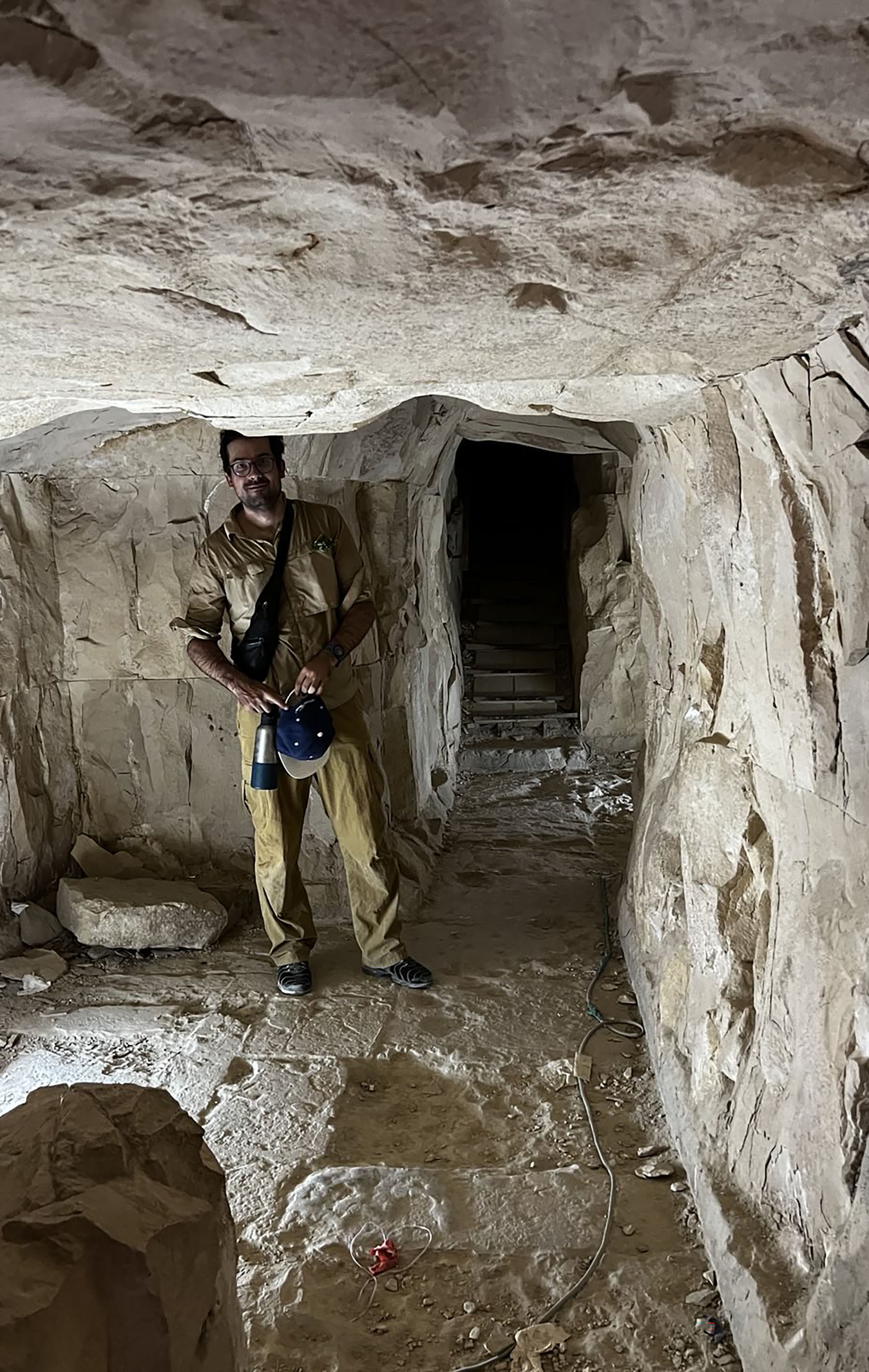
Supporting this concept is the presence of at least 13 interconnected shafts in the Djoser complex, along with over 6 kilometers of subterranean tunnels. Many of these features have no clear funerary function—there are no inscriptions, no preserved remains of the king, and no funerary goods commonly found in tombs of the era.
a new lens on ancient engineering
Egypt has long been recognized as an early hydraulic civilization, known for irrigation canals, water basins, and barge transport on the Nile River. What’s new here is the suggestion that water wasn’t just used to move stones across the land—but also to lift them vertically through engineered mechanisms.
This reframes the Step Pyramid as more than a symbolic monument. It becomes a functional machine—a central piece of a vast water-powered construction ecosystem.
Notably, the study challenges traditional interpretations that frame ancient Egyptian monuments primarily through a religious or symbolic lens. The authors do not deny the spiritual significance of the structures, but argue that engineering considerations played a central role, particularly in the earliest large-scale pyramid projects.
The absence of direct textual records from the pyramid’s construction period means no theory is fully provable. But the alignment of geological features, construction patterns, and water flow models adds weight to the hydraulic hypothesis.