
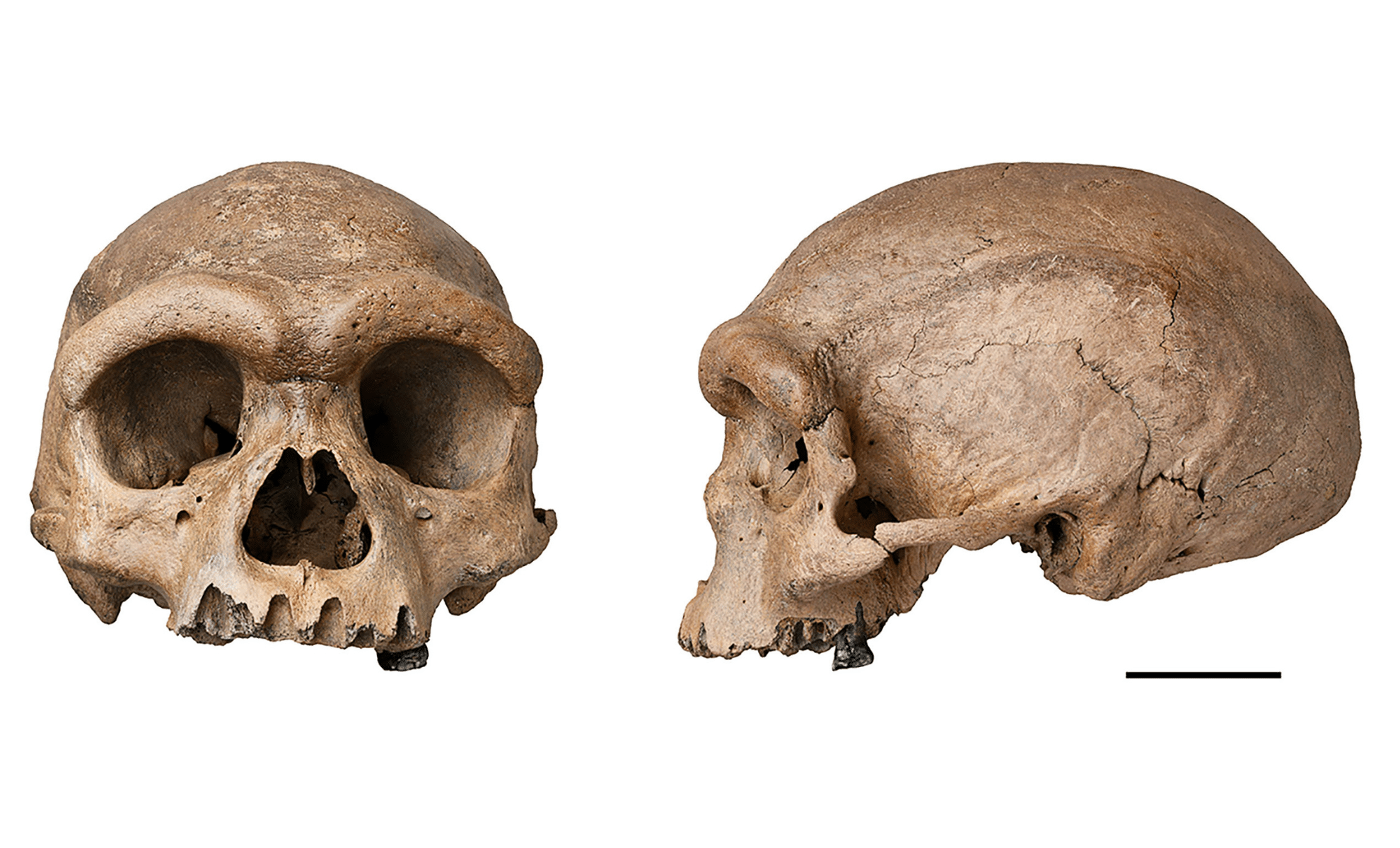
For over a decade, the mysterious Denisovans were known only through their DNA, with little understanding of what they actually looked like. A groundbreaking discovery has changed that narrative, as scientists have now confirmed the identity of the “Dragon Man” skull found in Harbin, China, providing the first physical evidence of this ancient human species. Through advanced DNA analysis and protein extraction, this skull has revealed stunning new details about Denisovans, reshaping our understanding of human evolution.
The Discovery of Dragon Man: A Key to Understanding Denisovans
The story of the “Dragon Man” skull began almost 15 years ago when researchers stumbled upon it in Harbin, China. For years, the skull was kept in obscurity, but recent advances in DNA sequencing and protein extraction have finally brought it into the limelight. The skull, dating back about 146,000 years, now serves as the first definitive physical connection to the Denisovans, an ancient human group that was previously known only from fragments of DNA.
Researchers have long suspected that this skull might belong to the Denisovans, but it wasn’t until a team led by evolutionary geneticist Qiaomei Fu used cutting-edge techniques to analyze mitochondrial DNA and ancient proteins that they were able to confirm this hypothesis. According to Fu, “This is the first time we have connected a cranium to Denisovans.” The successful analysis not only settled the debate but also brought forward the opportunity to learn what these elusive ancient humans looked like.
The skull’s distinct features, including thick brow ridges and a roomy braincase, indicate a being that falls somewhere between Neanderthals and modern humans in terms of physical traits. These findings were published in the journal Cell, where they have opened up new avenues for understanding the Denisovan lineage.

From DNA to Protein: Unlocking the Secrets of Ancient Humans
One of the primary challenges in studying ancient humans is the fragility of DNA. Over thousands of years, DNA begins to deteriorate, especially in the warm and humid environments where many fossils are found. However, the skull of the Dragon Man held a secret. Researchers turned to proteins—molecules that last longer than DNA and can still provide valuable insights into ancient ancestry.
Fu’s team used proteins extracted from the tooth tartar of the skull, a substance often overlooked in fossil studies. This tooth tartar, which encases ancient microbes and cells, preserved crucial molecular information that allowed the team to confirm the skull’s identity as Denisovan. The researchers identified 95 ancient proteins, with three matching Denisovan-specific variants, providing strong molecular evidence. This new approach to protein analysis has the potential to revolutionize the study of ancient human remains, especially when DNA is not available.
What Denisovans Looked Like: The First Full Reconstruction
Before the discovery of the Dragon Man skull, researchers had little information about the physical appearance of Denisovans. While DNA analysis provided clues about their genetic traits, it did not offer a clear picture of their anatomy. The Harbin skull fills this gap, giving scientists a tangible reference for reconstructing the physical appearance of Denisovans.
The skull is strikingly large, with a braincase that measures close to that of modern humans. The features, however, show a blend of archaic and modern traits. For example, the brow ridges are thick and prominent, similar to those of Neanderthals, but the overall shape of the skull indicates a species that is closer to humans in terms of brain capacity. Researchers now have a clearer idea of what Denisovans might have looked like in life, with thick, robust facial features, a large brain, and a strong body suited for cold environments.
Paleoanthropologists have used the measurements of the Dragon Man skull to create 3D reconstructions of its face, allowing us to imagine what these ancient humans may have looked like. This reconstruction has sparked new debates about the social behaviors, tools, and technologies of Denisovans, all of which will continue to be explored as new research unfolds.

Denisovans and Their Environment: Insights into Their Lifestyle
The Dragon Man skull provides more than just a snapshot of Denisovan physical traits. It also offers insight into the environment they inhabited and the lifestyle they led. Based on isotopic analysis of their teeth, scientists believe that Denisovans were likely large, strong individuals with high caloric needs, possibly around 220 pounds in lean body mass.
These large bodies may have influenced their behavior and mobility. Paleoanthropologist Bence Viola, who was not involved in the study, speculates that such a robust physique would have required Denisovans to roam large territories in search of food. Evidence suggests that their diet was rich in meat, with a preference for high-calorie foods to sustain their size. This aligns with the idea of Denisovans being cold-adapted hunters who roamed the upland steppes of Asia, following herds of deer and horses.
Denisovans’ Genetic Legacy: Traces in Modern Humans
While the Denisovans themselves are long extinct, their genetic legacy lives on in modern humans. Research has shown that some populations, especially in Melanesia and parts of Southeast Asia, carry traces of Denisovan DNA. For example, Papuan and other Melanesian genomes carry about 4-6% of Denisovan genetic material, influencing various traits, including immunity and fat metabolism.
In high-altitude regions like Tibet, Denisovan genes have played a crucial role in adapting to low-oxygen environments. A specific Denisovan version of the EPAS1 gene, found in Tibetan populations, helps them utilize oxygen more efficiently at altitudes of 13,000 feet. This genetic adaptation, along with others related to disease resistance and metabolism, underscores the ongoing influence of Denisovans on human populations today.
The study published in Cell highlights how these genetic traits were not merely remnants of an ancient, isolated species but valuable contributions to human evolution. As researchers continue to explore these genetic markers, they may uncover even more insights into how Denisovans shaped the development of modern human populations.