
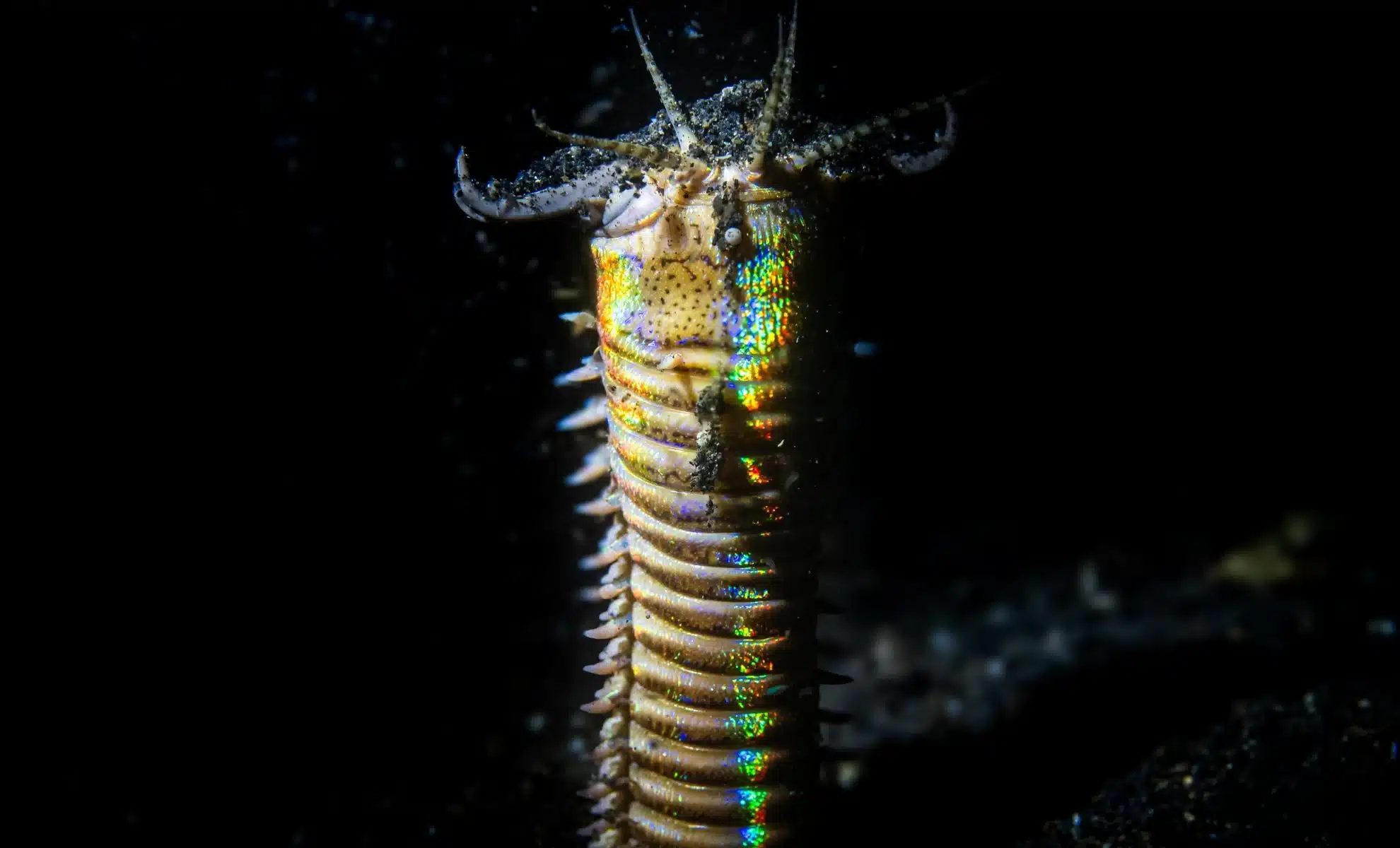
The study, conducted by researchers at the University of Vienna and the Alfred Wegener Institute in Bremerhaven, highlights a remarkable similarity between the eye growth mechanisms of Platynereis dumerilii and those of vertebrates. In a groundbreaking finding, the scientists showed that these marine worms have a neural stem cell region, akin to the ciliary marginal zone in vertebrate eyes, which enables the continuous expansion of their eyes. Crucially, the research suggests that environmental light regulates this process, potentially altering the way we understand how sensory organs evolve.
Understanding the Evolutionary Significance
The idea that eye development can follow similar patterns across vastly different species has long been a topic of interest in evolutionary biology. Camera-type eyes, like those found in vertebrates and cephalopods, are often considered prime examples of parallel evolution, traits that evolved independently in different species to solve similar problems. Platynereis dumerilii, an annelid worm, is among the few invertebrates that has evolved camera-like eyes, making it an important subject for researchers studying the evolution of vision.
According to a study published in Nature Communications, the worm’s eyes are much more complex than previously believed. The discovery of neural stem cells around the edge of the retina, responsible for continuous eye growth throughout the worm’s life, suggests a shared biological strategy with vertebrates like fish and amphibians. This challenges the traditional view of invertebrate eyes as simpler and less sophisticated than their vertebrate counterparts, revealing deeper evolutionary connections between the two groups.

Light’s Role in Eye Growth
One of the most surprising findings from this study is the role light plays in the growth of the bristleworm’s eyes. The research team found that light exposure directly influences the proliferation of neural stem cells in the eye, a process controlled by a light-sensitive protein called c-opsin. C-opsin is commonly associated with vertebrate vision, but its presence in Platynereis dumerilii was an unexpected discovery. According to the study, c-opsin is involved in regulating the differentiation of photoreceptor cells, meaning that light exposure can alter how the worm‘s eyes develop, even in adulthood.
This light-dependent mechanism mirrors the way vertebrate eyes, such as those in fish and amphibians, continue to grow as the animal matures. The presence of c-opsin in the bristleworm’s photoreceptor precursors suggests that light exposure could serve as a signal that triggers the activity of stem cells, highlighting the remarkable adaptability of sensory systems across different species.

Neural Stem Cells: A Shared Evolutionary Mechanism
The discovery of the neural stem cell ring around the bristleworm’s retina offers a new perspective on how eyes can grow continuously throughout life. In vertebrates, a similar stem cell region, the ciliary marginal zone, helps maintain retinal function by producing new photoreceptor cells and allowing for eye expansion. Platynereis dumerilii appears to employ a similar mechanism, but with a twist: its neural stem cells are not only responsible for maintaining the eye but also for its growth in response to environmental factors like light.
First author Nadja Milivojev from the University of Vienna emphasized the significance of this finding in understanding eye evolution. “It was remarkable to find dividing cells at the edge of the worm’s retina — the same place where some groups of vertebrates maintain their retinal stem cells for life-long eye growth,” she said. This discovery suggests that the strategy for sustaining and expanding eyes might not be as unique to vertebrates as once thought, offering new avenues for exploring the evolutionary links between invertebrates and vertebrates.