
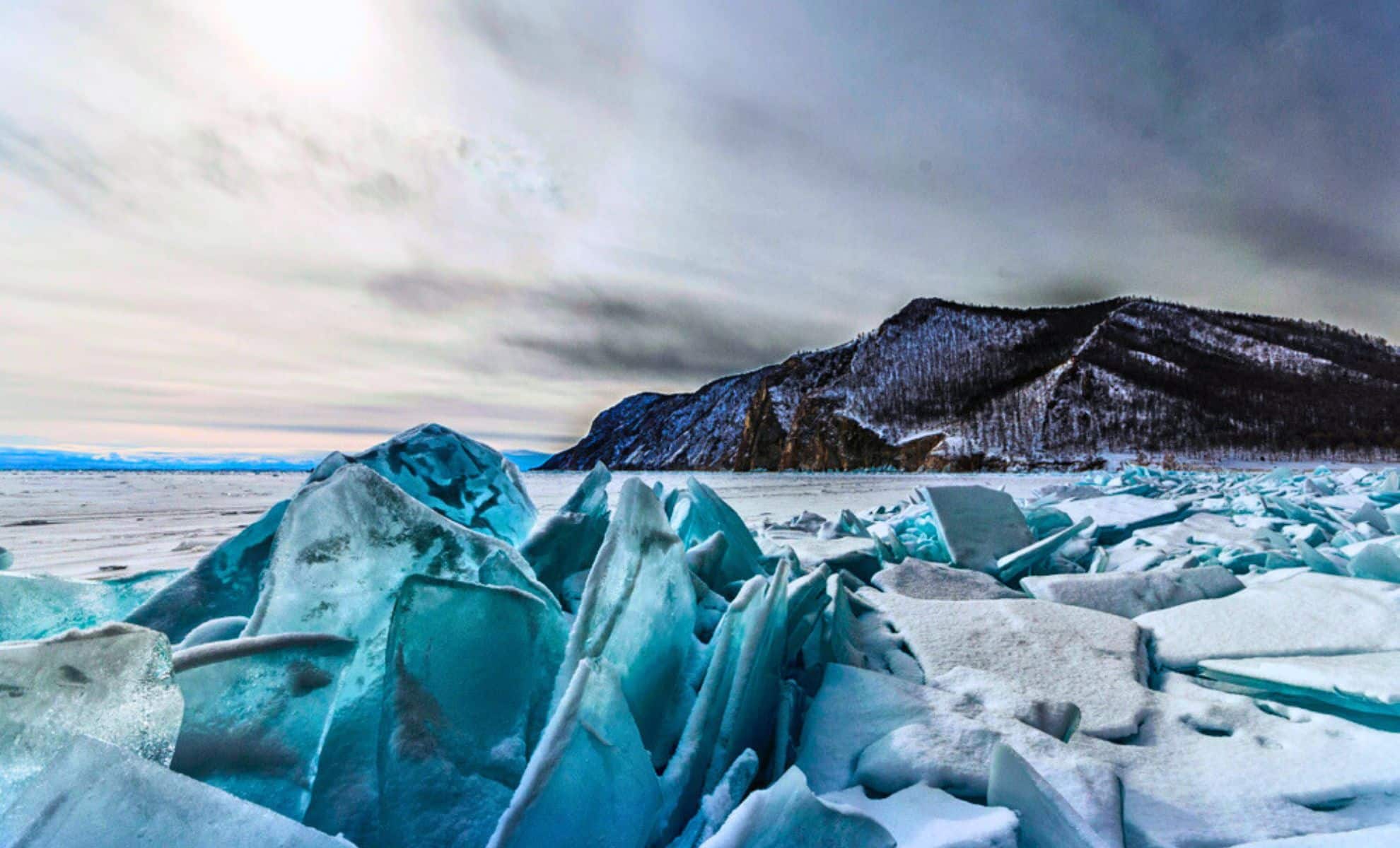
During the Antarctic winters of 2016 and 2017, satellites detected something extraordinary in the Weddell Sea — a vast, circular hole in the middle of the frozen ocean. Roughly the size of Switzerland, it appeared where the sea ice should have been thickest. Scientists hadn’t seen anything like it in decades.
This wasn’t just another crack in the ice. The formation, known as a polynya, emerged hundreds of kilometers from open water and persisted for weeks, defying extreme polar temperatures. Researchers were stunned: what force could create and sustain an open wound in one of the planet’s coldest regions?
The last time a polynya of this scale formed near Maud Rise, an undersea mountain east of Antarctica, was in the 1970s. For years, that event remained a climatic riddle.

Now, a new peer-reviewed study published in Science Advances has finally provided a detailed explanation, revealing how a complex interaction between wind, ocean currents, and salinity tore a hole through the Antarctic ice pack.
A Hidden Engine Beneath Antarctica’s Ice
The research team, led by Aditya Narayanan of the University of Gothenburg, found that the Maud Rise polynya was driven by a powerful process called Ekman-driven salt transport. Between 2015 and 2018, eastward surface winds strengthened over the region, pushing saltier water from the seamount’s center toward its northern flank.
This subtle but persistent movement of salt disrupted the ocean’s vertical layering. The upper layer of water became denser and began to sink, drawing up warmer, saltier water from the deep ocean. That upwelling heat melted the sea ice from below, preventing new ice from forming and maintaining an open patch of ocean in the dead of winter.
The process created a feedback loop: open water released heat to the cold Antarctic atmosphere, encouraging further mixing and sustaining the hole. Once started, it became a self-reinforcing system of ocean convection.

The study used a detailed ocean model known as the Southern Ocean State Estimate (SOSE), which merges satellite, buoy, and climate reanalysis data to reconstruct the event. The simulations showed how local frictional forces, deep-water salinity, and regional circulation all converged to weaken stratification — the layering that normally keeps warm, deep water sealed beneath the ice.
When Wind and Salt Reshape the Southern Ocean
From 2013 onward, the Weddell Gyre, a vast rotating current that circles the southern Atlantic sector of the Southern Ocean, began to intensify. That shift injected more warm deep water and salt toward Maud Rise, setting the stage for destabilization.

By 2016, persistent cyclonic winds over the region enhanced surface stress on the ocean. The wind-driven Ekman transport carried saline water across the Maud Rise’s flanks, gradually eroding the upper layer’s stability. The result was a rare alignment of oceanic and atmospheric forces strong enough to open the sea ice.
The polynya first appeared late in the winter of 2016, then expanded dramatically in 2017 to an area of about 80,000 square kilometers. Satellite observations showed the water column mixing from the surface down several hundred meters — a clear sign of deep convection. The hole finally closed in early 2018 as wind and temperature patterns shifted, but the ocean beneath remained altered for months.
Researchers documented a measurable loss of ocean heat content, confirming that the event had ventilated warm, carbon-rich waters from the depths into the atmosphere. The study demonstrated that even highly localized wind changes can trigger global-scale consequences by influencing how the ocean exchanges heat and carbon dioxide with the air.
What the Maud Rise Polynya Reveals About a Changing Climate
Open-ocean polynyas like Maud Rise play a crucial role in regulating the Earth’s heat balance and the formation of Antarctic Bottom Water, one of the key drivers of global ocean circulation. When they form, they expose deep waters to the atmosphere, releasing stored carbon and heat while altering sea-ice formation and local ecosystems.
The study’s authors note that such events used to be more common in the pre-industrial era, but are now rare due to the strengthening of vertical ocean stratification—a result of fresher surface waters and stronger westerly winds driven by human-induced climate change. Their findings suggest that if wind patterns continue to shift or sea-ice cover weakens, similar open-ocean convection could recur more frequently.
The Southern Ocean is already absorbing vast amounts of excess heat and carbon, buffering the planet against rapid warming. But events like the Maud Rise polynya show that this system is not stable. A small perturbation in wind or salinity can reconfigure how the ocean breathes—potentially altering weather, sea-level rise, and carbon cycling far beyond Antarctica.