
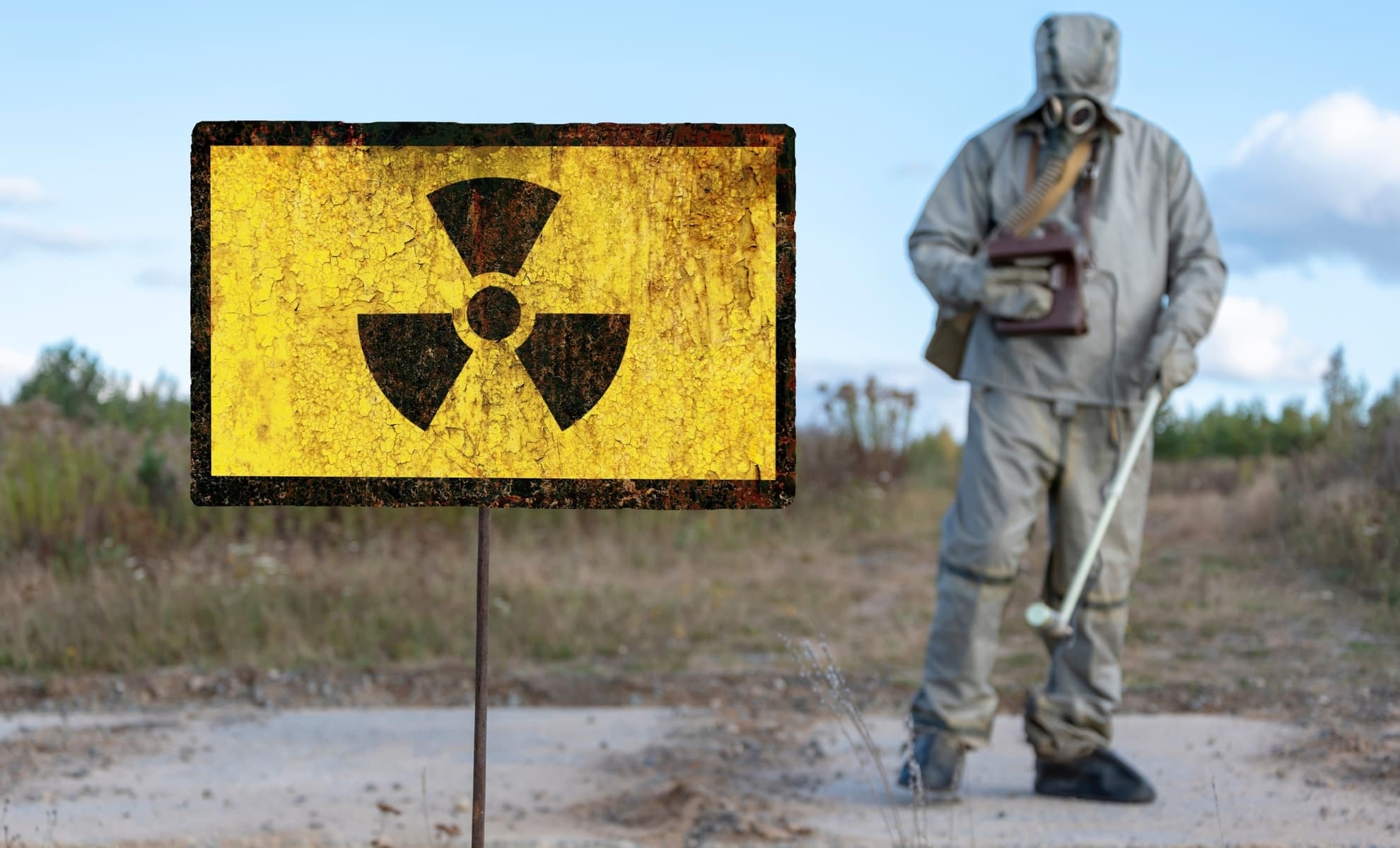
The International Atomic Energy Agency (IAEA) has confirmed that the New Safe Confinement structure at the Chernobyl nuclear power plant no longer fulfills its radiation containment role following a recent drone strike. Although the structure remains stable, it has lost its primary safety functions, placing the site’s long-term nuclear security at risk.
This development follows a drone attack that hit the multi-layered structure earlier this year during the ongoing war in Ukraine. The New Safe Confinement (NSC), completed in 2016, was designed to enclose Reactor 4, the site of the catastrophic 1986 meltdown, and withstand threats such as radiation, heat, humidity, and tornadoes. For now, temporary repairs have been made, but a permanent solution cannot be implemented until the war ends, according to the IAEA.
The damaged structure, which once symbolized the world’s commitment to safely sealing off the world’s worst nuclear accident, now finds itself in a vulnerable state again. The IAEA, which maintains a permanent team at the site, confirmed that although load-bearing elements of the dome are still intact, its containment capabilities have been critically impaired. Rafael Grossi, Director General of the IAEA, stated in a press release that “limited temporary repairs have been carried out on the roof,” but added that “timely and comprehensive restoration remains essential to prevent further degradation and ensure long-term nuclear safety.”
A Structure Built To Seal Catastrophe
After the 1986 explosion at Chernobyl’s Reactor 4, the Soviet Union built an emergency concrete sarcophagus to isolate the radioactive material. But the structure was never intended to last. In 1994, Ukraine began seeking international proposals for a safer, more durable solution. That led to the design and eventual construction of the New Safe Confinement, a vast arch-shaped structure resembling a giant aircraft hangar.
The NSC, primarily made of steel and concrete, was fitted with polycarbonate interior panels to prevent radioactive dust from settling on its frame. It also operates under negative air pressure, ensuring that in the event of a leak, outside air would flow in rather than radioactive air escaping. The structure, weighing 1,944.25 tons, was slid into position on November 29, 2016, completely enclosing the original sarcophagus. According to the IAEA, the NSC was initially designed to provide 100 years of protection.
Smoldering Fission Still Active Inside Reactor 4
Even though the Chernobyl site no longer poses the same immediate threat it did in 1986, the risks remain active. A 2021 study confirmed that uranium fuel deep inside the destroyed reactor continues to undergo nuclear fission. One of the researchers described it as “like embers in a barbecue pit.” This conclusion was based on sensors detecting a rising number of neutrons in one of the inaccessible rooms of the reactor—an indicator that fission reactions are still occurring.
This reality underscores the critical importance of maintaining the integrity of the New Safe Confinement, whose job is to contain these lingering radioactive processes. The breach caused by the drone strike now brings into question the site’s ability to hold off further degradation.

Repairs On Hold Until End Of Conflict
While the immediate drone attack did not cause a radiological incident, the long-term implications of the breach remain serious. The IAEA has stated that additional temporary repairs will continue, but full-scale restoration must wait for a cessation of hostilities. According to Popular Mechanics, the NSC had already withstood a month-long Russian occupation of the site in early 2022. Yet, the recent strike managed to pierce the protective layers of the dome.
Although Moscow denies involvement in the drone attack, the incident illustrates how military activity near sensitive nuclear infrastructure can escalate environmental and public health risks. As Rafael Grossi emphasized, the IAEA “will continue to do everything it can to support efforts to fully restore nuclear safety and security at the Chornobyl site.”