The movie business is a tricky one. You could have the best idea in the world, but the wrong script leads to a terrible film. You could have a great script, but a bad actor could tank the whole thing if their performance doesn’t hit its mark. Sometimes a director fumbles the production and goes way over budget, and the movie has no hope of making its money back. Sometimes the marketing sells the movie to the wrong crowd, and no one shows up.
All of those things could potentially be avoided, but sometimes the success or failure of a film is just up to coincidence, pure timing. In other words, sometimes a movie does everything right, but factors outside of the creative team’s control lead to the resulting film failing to find its audience. If a given film had come out a few months earlier, say, it might’ve competed against something less popular. If one of these unlucky movies had been released earlier in the year, it might’ve avoided being swept up in a scandal surrounding its star. Sometimes a film about Halloween comes out in the middle of summer, where it has no shot. Sometimes world-shaking events make the movie seem like it’s about something completely different than they intended just days earlier.
Some of the unlucky movies on this list managed to find audiences later, while others still languish in obscurity. They all have one thing in common: these movies failed because of terrible release timing.
America wasn’t ready for Donnie Darko just after 9/11
Okay, “Donnie Darko” is a very weird movie. There’s a good chance it would’ve struggled to find an audience no matter when it came out. After all, the movie is about dreams and visions, centering on a teenager who receives ominous messages from a rabbit-suited specter named Frank. It’s told out of order and features bizarre twists that the movie has little interest in explaining. It’s not a crowd-pleaser, in other words, so it was likely never going to be a smash hit.
But boy, did “Donnie Darko” bomb. Against a $6 million budget, the film only pulled in $110,494 its opening weekend. While it might be tempting to write that off as a bad movie that didn’t connect, there were some circumstances simply out of director Richard Kelly’s control. Namely, there’s the fact that the movie opened in October 2001, meaning audiences were not particularly interested in watching a film about the traumatic after-effects of a plane crash. Kelly later told BFI that he definitely felt 9/11 contributed to the film’s failure, reflecting, “I don’t think anyone was in the mood to just go to the movies, and if they did want to it was probably for something that was happy. I think this is a very challenging, disturbing film in a lot of ways, and that’s not what people wanted to experience in the shadow of such a catastrophic tragedy.”
The Thing had no chance against ET
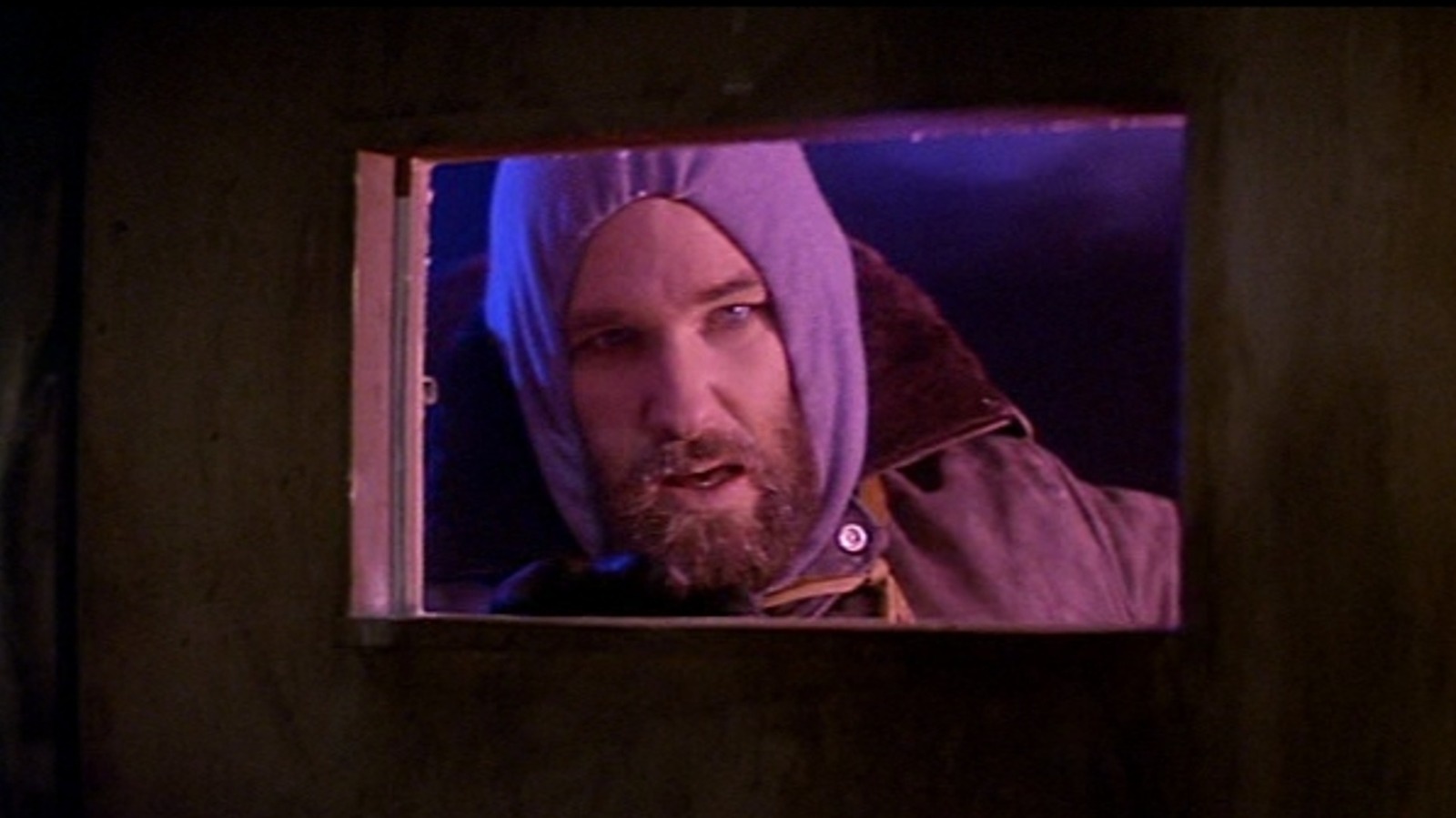
Nowadays, “The Thing” is considered a sci-fi/horror classic, one of John Carpenter’s best movies. It’s a remake of “The Thing from Another World,” from the 1950s; in fact, you can see the kids watching that movie in “Halloween,” which came out years before Carpenter made his own version. It’s about a research team sent to a remote base in Antarctica, where they are set upon by … well, something from the ice. The alien seems to be able to take any shape it wants, morphing into the scientists themselves as a way to hide among the group. It’s a deliciously-chilly, paranoid thriller of a movie, featuring some fantastic goopy-gory-gross practical effects.
And audiences were not interested. When the film hit theaters in 1982, it was up against another alien: “E.T. The Extra-Terrestrial” had been released just weeks earlier, and audiences around the world had fallen in love with the adorable, friendly creature. “I guess the country was going through a recession and there were tough times. Audiences wanted an up/cry and ‘E.T.’ gave it to them,” Carpenter reflected in 1999 (via The Distracted Globe). “Two weeks later, out comes my movie. And my movie is exactly just the opposite of E.T. It is not an up/cry. It is a downer.”
“The Thing” wasn’t even the only sci-fi movie to be kneecapped by the unfortunate coincidence of going up against one of Steven Spielberg’s best. The same weekend, “Blade Runner” hit theaters. Oh well!
Hugh Grant was arrested days before the release of Nine Months
Once upon a time, Hugh Grant was in some of the best romantic comedies of all time. The man led “Notting Hill,” “Bridget Jones’ Diary,” “About a Boy,” “Love Actually,” and many more, dominating the genre. Most of those came later, however. When Grant first tried to cross over from British comedies like “Four Weddings and a Funeral” to Hollywood films, he starred opposite Julianne Moore in a little-remembered movie called “Nine Months.”
The movie was directed by “Home Alone” helmer Chris Columbus and starred a Moore fresh from critical raves for “Safe,” the Todd Haynes film where she played a woman terrified to go outside. “Nine Months” seemed like a sure thing, a great way to introduce this charming leading man to American audiences … until Grant was arrested mere days before its release. He’d been found receiving oral sex from a sex worker in a car in Hollywood, and the media had a field day with the story. “Last night I did something completely insane,” Grant said in a statement the next day (via The Guardian). “I have hurt people I love and embarrassed people I work with. For both things I am more sorry than I can ever possibly say.”
The movie was a decent box office success, but a critical catastrophe. Many reviews of the film focused instead on Grant’s arrest, and the film had little staying power in Grant’s overall filmography.
Nate Parker’s The Birth of a Nation didn’t survive rape allegations against the director
At Sundance in 2016, Nate Parker’s “The Birth of a Nation” was the talk of the town. Centering on the Nat Turner-led slave rebellion, it provocatively took its title from the deeply-racist, yet cinematically-pivotal D.W. Griffith film; in its revitalization of the Ku Klux Klan, that movie changed the world — for the worse, to be clear. Parker wrote, directed, and starred in the movie himself, winning several prizes at that year’s festival. The movie was picked up by Fox Searchlight for $17.5 million, which was, at the time, the largest amount of money ever paid for a movie from any film festival.
If the movie had been put right into theaters, the hype around this exciting new cinematic talent was so strong that it likely would’ve been a massive box office success. Instead, it was held for that October to catch the eye of awards-season voters. That gave time for people to look into Parker’s past, and what they found was a deeply-disturbing rape allegation that sank the movie’s chances of success.
Though Parker was acquitted of charges that he’d raped someone while a wrestler at Penn State University in the 1990s, the way he addressed the allegations raised eyebrows. “Women have been such an important part of my life,” he told Deadline tearfully. “I try, every day, to be a better father to my daughters, and a better husband.” The movie bombed.
The theaters were filled with instant classics when Weird Al released UHF
Hitting theaters at the tail end of the 1980s, “Weird Al” Yankovic’s film “UHF” seemed like the kind of thing that should’ve found a big audience. After all, that decade brought us some of the best spoof movies of all time, including “Spaceballs” as well as “Airplane!,” “The Naked Gun,” and more. “UHF” is that kind of movie; it stars the parody singer as the hapless owner of a local television station, and it includes spoofs of everything from “Gandhi” to “Rambo.”
There are plenty of fans of “UHF,” but the movie had trouble finding an audience in theaters. In this case, it seems like there was simply too much competition; after all, “UHF” was playing against some of the most iconic films of the decade, all in theaters at the same time. The weird little “Weird Al” movie had to compete with “Dead Poets Society,” “Ghostbusters II,” “Batman,” “Honey I Shrunk the Kids,” “Do The Right Thing,” “Weekend At Bernie’s,” “Lethal Weapon II,” “The Karate Kid Part III,” and “When Harry Met Sally.”
Speaking with The AV Club, Yankovic pointed out that his movie simply didn’t have a chance up against such colossal cultural smashes. “In retrospect, if the movie had been put out during a sleepy or slow period, when there wasn’t a whole lot going on, it probably would have done a whole lot better,” he said. “But as it was, it got swallowed up very quickly.”
All the Money in the World got more expensive when it reshot Kevin Spacey’s role
In 2017, Ridley Scott directed “All The Money In The World,” a drama about the kidnapping of John Paul Getty III (Charlie Plummer). The movie featured a star-studded cast and seemed poised to be a major awards player; stars like Michelle Williams, Mark Wahlberg, and Timothy Hutton seemed likely to make the film a sure-thing. And then there was Kevin Spacey, cast as Getty’s grandfather, who infamously decided not to pay the ransom to get him back.
Shortly before the release of the film, Spacey was accused of having sexually assaulted “Rent” star Anthony Rapp when he was younger. As the case exploded into the public consciousness, Spacey was removed from “House of Cards,” and Scott announced that he’d be replacing his lead actor in “All The Money in the World,” too. With just weeks left before the film was due to hit theaters, Scott re-shot Spacey’s scenes, adding “The Sound of Music” star Christopher Plummer in the role instead.
The situation upended the film’s reputation with the public, and it made the movie a lot more expensive, adding as much as $10 million to the budget. A risk assessment expert told Variety that the film’s insurance wouldn’t cover the costs, noting, “The cost will be a lot, and I think it will be 100% the production’s cost.” When the movie was released, it didn’t come close to making back that extra money in the opening weekend.
Kevin Bacon thinks The Sixth Sense ruined Stir of Echoes
“The Sixth Sense” is one of M. Night Shyamalan’s best movies. When it was released in 1999, it took the film world by storm, instantly rocketing the writer/director to the top of Hollywood horror’s A-List. The movie’s shocking twist, its touching performance from young star Haley Joel Osment, and its sensitive turn from action-man Bruce Willis made it a surprise smash, leaving a humongous cultural impact that continues to this very day.
And then there was “Stir of Echoes,” a movie starring Kevin Bacon that came out around the same time. Like “The Sixth Sense,” “Stir of Echoes” is about someone who sees dead people. Kevin Bacon plays Tom, a man who is hypnotized into having his mind opened to other worlds. Like “The Sixth Sense,” “Stir of Echoes” blends supernatural stories with some really grounded character work. But audiences simply didn’t care. “The Sixth Sense” had come out mere weeks earlier, and while “Stir of Echoes” might have been well-received on its own, it simply didn’t hold a candle to Shyamalan’s masterpiece.
Bacon told Entertainment Weekly that they’d pushed to get “Stir of Echoes” in theaters first, but it just didn’t happen. “Every step of the way we were compared to them, and it completely f***ed the possibility of the movie being seen,” he said. “It was a terrible mistake on the part of the studio … It was, in my opinion, a really dumb move.”
Hocus Pocus came out in July, opening against Free Willy
There are no rules for when a movie should be released in theaters. A great movie should be able to stand the test of time, entertaining audiences no matter when they watch it. Some things, though, just make sense. You probably don’t want to release a movie about Christmas on a random weekend in April, and it would be strange to release a movie set on Halloween in the height of the summer.
That last one, however, is exactly what Disney did in 1993, when they released “Hocus Pocus” in July. For many millennials, this is the quintessential Halloween movie, but audiences in theaters were instead checking out blockbusters like “Jurassic Park” that year instead, and they were uninterested in this movie’s witchy shenanigans. “I was pleading with them to release it at, like, the end of September,” producer David Kirschner told “Dizney Coast to Coast.” The studio worried that not enough kids would go to the movies in September, because they were back at school then. The movie’s reviews were so-so, and Kirschner concluded that the timing meant the movie had no shot at success.
Still, the film did leave quite the legacy, leading to a sequel decades later. It’s a perennial spooky-season favorite now thanks to home video and frequent showings on The Disney Channel. Even though it came out in July, “Hocus Pocus” even sparked a Satanic panic!
Armie Hammer was in a public relations crisis shortly before Crisis
Plenty of movies had their releases disrupted by the COVID-19 pandemic. This whole list, in fact, could have been made up of movies that had their schedules shifted around, trying to find the right window that would let them dodge the never-ending variants that people tried to avoid in those first few years. After all, “Crisis” was originally filmed in early 2019, so you’d expect it to show up in theaters sometime in 2020. It didn’t, though, until early 2021.
In 2019, Armie Hammer was a star on the rise, fresh off of critical smashes like “Call Me By Your Name.” By early 2021, however, Hammer’s star image had completely collapsed. He was accused of a number of horrifying things, including an alleged interest in a cannibalism that may have led him to assault multiple women (years later, a docuseries called “House of Hammer,” edited after its release, detailed the allegations against the star).
Director Nicholas Jarecki later explained the furor that surrounded the movie’s release on “The Bret Easton Ellis Podcast” (via MovieMaker). “We had all this stuff lined up … Little by little all these things evaporated and all this press — they didn’t want to do a feature about Armie Hammer because let’s be honest, the story was Armie Hammer, cannibal,” he said. “But the subtext of the story was Armie Hammer, sexual abuser. And now the further subtext, which now has become the text, is Armie Hammer, accused rapist.” A crisis, indeed.
By the time The Flash was finally released, Ezra Miller was toxic
Ezra Miller had previously appeared as Barry “The Flash” Allen in “Justice League,” the Zack Snyder film released in 2017. Like many superheroes, Miller’s incarnation of The Flash was meant to receive its own standalone film. It took years to materialize, however, and by the time the long-delayed film finally hit theaters, Miller’s association with the movie had made it toxic.
In 2022, Miller broke their silence about allegations that they had groomed minors, assaulted people, and allegedly even committed a robbery. In a statement to Variety, the “Perks of Being a Wallflower” star confessed, “Having recently gone through a time of intense crisis, I now understand that I am suffering complex mental health issues and have begun ongoing treatment.”
It was difficult for Warner Bros. to promote “The Flash,” given the crisis their star was going through. They couldn’t exactly go on the interview circuit, as major tentpole stars normally would; the questions would’ve all been about the allegations. When the film finally hit theaters in 2023 — five years after people were excited about Miller’s potential in “Justice League” — it bombed big-time. Director Andy Muschietti later told “La Baluera del Coso” (via Deadline), “When you make a film, there are things that are out of your control, and one of those is when an actor has a PR crisis.”