
Religious sentiments have long been a potent undercurrent in Punjab’s political discourse, influencing policy decisions, legislative initiatives, and public outreach across party lines.
From giving cities “holy city” status and proposing anti-sacrilege laws to pilgrimage schemes and even election scheduling, successive governments led by the Shiromani Akali Dal (SAD)-BJP, the Congress, and now the Aam Aadmi Party (AAP) have sought to project sensitivity to faith-based concerns while navigating electoral politics.
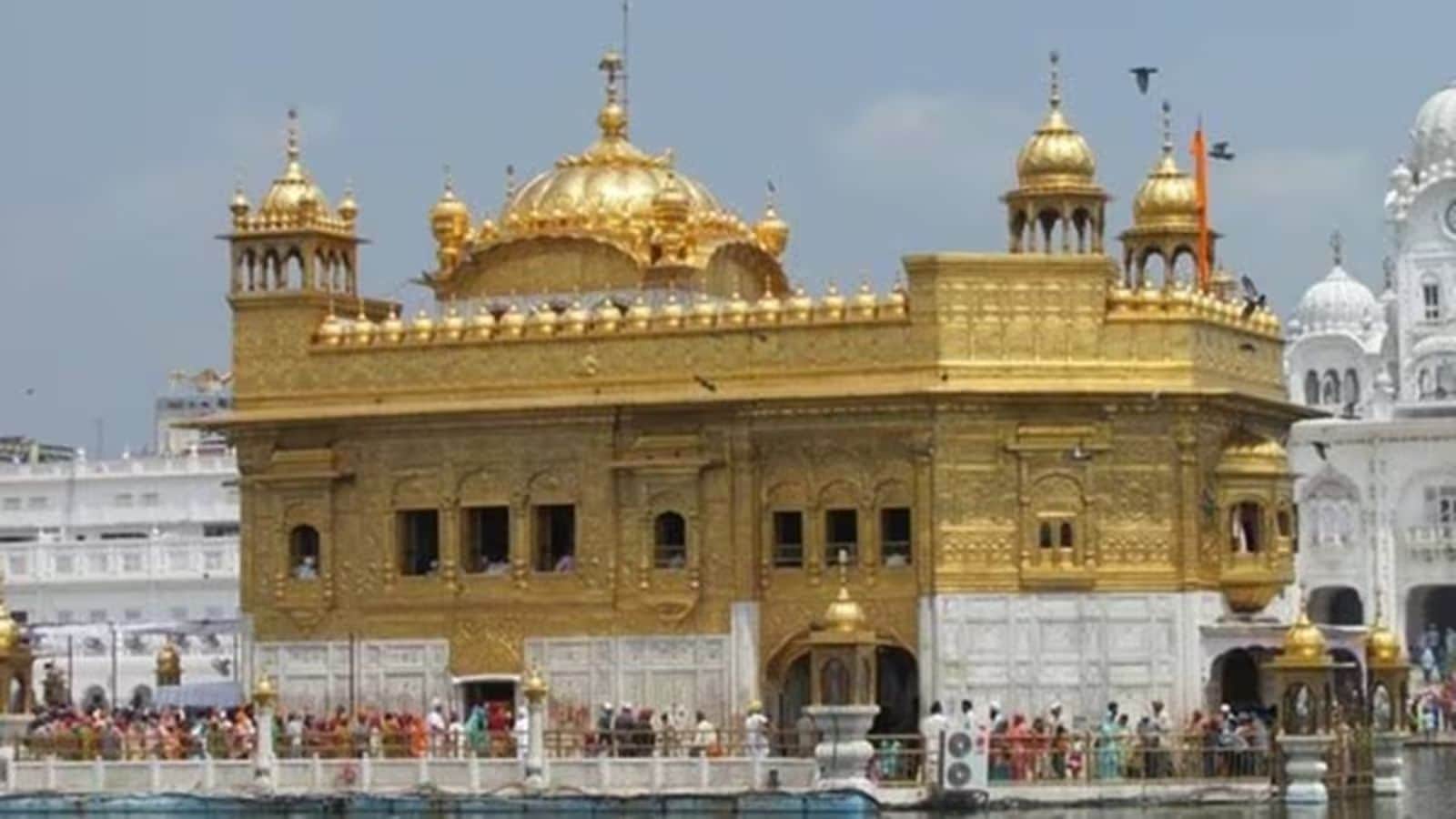
Earlier this month, the AAP-led Punjab government notified its decision to declare the walled city of Amritsar, Sri Anandpur Sahib (Rupnagar), and Talwandi Sabo (Sri Damdama Sahib, Bathinda) as “holy cities”. This came weeks after the decision was approved through a unanimous resolution of the Punjab Assembly during a special session convened to mark the 350th martyrdom anniversary of Guru Tegh Bahadur.
The AAP government’s move is primarily linked to the presence of three of the five Sikh Takhts in these cities. These Takhts are not merely places of worship but panthic institutions central to Sikh religious authority, governance and identity. Sikh organisations have long been demanding that these cities be formally declared holy cities.
Alongside the declaration, the government banned the sale and consumption of meat, liquor, tobacco and other intoxicants within the notified areas. Chief Minister Bhagwant Mann on Sunday described the move as the fulfilment of a decades-old demand of Sikh devotees, saying the cities were not just religious centres but symbols of Punjab’s civilisational heritage. The government claimed that the move “would help preserve sanctity, promote heritage tourism and improve infrastructure for pilgrims”.
However, political observers, the Opposition, and some locals described the decision as largely symbolic. Areas around major religious sites already had informal restrictions in place. In Amritsar, for instance, the Heritage Street near the Golden Temple has long housed only vegetarian eateries, with no liquor outlets. The “holy city” tag, they said, is more about branding these cities as heritage and cultural hubs of Punjab.
“We welcome this move, but at the same time there were already no meat, tobacco or liquor shops in and around these religious places. If the government has granted them this status, it should protect their sanctity in true letter and spirit.” BJP Punjab state spokesperson Pritpal Singh Baliawal said, adding there was a need to clarify the radius of the cities.
Congress MLA Pargat Singh questioned whether the areas were being declared holy cities or merely holy corridors while also noting that the sale and consumption of meat, tobacco and liquor were already absent within the walled city limits.
SAD president Sukhbir Singh Badal claimed Anandpur Sahib and Talwandi Sabo had been declared holy cities about 15 years ago during the CM tenure of Parkash Singh Badal, his father, and slammed the Mann government for projecting the move as a “new achievement”.
Mann, however, maintained that there was no official government order enforcing such restrictions and that people had voluntarily refrained from these activities out of religious sentiment. He said the Assembly resolution was giving official recognition to an existing practice and that the ban would now be legally enforceable rather than voluntary.
The CM said the state government would allocate the funds and also seek funds from the Centre for the upkeep of the “holy cities”, stressing that such measures were necessary to “preserve and promote the legacy of these historic towns”.
The AAP government’s move came amid intense political activities during the 350th martyrdom year of Guru Tegh Bahadur. While the AAP government organised programmes across Punjab, the BJP held a kirtan darbar at Anandpur Sahib. Outside the state, Delhi BJP leaders organised commemorative events at the Red Fort, while the BJP-led Haryana government observed a month-long programme, highlighting the wider political engagement around the anniversary.
Mann on Friday also paid obeisance at Gurdwara Fatehgarh Sahib, where a three-day Shaheedi Sabha, or martyrdom congregation, is underway. The annual congregation is held from December 25 to 27 in the memory of Sahibzades Baba Zorawar Singh and Baba Fateh Singh, the younger sons of the 10th Sikh Guru, Guru Gobind Singh, and their grandmother Mata Gujri.
Ravidas Jayanti to pilgrimage schemes
The political weight of religious sentiment was also evident during the 2022 Punjab Assembly elections. Polling, initially scheduled for February 14, was postponed to February 20 after then Congress CM Charanjit Singh Channi pointed out that the original date fell close to Ravidas Jayanti on February 16. He said lakhs of devotees from Punjab travel to Varanasi for a holy dip during that period.
The demand was supported by all major parties, including AAP, SAD and BJP. On January 21, 2022, the Election Commission announced revised dates, citing an overlap with the third phase of polling in Uttar Pradesh. Punjab’s political parties, however, maintained that religious considerations were central to the decision.
The Mukhyamantri Teerath Yatra scheme illustrates how religion-linked welfare has intersected with electoral politics. Launched in 2016 by the SAD-BJP government under Parkash Singh Badal ahead of the 2017 Assembly elections, the scheme offered free pilgrimages to destinations such as the Golden Temple, Hazur Sahib, Patna Sahib, Naina Devi and Chintpurni.
The programme operated constituency-wise across all 117 Assembly segments using buses and trains but was discontinued after the Congress came to power in March 2017. The SAD has repeatedly promised to revive it if voted back.
In November 2023, the AAP government revived the scheme, a move SAD described as a continuation of its original initiative. That phase ran briefly using buses, as the railways could not arrange dedicated trains. From November 2025, AAP launched a second phase, with pilgrims being taken by buses to religious sites within Punjab, including the Golden Temple, Anandpur Sahib and Talwandi Sabo while Mann announced last month that trains have been proposed for out-of-state destinations.
Anti-sacrilege laws
Legislative attempts to address sacrilege underscore the political sensitivity surrounding religious matters. In March 2016, following the October 2015 sacrilege incident involving the Guru Granth Sahib in Bargari village, the SAD-BJP government passed Bills in the Assembly seeking amendments to the IPC and CrPC to provide life imprisonment for sacrilege of the Sikh holy scripture. The Centre returned the Bills, citing constitutional concerns related to secularism.
The Congress government made another attempt in August 2018, expanding the scope to include the Guru Granth Sahib, Bhagavad Gita, Quran and Bible. These Bills, too, failed to receive presidential assent.
In July 2025, the AAP government introduced the Punjab Prevention of Offences Against Holy Scriptures Bill as a standalone state law aligned with the Bharatiya Nyaya Sanhita framework. The Bill has since been referred to a select committee.