
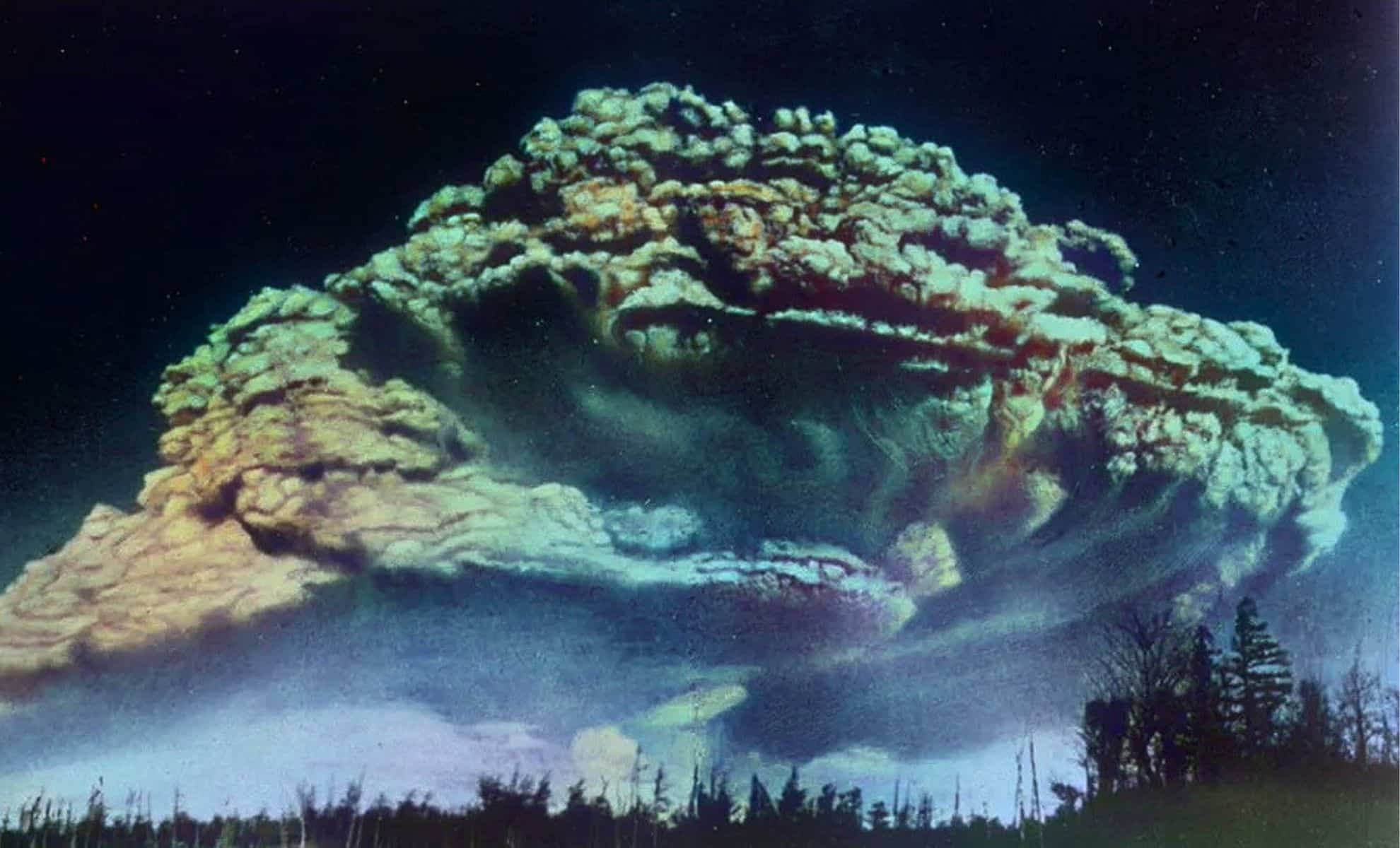
A Soviet-era eruption once blasted a giant crater into the side of Bezymianny volcano, leaving the mountain decapitated and unstable. That was in 1956. Today, the stratovolcano in Russia’s remote Kamchatka Peninsula has almost completely recovered its pre-eruption height — and scientists are tracking every meter of its comeback.
This isn’t just a geological curiosity. The volcano’s rebuilding process is offering one of the clearest, most data-rich windows into how a volcanic edifice regrows after catastrophic collapse. Each new lava flow, pyroclastic deposit, and thermal anomaly adds detail to a decades-long experiment being run by nature itself.
What makes Bezymianny stand out isn’t just that it erupted violently — it’s how fast it’s been rebuilt. Researchers monitoring the volcano say it’s on pace to fully restore its 3,113-meter peak by the early 2030s. The implications are both scientific and practical, especially for regions worldwide with similar volcanoes sitting quietly — or not so quietly.
Decades of Volcanic Construction—Not Destruction
Bezymianny’s 1956 eruption was one of the most significant explosive events of the 20th century. A lateral blast destroyed the volcano’s eastern flank, carving a 1.3-kilometer-wide amphitheater-shaped crater and releasing an estimated 0.7 cubic kilometers of rock into the atmosphere. The collapse bears strong similarities to the Mount St. Helens eruption in 1980.
But instead of going quiet, the volcano began to recover almost immediately. Within months, a lava dome started growing inside the new crater. Since then, ongoing eruptions, mostly small to moderate in scale, have contributed to a near-continuous process of rebuilding.
From 1956 to 2017, researchers documented an average addition of 26,400 cubic meters of volcanic material per day, as reported in a 2020 study published in Communications Earth & Environment. This steady output came largely through dome growth and effusive lava flows. These flows — less rich in silica and less viscous than earlier eruptions — helped reshape the volcano’s flanks and restore its stratovolcano profile.
The study projected that Bezymianny may reach its original elevation between 2030 and 2035, assuming the current rate of activity continues.
New Ash Plumes, Thermal Spikes and Satellite Clues
In late 2025, Bezymianny delivered fresh evidence of its activity. A November eruption sent an ash cloud 10 kilometers (32,800 feet) into the air, accompanied by pyroclastic flows cascading down the southeastern flank. These events were documented in the Weekly Volcanic Activity Report by the Smithsonian’s Global Volcanism Program.

That eruption followed an October explosion which produced a plume reaching 11 kilometers in altitude. Ash from that event traveled nearly 900 kilometers. Copernicus Sentinel-2 satellite images captured intense thermal anomalies and fresh lava flows moving down the slope.
During this active period, the Kamchatka Volcanic Eruption Response Team (KVERT) raised the Aviation Color Code to Red, before gradually reducing it as activity subsided. These alert levels, issued through the Volcano Observatory Notice for Aviation (VONA) system, are critical for managing nearby airspace, given Kamchatka’s proximity to international flight paths.
Thermal monitoring networks, including Italy’s MIROVA detection system, confirmed sustained volcanic heat output, consistent with ongoing lava extrusion beneath the summit crater.
A Rare Look at Stratovolcano Regrowth
Volcanoes do rebuild after collapse, but few have been tracked as closely — or for as long — as Bezymianny. This makes it a unique case study for how andesitic stratovolcanoes evolve after large-scale structural failure.

One of the key insights from decades of monitoring is the recentralization of eruption vents. Initially dispersed across the crater floor, eruptive activity has gradually moved toward the summit. This trend, confirmed in the 2020 Nature study, suggests a reorganization of internal stress fields and a maturing conduit system — markers of a more stabilized volcanic edifice.
That stability may be temporary. Bezymianny’s history includes signs of multiple sector collapses over the Holocene epoch, raising concern that the fast-growing cone may again become structurally unstable. The volcano is part of the Eastern Kamchatka Volcanic Arc, a seismically active region along the Pacific Ring of Fire, where explosive behavior is common.
Events like the 1956 eruption are not one-offs in these settings. Many volcanoes around the world, including Mount St. Helens, Shiveluch, and Soufrière Hills, have experienced repeated cycles of collapse and regrowth — some with little warning.
The Mountain Is Back—But Not Necessarily Stable
By 2017, Bezymianny’s summit had already reached 3,020 meters, just 90 meters short of its original height. Full recovery could occur within the next decade, depending on eruptive frequency and lava supply rates.
Yet with every new layer of rock, the pressure on older, fractured flanks increases. As the cone rises, its steepness and load distribution make it vulnerable to gravitational collapse. This is especially concerning for cones formed within horseshoe-shaped craters, like Bezymianny, where the underlying structure is already weakened.
Even in periods of apparent calm, the volcano remains under 24/7 observation by researchers, satellites, and thermal sensors. The knowledge gained from this continuous monitoring is already shaping global volcanic risk models, helping scientists better anticipate the behavior of other high-risk volcanoes worldwide.