
Bangladesh on Friday erupted in violence after a youth leader, Osman Hadi, died at a Singapore hospital, about a week after he was shot, leading to large-scale arson and attacks on media outlets. A Hindu man was lynched in the violence, raising questions over the safety of minorities in the neighbouring country.
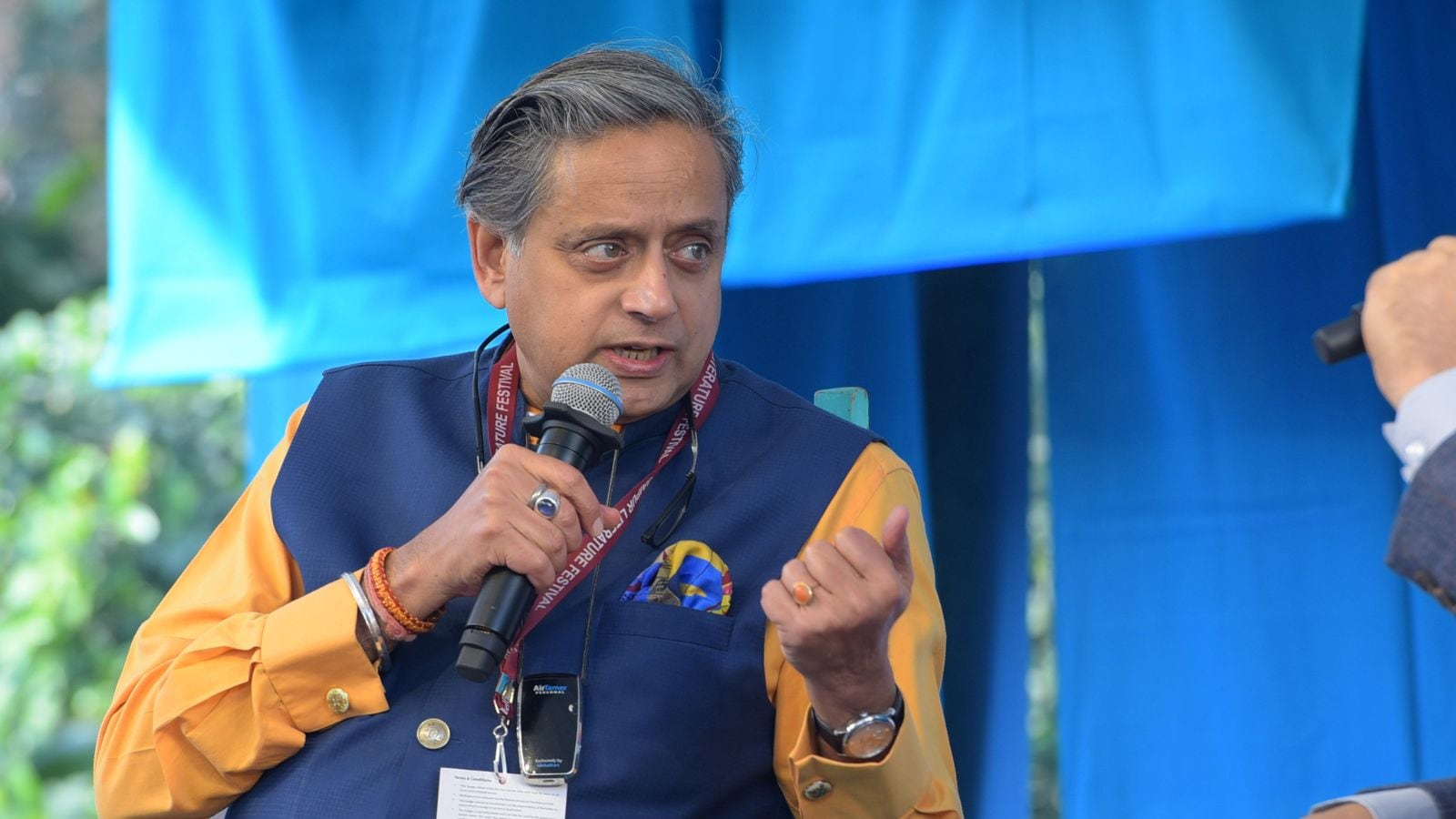
In an interview to The Indian Express, Shashi Tharoor, Congress MP and chairman of the Parliamentary Standing Committee on External Affairs speaks about the evolving situation in Bangladesh under Nobel laureate Mohammad Yunus, who is the Chief Advisor to the interim government; ousted Bangladeshi PM Sheikh Hasina; and what New Delhi can do in such a situation to bring back normalcy in the neighbouring country. Excerpts:
* Is the situation in Bangladesh a reflection of the Jamaat-e-Islami’s empowerment in the post-Sheikh Hasina era?
It is partially that but it is also much more. The situation reflects the empowerment of a large number of lawless elements whom Hasina had been able to curb during her stabilising rule.
It is true that Hasina was not as democratic as she should have been, particularly in terms of failing to include elements like the Bangladesh Nationalist Party (BNP) of Begum Khaleda Zia.
What has happened after the student-led revolt is a combination of mobocracy being unleashed, with elements which came to the fore during the student movement, including criminals released from prison, and the empowerment of Islamists such as the Jamaat and other like-minded groups, who now have been able to gain a free hand. These unruly elements are on the loose and are running amok.
Events of yesterday (Friday) essentially show a kind of mob rule or what is called ochlocracy, where the street is running the government or bypassing it. Today’s (Saturday’s) statement from the government is pleading with these people to behave and is condemning these things as if it is a helpless observer.
We need to see not just condemnation but concrete action like exemplary punishment for evildoers and some effort to rein in these forces, through force if necessary.
I do not know if (interim head) Mohammad Yunus has the appetite for that as he also knows that Hasina was overthrown because attempts to curb the streets spiralled and went out of hand, resulting in the killing of some protesters. Her attempts to curb protesters ignited larger protests.
Friday’s incidents cannot augur well for the stability of Bangladesh, let alone for the future of any democracy emerging from the process.
* What is your assessment of how the government handled the post August 5 situation?
The Parliamentary Standing Committee (on External Affairs) studied this in some detail and came up with a report just a few days ago. We commended the government on a constructive approach while urging it to support forces working towards (setting up) an inclusive democracy in Bangladesh.
Lawlessness is dangerous, even for us and some of the statements from these elements on the streets are disquieting. In any country, people should be free to express their views that may be critical of India but there is a limit on statements that can be deemed acceptable.
If an Indian politician threatened to break up Bangladesh or conquer it, Bangladesh would be perfectly justified in protesting and urging India to curb or discipline such voices. But when a student leader makes an inflammatory speech, threatening to cut off India from its seven northeastern states, to a crowd of thousands, the voices are unfortunately associated with the forces behind the interim government. Needless to say, it is not something we must be happy to hear.
The government of India is bound to be looking very, very carefully at the evolving situation (in Bangladesh). We have been supportive of free and fair elections there. If people are intimidated by lawlessness and violence, they cannot participate in a free and fair election.
Also, I particularly worry about the minorities. Friday’s incident, where a mere false accusation of blasphemy led to the lynching of a poor Hindu, was actually a work-related dispute. It had nothing to do with him saying anything about the Prophet. Yet, he was murdered over the accusations. This is the kind of intolerance that is beginning to rear its ugly head and I would urge the interim government to take matters more firmly in its hand. I hope our government is also conveying the same message.
Yunus is a respected figure across the world and it is not enough for him to wring his hands and say sorry or to just condemn what happened. He needs to take decisive steps to prevent it from recurring and punish those who have done it. These things will keep happening if there is no exemplary punishment.
* What options does the government have?
India cannot interfere in the domestic affairs of a neighbouring country. But as a country which has contributed in many ways to the Bangladeshi nation and people, we can certainly exercise our diplomatic influence in Dhaka to persuade the (Yunus) government to take constructive steps.
* There is a strong demand by the Yunus government and protesters to return Hasina to Bangladesh …
We have asked the government for its response on the issue. They said they are studying it with all legal caveats and due processes. This is no small matter, both in terms of legal obligations of the Indian government under the existing treaty with Bangladesh and the obvious question of political impact, as well as our own relationship with Hasina, which has been built over decades.
All these factors will have to be considered. I do not think any one of us can foretell what the decision might be or when it would be taken.