When Atal Bihari Vajpayee’s 13-month government fell by one vote in April 1999, there were murmurs in the NDA that the alliance should try to stake fresh claim with the support of some new parties after replacing Vajpayee.
However, the move was stonewalled by Trinamool Congress supremo Mamata Banerjee and MDMK leader Vaiko, who also had the support of BJD chief Naveen Patnaik. Vajpayee survived, and the NDA returned to power for five years once fresh elections were ordered.
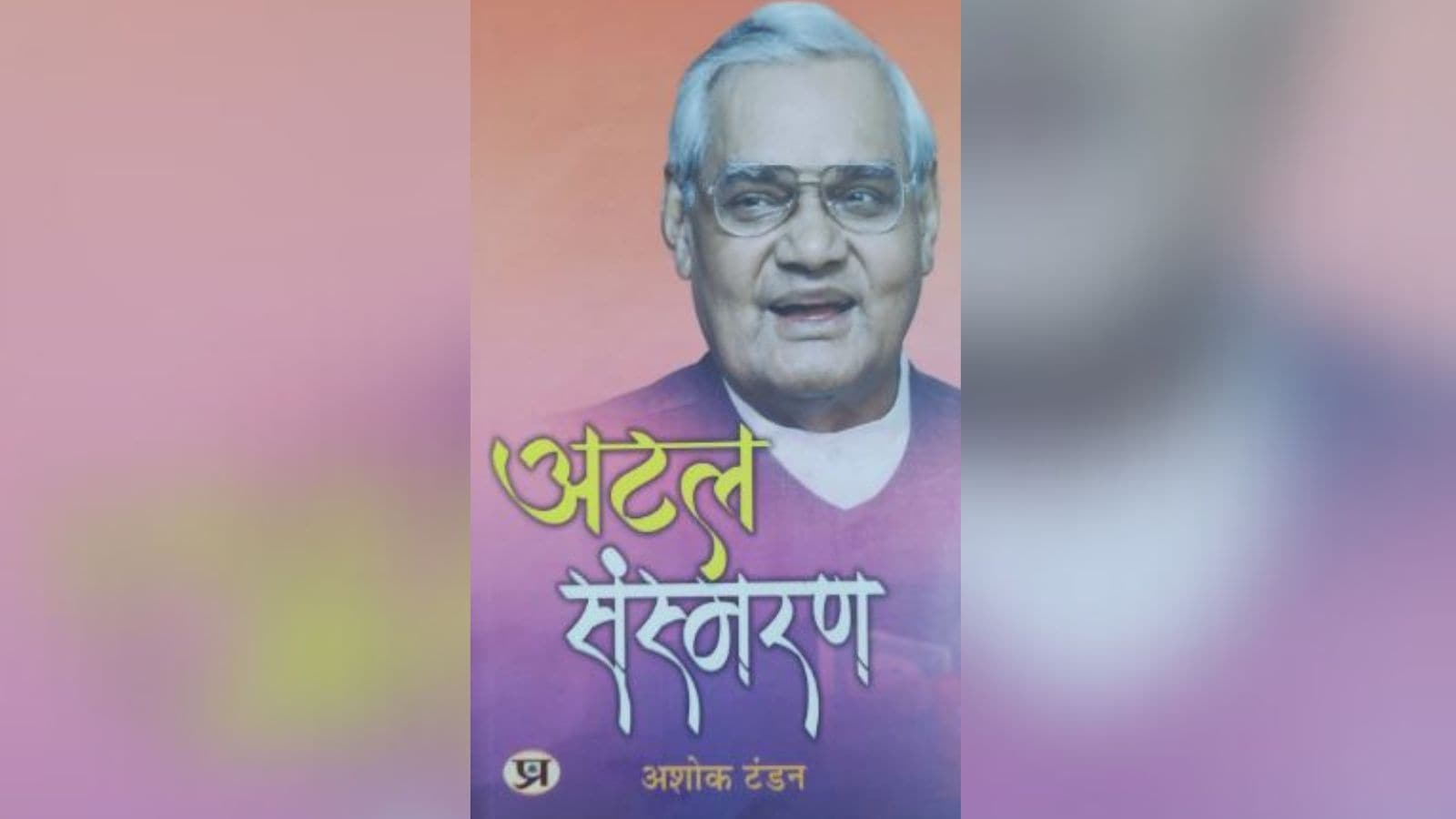
Ashok Tandon, a member of Vajpayee’s PMO as in-charge of media relations, writes about this little-known anecdote of 1999 in his book Atal Sansmaran, which was released on Tuesday.
The argument was that “if the United Front government (which preceded the NDA’s) could replace H D Deve Gowda as Prime Minister with I K Gujral, why could the NDA not do the same” to explore forming an alternative government, Tandon writes.
But Banerjee and Vaiko rejected the idea straightaway, saying there would be “No NDA government without Vajpayee”. Patnaik also took the same line.
Tandon says, “Mamata Banerjee and Vaiko could go to any extent to defend Vajpayee, be it at an NDA forum or a public rally — Mamata considered him a father figure and freely poured her heart out when she spoke with him.”
As per Tandon, what remained unclear to those in the PMO was who was behind the campaign to replace Vajpayee.
The senior journalist also writes about why no alternative government could be formed after the fall of the Vajpayee ministry, despite the combined Opposition having the numbers. According to him, Congress president Sonia Gandhi tried, but felt betrayed by the Left, and hence refused to support any ‘third front’ parties.
The “betrayal”, as per Tandon, was that Gandhi had come to know that even as CPI(M) leader Harkishan Singh Surjeet encouraged her to stake claim to form the government after Vajpayee’s ministry fell, he goaded Samajwadi Party chief Mulayam Singh Yadav to say he would not support her as PM.
Tandon cites from Gujral’s book Matters of Discretion to say that Surjeet wanted Jyoti Basu to be PM. Gujaral also wrote that he had cautioned Gandhi on April 20, 1999, to not be “naive” and trust the Left, saying it would betray her at the last moment.
In Tandon’s words, Surjeet shared with Gandhi a list of 288 MPs apparently ready to support the Congress, asking her to stake claim. Accordingly, she met President K R Narayanan on April 21, 1999, and told him she had the support of 272 members, and more would join. The next day, Mulayam and the Left bloc’s Revolutionary Socialist Party and Forward Bloc vetoed the name of Gandhi, indicating their 28 MPs would not support the Congress if she was the PM.
According to Tandon, while Surjeet wanted Basu as PM, he also had a plan-B in case the West Bengal Chief Minister refused – President Narayanan, whose candidature would have been hard to deny given his stature and the fact that he was a Dalit.
Tandon says Gandhi felt she had been “used” to topple the Vajpayee government and to install a ‘Third Front’-led government. And that she put her foot down and said she would not accept any government not led by the Congress. The stalemate meant no government could be formed, and the country had to go for fresh elections, with Vajpayee returning to power for a full five-year term, writes Tandon.
The book also says that when Vajpayee was well into his first full term, the BJP suggested that he take over as President and hand over the prime ministership to his deputy, L K Advani. However, Tandon writes, Vajpayee refused.
According to Tandon, “Vajpayee was not ready for this. He believed that for any popular prime minister, becoming President by virtue of majority would not be a good sign for Indian parliamentary democracy. It would set a very wrong precedent, and he would be the last person to support such a move.”
Tandon writes that Vajpayee then invited leaders of the Congress so that a consensus could be built for the post of President. “I remember that Sonia Gandhi, Pranab Mukherjee, and Dr Manmohan Singh came to meet him. Vajpayee officially revealed for the first time that the NDA had decided to nominate Dr A P J Abdul Kalam as their candidate for the presidential election… There was a moment of silence… Then Sonia Gandhi broke the silence and said that they were surprised by his choice, and that they had no option but to support him, but they would discuss his proposal and then make a decision.”
On ties between Vajpayee and Advani, Tandon writes that despite differences on some policy issues, the relationship between them never soured.