
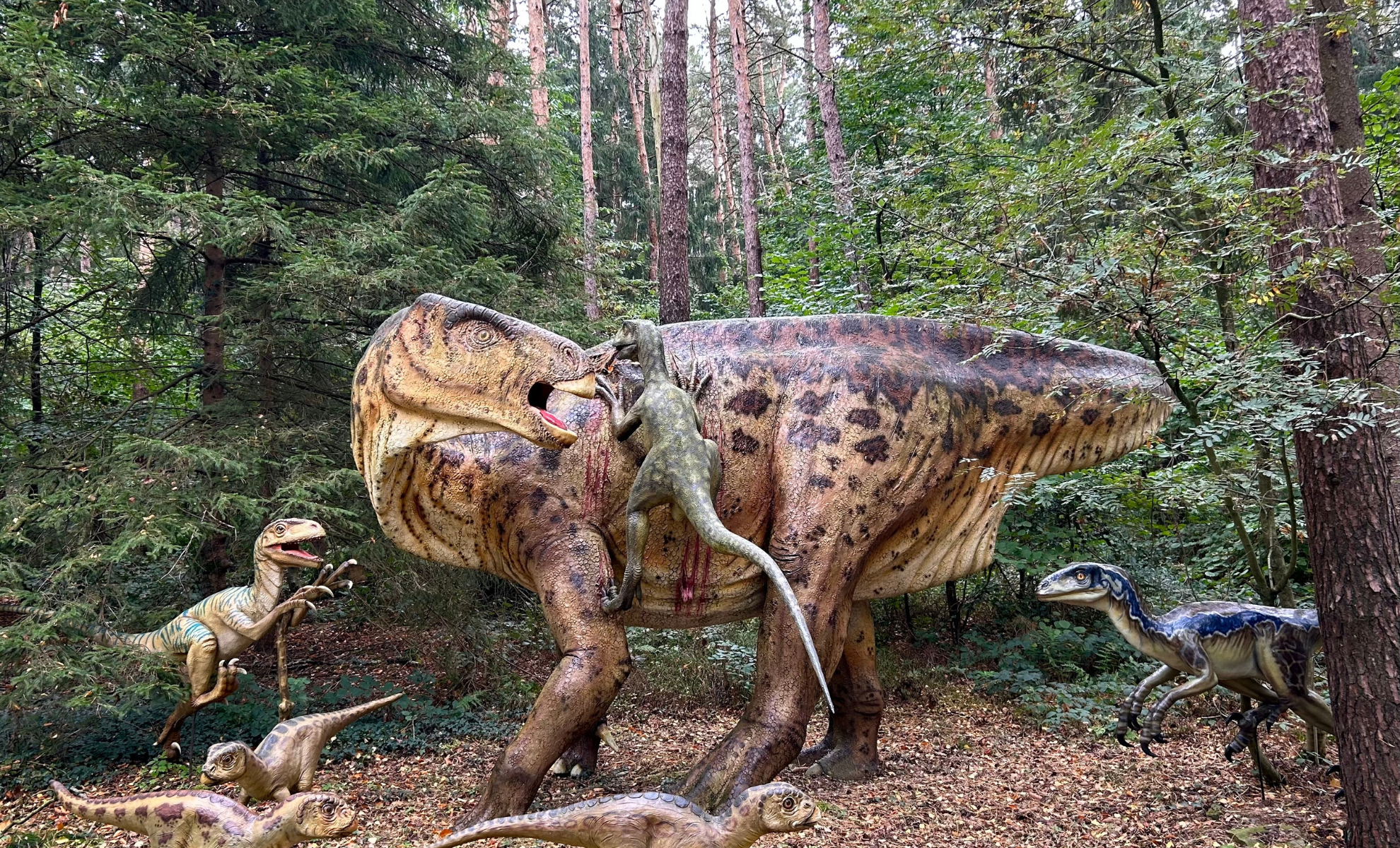
For a long time, scientists have compared dinosaurs to modern mammals, assuming they played similar roles in their ecosystems. However, a key difference in how they raised their young has recently come to light. Unlike mammals, where offspring remain dependent on their parents for years, juvenile dinosaurs quickly became independent, filling distinct ecological roles. This shift in understanding is offering fresh insights into the ecological diversity of the Mesozoic era and how these ancient ecosystems functioned, as highlighted in a recent study published in the Italian Journal of Geosciences.
Rethinking Dinosaur Ecosystems: The Hidden Parenting Difference
For years, scientists have compared dinosaurs to modern mammals, given their shared dominance in their respective time periods. However, a recent study led by Thomas R. Holtz Jr., a principal lecturer at the University of Maryland, brings to light a crucial factor that has often been overlooked—their vastly different reproductive and parenting strategies. Published in the Italian Journal of Geosciences, Holtz’s research sheds new light on how dinosaurs raised their young, suggesting that the way offspring became independent early in life played a significant role in shaping Mesozoic ecosystems.
“A lot of people think of dinosaurs as sort of the mammal equivalents in the Mesozoic era, since they’re both the dominant terrestrial animals of their respective time periods,” Holtz explained. “But there’s a critical difference that scientists didn’t really consider when looking at how different their worlds are: reproductive and parenting strategies. How animals raise their young impacts the ecosystem around them, and this difference can help scientists reevaluate how we perceive ecological diversity.”
Helicopter Parents vs. Latchkey Kids: The Mammal-Dinosaur Divide
Mammals, as we know them today, tend to have a very different approach to parenting compared to dinosaurs. In the case of mammals, the maternal bond is strong, and young animals remain under the close care of their parents for an extended period. Holtz compares this parenting style to the idea of “helicopter moms.” “You could say mammals have helicopter parents, and really, helicopter moms,” he said. “A mother tiger still does all the hunting for cubs as large as she is. Young elephants, already among the biggest animals on the Serengeti at birth, continue to follow and rely on their moms for years. Humans are the same in that way; we take care of our babies until they’re adults.”
This extended dependence allows mammalian offspring to fill similar ecological roles as their parents, living in the same environments, interacting with the same species, and relying on adult animals for protection and food. However, dinosaurs operated differently. Their young did not remain under constant care from their parents but became relatively independent much earlier. Holtz’s research argues that this stark difference in parenting had far-reaching consequences for the ecological roles these species played.
The “Latchkey Kid” Dinosaur: Independent from the Start
When we look at dinosaurs, the parental care they provided was far less involved than what we see in mammals. Holtz draws an interesting parallel between dinosaurs and modern-day crocodilians, which are some of the closest living relatives of dinosaurs.
“Dinosaurs were more like latchkey kids,” Holtz remarked. “In terms of fossil evidence, we found pods of skeletons of youngsters all preserved together with no traces of adults nearby. These juveniles tended to travel together in groups of similarly aged individuals, getting their own food and fending for themselves.”
This early independence meant that young dinosaurs could explore ecological niches that their parents could not. This is a stark contrast to the way mammals raise their young, which generally stay in close proximity to their parents for years. The difference in these strategies could explain why dinosaurs were able to occupy diverse roles within their ecosystems, with juveniles filling niches that were left untouched by the adults.
Ecological Niche Partitioning: What Juvenile Dinosaurs Could Teach Us
The concept of “niche partitioning” plays a crucial role in this new understanding of dinosaurs. Holtz explains that the early separation between parent and offspring, combined with the size differences between dinosaurs, led to profound ecological consequences.
“The key point here is that this early separation between parent and offspring, and the size differences between these creatures, likely led to profound ecological consequences,” he noted.
As a dinosaur matured, its role in the ecosystem shifted dramatically. For instance, a juvenile Brachiosaurus would have occupied different food sources and faced different predators compared to the fully grown adults.
“Over different life stages, what a dinosaur eats changes, what species can threaten it changes, and where it can move effectively also changes,” Holtz said. This transformation of ecological roles as the dinosaur grew meant that the young and the adults were essentially occupying different ecological niches—effectively becoming different “functional species.”
A More Diverse Mesozoic World?
Holtz’s research suggests that this form of “ontogenetic niche partitioning” led to greater functional diversity in dinosaur ecosystems. By treating juvenile dinosaurs as distinct ecological players, Holtz argues that the overall number of species in a given ecosystem—when considering both adults and juveniles—could have been far greater than previously understood.
“This early separation between parent and offspring likely increased the overall biodiversity of the Mesozoic world,” Holtz suggests. “While adults and offspring are technically the same biological species, they occupy fundamentally different ecological niches. So, they can be considered different ‘functional species.’”
This insight has the potential to drastically alter how scientists interpret fossil records. It suggests that the diversity of species in ancient ecosystems was not only higher than previously thought, but that these species were often functionally distinct throughout their life stages.
Environmental Conditions and the Mesozoic’s Ecological Diversity
Another aspect of the study considers the environmental conditions of the Mesozoic world and how they might have supported such a high level of functional diversity. Holtz notes that the planet was likely warmer, with higher levels of carbon dioxide in the atmosphere, which could have supported more plant growth. This, in turn, would have provided more food and energy to sustain a higher number of species.
“Our world might actually be kind of starved in plant productivity compared to the dinosaurian one,” Holtz suggested.
This difference in productivity could have been key to supporting the complex ecological relationships between juvenile and adult dinosaurs. Additionally, Holtz speculates that dinosaurs might have had lower metabolic rates than similar-sized mammals, allowing them to survive on less food and thus sustain larger, more diverse ecosystems.