
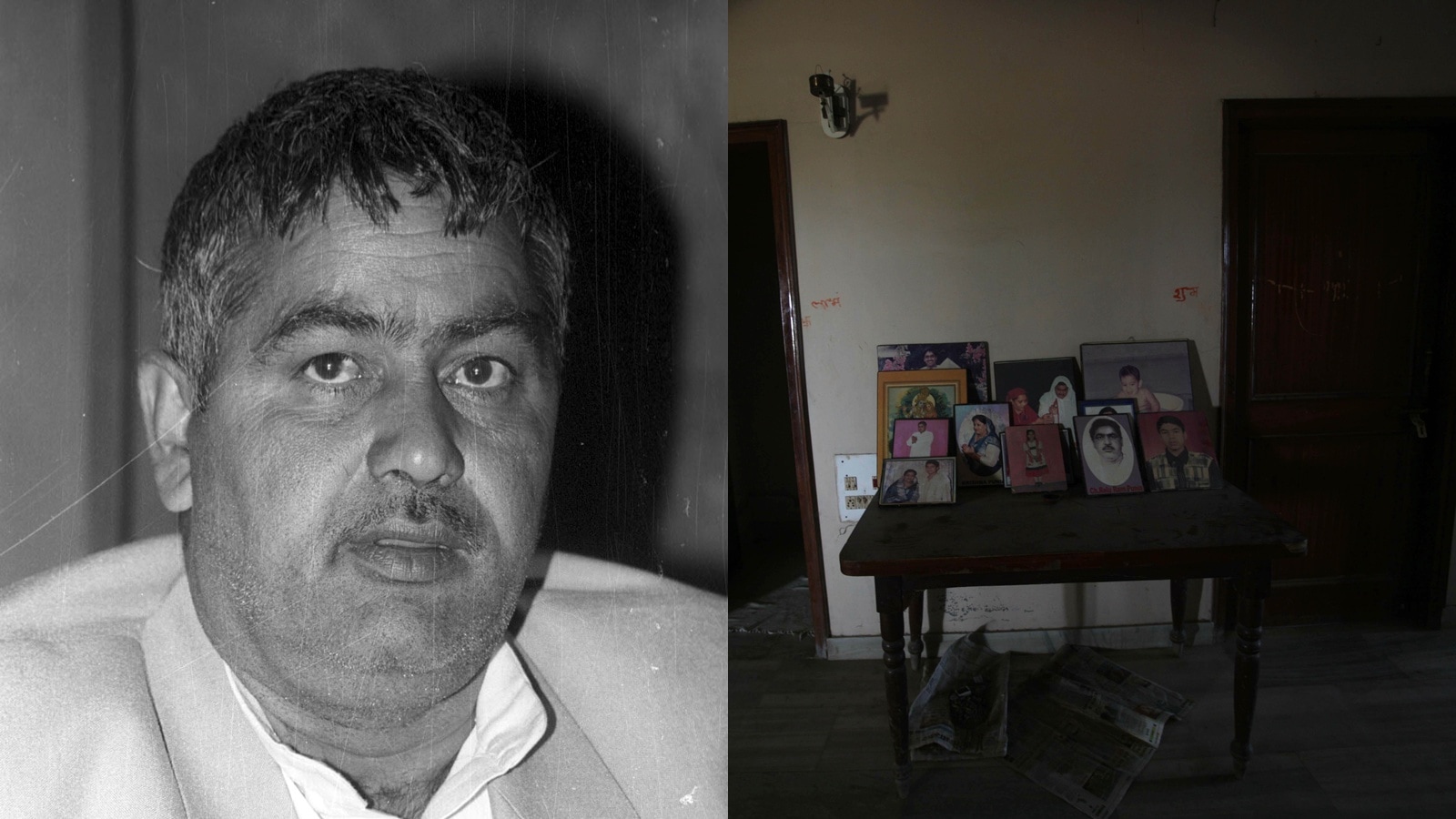
On the night of her 19th birthday on August 23, 2001, Sonia Punia and her husband Sanjeev Kumar committed one of Haryana’s most chilling crimes, bludgeoning eight members of her family – including her father, former MLA Relu Ram Punia, her stepmother, two siblings, a sister-in-law and three minor children – to death with iron rods and sticks as they slept at their home in Hisar’s Uklana.
Sonia was convicted for the murders along with Sanjeev, with the prosecution linking it to her motive that she was being driven out of Relu Ram’s massive properties worth hundreds of crores.
Now, 24 years after the massacre shocked the nation, the property dispute in the Punia family has again come into the spotlight.
In a recent order, Justice Surya Pratap Singh of the Punjab and Haryana High Court set aside the Haryana government’s rejection of Sonia Punia’s premature release, calling its order “patently perverse, illegal and unsustainable in the eyes of law”.
The high court ordered a fresh review of her case under the state’s 2002 premature release policy, and granted her interim bail. Her husband and co-convict Sanjeev also got the same relief, with both set to walk out of Hisar Central Jail now.
What was the incident?
Relu Ram had built his mansion on two acres of land near Litani village in Uklana. It is still considered among the most palatial houses (havelis) in Hisar, where a car could be driven directly onto its second-floor. It is said that Relu Ram used to drive his car straight up to his bedroom.
Among those clubbed to death were Relu Ram (50), his second wife Krishna (41), their younger daughter Priyanka (14); his son by his first marriage Sunil (23), Shakuntala Devi (20, Sunil’s wife), their son Lokesh (4) and daughters Shivani (2) and Preeti (one-and-a-half months).
Story continues below this ad
The massacre took place during the tenure of the INLD government under chief minister Om Prakash Chautala.
IN 2004, the trial court convicted Sonia and Sanjeev, sentencing them to death. While the Punjab and Haryana High Court commuted it to life in 2005, the Supreme Court upheld the death sentence in 2007.
In 2013, commuting the death sentence to life, the apex court cited the time the two convicts had already spent in custody since their arrests in 2001 – 12 years 3 months until then – besides delays in disposal of their mercy petitions.
The commutation of their sentences enabled the couple eligible for parole or furlough to meet their only child Prashant, who was aged 12 in 2013 and was being looked after by Sanjeev’s family. Both Sonia and Sanjeev, lodged in Ambala jail, used to meet each other once a fortnight.
Story continues below this ad
Who was Relu Ram?
Ex-Haryana MLA Relu Ram grew up in poverty and grazed buffaloes. Later, he moved to Delhi where he washed trucks before starting to drive them. He then started a crude oil business, going on to amass huge wealth. He bought over 100 acres of land, built mansions in Faridabad and Delhi, and set up more than 13 shops at various places.
Relu Ram was once considered close to ex-CM Bansi Lal’s Haryana Vikas Party (HVP). In the run-up to the 1996 state Assembly elections, he was an aspirant for a HVP ticket. But when the HVP did not field him, he contested the election from Hisar’s Barwala constituency as an Independent candidate. His election symbol was a train, with his campaign giving a slogan : “Relu Ram ki rail chalegi, bin paani bin tel chalegi”. He won the seat, defeating the HVP’s Anant Ram by 10,789 votes.
Relu Ram, however, did not enter the fray in the 2000 Assembly elections.
He had first got married to Oma Devi. Relu and Oma had a son Sunil, while he and his second wife Krishna had two daughters, Sonia and Priyanka.
Story continues below this ad
What was the property dispute?
Sonia was said to have a dispute with her step-brother Sunil over nearly 46 acres of agricultural land around the Uklana farmhouse. This often led to arguments between them, and a few weeks before the murders, Sonia had also threatened Sunil with a revolver. After the massacre, Relu Ram’s brother Ram Singh Punia and his family moved into the farmhouse in 2004.
At the time of her arrest, during her custodial interrogation, Sonia had told the investigators that “Papa wanted to give all his property to my stepbrother Sunil. The papers had already been prepared. He had 100 acres of land, 13 shops in Nangloi, a mansion in Faridabad, several other houses, and three cars.”
What is the new row?
A fresh property dispute seems to have started brewing in the Punia family immediately after decks were cleared for the release of Sonia and Sanjeev from jail. From inside the prison, Sonia had written to the District Legal Services Authority, asserting her claim over her father’s properties. She argued that she should inherit Relu Ram’s properties and that her son Prashant is also entitled to it. She claimed her rights over the Litani Mor mansion, agricultural land in Daulatpur, agricultural land and multiple shops in Nangloi, and various other assets that belonged to her father.
Ram Singh’s son Jitendra Punia (Relu Ram’s nephew) has been opposed to Sonia and Sanjeev’s release. He too had been staking claim on his uncle’s properties.
Story continues below this ad
After Relu Ram’s murder, his various assets went to Ram Singh, that included his bank accounts in SBI and PNB; the PNB bank accounts of Krishna, Sunil and Priyanka besides Krishna’s LIC policy.
Jitendra has argued that Ram Singh got the legal heir status from the court and is thus entitled to Relu Ram’s properties.
Some legal experts say that under Section 25 of the Hindu Succession Act, a person who commits murder or abets the commission of a murder becomes disqualified from inheriting the deceased’s property.