
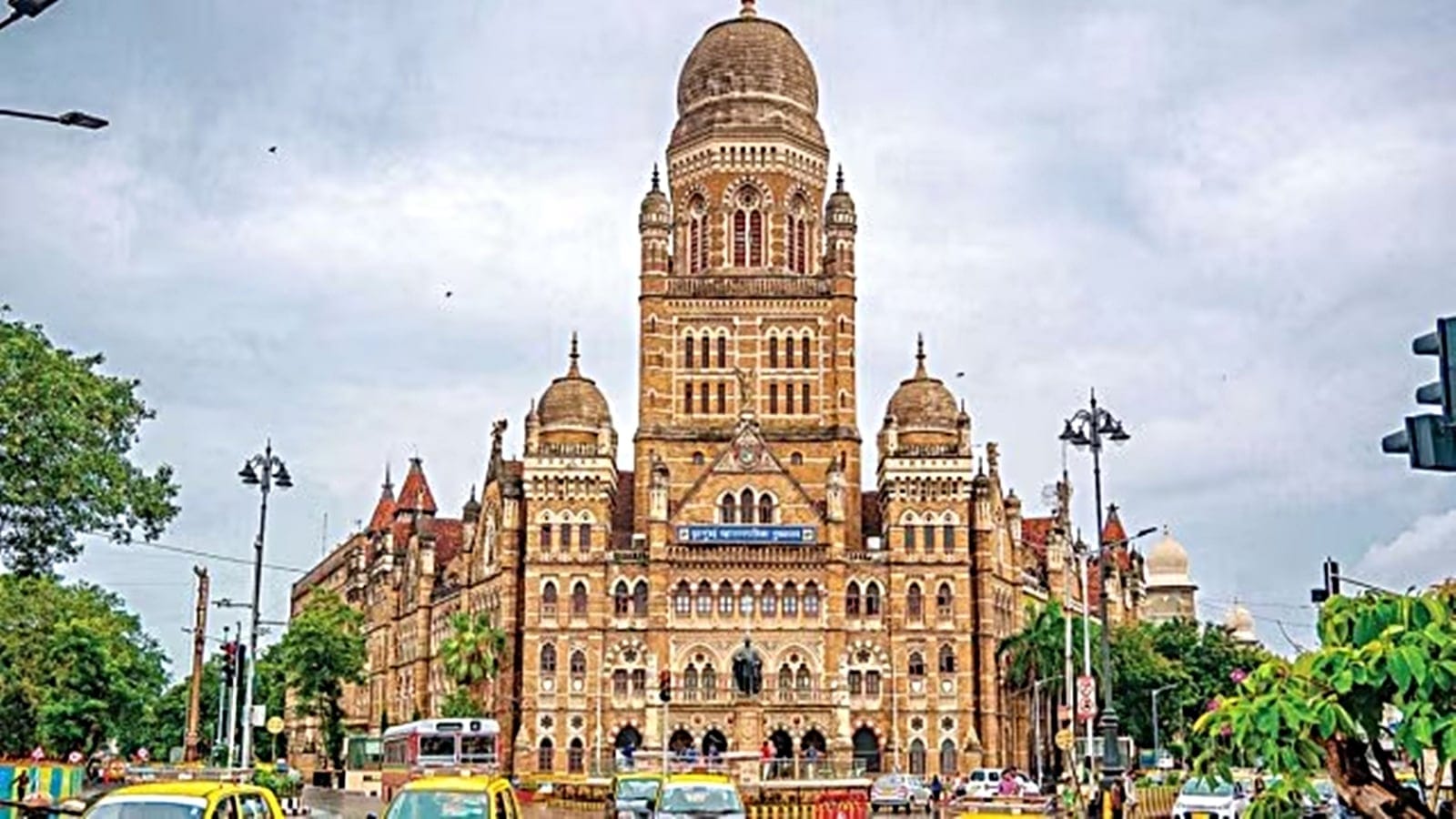
For a party that once dominated Mumbai’s civic landscape for decades after Independence, the Congress now enters every Brihanmumbai Municipal Corporation (BMC) election as little more than a bystander in a contest shaped by others. Despite its national stature and deep organisational roots in Maximum City, the party has struggled to reassert itself in the fight for control of India’s richest municipal corporation. With the first phase of Maharashtra’s civic body elections completed for municipal councils and municipal panchayats, polling dates for municipal corporations including the BMC are yet to be announced.
Its last victory in the BMC came in 1992, and the three decades since have marked a steady decline. Internal discord, a fractured leadership, shifting demographics, and the erosion of core vote banks have left the Congress undertaking the arduous task of proving its relevance once again as the polls for the 227-member corporation draw near.
Dominance and first real challenge
In the decades following Independence and the creation of Maharashtra in 1960, the Congress seamlessly carried forward its position as the default political authority in what was then known as Bombay. The party’s leadership held an undeniable sway over the city’s political landscape, and for years civic elections were shaped less by inter-party competition and more by the Congress’s own internal dynamics.
In its early years, the Congress faced challenges from the socialists and the Communists, but its dominance remained largely unshaken. This was reflected most clearly in the mayoral elections between Independence and 1968, when the first modern BMC polls were held: all 21 mayors elected were associated with the Congress, and 15 of them were non-Marathis, underscoring both the party’s breadth and the cosmopolitan nature of its leadership.
The first significant jolt to the party came after the 1968 BMC elections, when despite emerging as the largest party with 65 of 140 seats, it lost the mayorship mid-term to the Shiv Sena’s Dr Hemchandra Gupte. The pattern repeated after the 1972 elections as the Congress once again secured the largest tally with 45 seats, yet failed to retain the mayor’s post.
 Party-wise seat won in BMC polls
It was during this phase that the Congress sought a tactical understanding with the Bal Thackeray-led Shiv Sena, an unlikely alliance between two ideologically divergent forces. But the partnership proved deeply unpopular. In the 1978 civic elections, both parties were swept aside in the Janata Party wave, with the Congress reduced to a marginal player.
The decline continued through the 1980s. While the Congress slumped to 37 seats, the Shiv Sena surged ahead with 74, cementing its dominance in the BMC.
The Congress staged a dramatic comeback in 1992, winning a commanding 112 seats and regaining control of the corporation. But the revival proved short-lived. By 1997, a resurgent Shiv Sena-BJP combine, buoyed by its ruling government in the state, once again pushed the Congress to the margins.
Since then, the Congress has only once mounted a serious challenge: in 2007, when it secured 75 seats, a performance it has been unable to replicate since. Its tally slid to 52 seats in 2012 and a mere 31 in 2017, marking a long, steady erosion of what was once the party’s unquestioned urban stronghold.
Why Congress lost its grip
A central reason behind the Congress’s long decline in Mumbai’s civic politics is its failure to recognise early enough that municipal elections were shifting away from questions of governance and service delivery and becoming battles over identity, local grievance, and cultural assertion of the Marathi manoos. This was a political arena in which the Shiv Sena, and later the BJP with its Hindutva narrative, excelled.
The party’s troubles were compounded by chronic factionalism. For an organisation long controlled by its national leadership, turf wars between Delhi-backed appointees and local strongmen repeatedly fractured its base. One of the most damaging episodes unfolded ahead of the 1985 BMC elections, when tensions between Chief Minister Vasantdada Patil and Bombay Congress chief Murli Deora spiralled into open internecine conflict.
Patil, seeking to undercut Deora, floated a rumour that Mumbai might be placed under central administration because it had become “too rich”. He followed this with the provocative remark: “Mumbai may be in Maharashtra, but I don’t see Maharashtra in Mumbai”. The Shiv Sena seized upon this, transforming the election into a referendum on Mumbai’s place within the Marathi cultural fold. The result was decisive, with the Sena capturing 74 of the 139 seats it contested, while the Congress slumped.
A similar pattern played out in 2007, when the Congress chose not to ally with the Sharad Pawar-led Nationalist Congress Party (NCP). Rivalries between CM Vilasrao Deshmukh, newly inducted leader Narayan Rane who had defected from the Shiv Sena, and Mumbai Congress president Gurudas Kamat eroded the party’s momentum just as the Shiv Sena was at its most vulnerable due to a wave of defections. The Congress fell agonisingly short of reclaiming the corporation.
Since then, the trajectory has remained downward, with the Congress entering the BMC battle weakened long before the campaign begins.
The strategy now
With the BJP emerging as the most financially and organisationally dominant force in Mumbai, a section of analysts and voters has argued that the Opposition would benefit from presenting a united front in the coming polls.
Yet history offers a cautionary reminder: For the Congress, alliances with the Shiv Sena have delivered only short-term gains and long-term setbacks. Each attempt at partnership, despite tactical advantages, has ultimately weakened the party’s organisational footprint and muddied its ideological identity.
It is this historical experience that informed the Congress high command’s November decision to endorse the Mumbai unit’s demand to contest the elections alone. The move marks an effort to reclaim political space the party has ceded or compromised in previous tie-ups, particularly with the Sena.
“We compromised during the Lok Sabha and Assembly elections, but our office-bearers feel that this civic election should be fought on our own strength. There’s nothing wrong in it,” AICC’s Maharashtra in-charge Ramesh Chennithala said when announcing the decision.
He said feedback from the grassroots had been unequivocal: constant alliances were eroding the party’s organisational presence across the city. “Lower-rung leaders have been telling us that the existence of the party organisation is jeopardised due to alliances at many places. These local body polls give us an opportunity to test the waters,” Chennithala said.