
New DelhiDecember 9, 2025 03:59 PM IST
First published on: Dec 9, 2025 at 03:46 PM IST
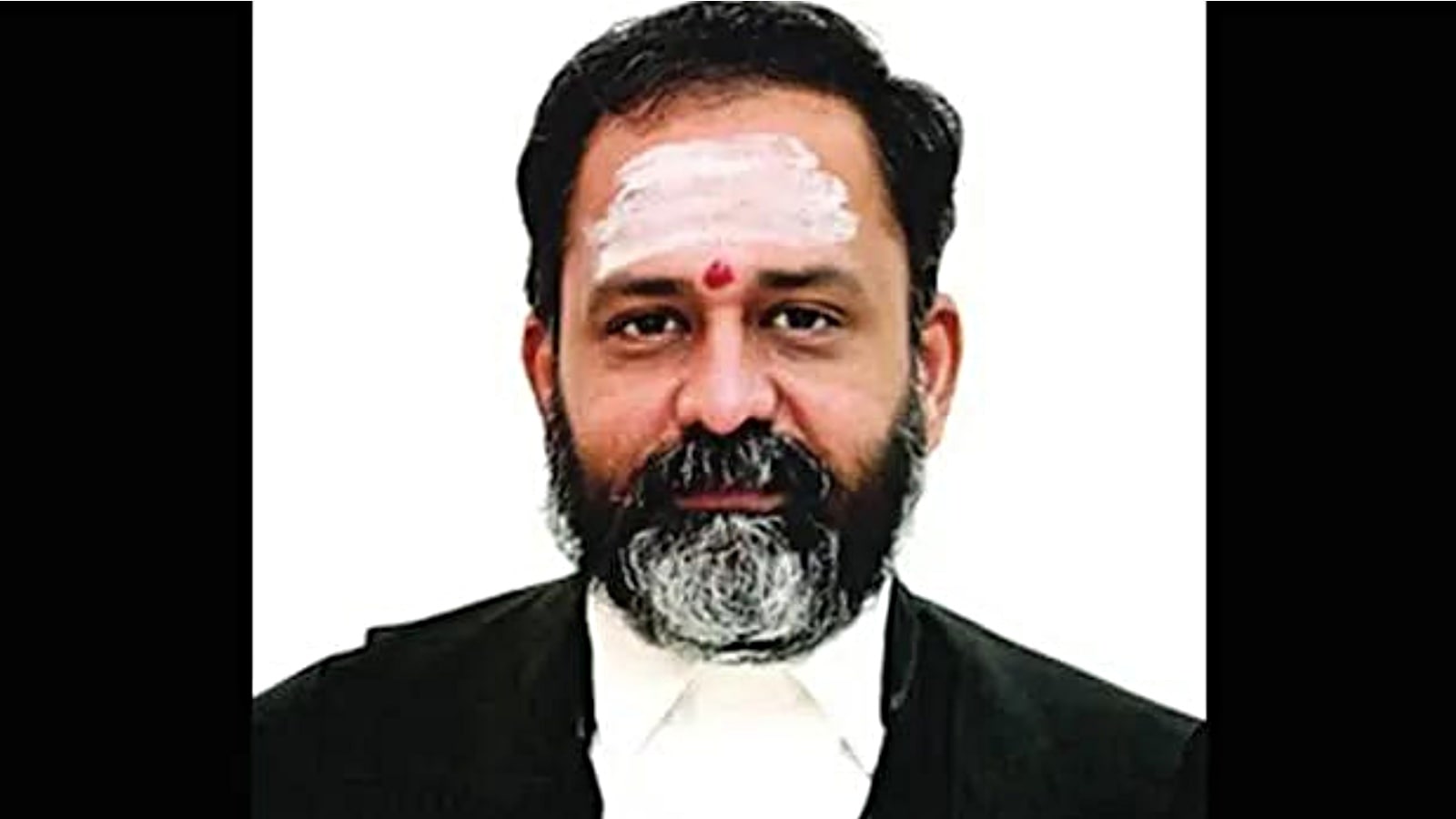
Asserting that the conduct of Madras High Court’s Justice G R Swaminathan raises serious questions regarding “impartiality, transparency, and the secular functioning of the judiciary,” over 100 MPs from the opposition INDIA bloc on Tuesday submitted a notice to Lok Sabha Speaker Om Birla for moving a motion to remove him.
Justice G R Swaminathan’s December 1 order over the lighting of the Karthigai Deepam lamp atop a stone pillar on the Thiruparankundram hill in Madurai, a site contested by Hindu temple authorities and an adjoining dargah, has triggered a political row in Tamil Nadu and landed the ruling DMK in a legal and political tussle. The DMK has alleged that efforts are underway to manufacture a communal flashpoint in the state months before the Assembly elections.

In their petition, the Opposition MPs have listed three grounds for seeking the judge’s removal. “The House resolves to pass the motion for the impeachment of Justice G R Swaminathan of the Madras on the following grounds of misconduct: The conduct of Justice G R Swaminathan raises serious questions regarding impartiality, transparency, and the secular functioning of the judiciary, undue favoritism shown to one Mr M Sricharan Ranganathan, Senior Advocate, in deciding the cases, also favoring advocates from a particular community, deciding cases on the basis of particular political ideology and against the secular principles of Indian Constitution,” it said.
Among the signatories of the petition, a move spearheaded by the DMK are Congress’s Priyanka Gandhi Vadra and Gaurav Gogoi; Samajwadi Party president Akhilesh Yadav, and NCP (SP) MP Supriya Sule.
Process to remove a judge
As per the Judges Inquiry Act, 1968, a complaint against a judge is taken up if it is signed by at least 100 members if moved in the Lok Sabha and 50 members if it is initiated in the Rajya Sabha. Once the motion is submitted, the presiding officer of the House takes a call on whether to accept or reject it.
The Constitution does not mention “impeachment”, but it is colloquially used to refer to the proceedings under Article 124 (to remove a Supreme Court judge) and Article 218 (to remove a High Court judge). If the motion is admitted, the Speaker or the Chairman constitutes a three-member investigative committee. It shall consist of a Supreme Court judge, the Chief Justice of a High Court, and a distinguished jurist.
The committee then frames charges based on which the investigation is conducted. After concluding its investigation, the committee submits its report to the Speaker or Chairman, who then has to lay the report before the relevant House. If the report records a finding of misbehaviour or incapacity, the motion for removal is taken up for consideration and debated.
For the motion to go through, at least two-thirds of those “present and voting” in both the Lok Sabha and the Rajya Sabha must vote to remove the judge, and the number of votes in favour must be more than 50% of the “total membership” of each House. Once both Houses adopt the motion by a special majority, it is sent to the President of India.
In his order on December 1, Justice Swaminathan of the Madurai Bench of the High Court directed the Hindu temple at the site, located atop a hill, to revive what he described as a “tradition” of lighting the Thiruparankundram Deepam, located near a historic dargah. Days later, he also issued a strong contempt order after officials failed to carry out the court’s directive, as the DMK government resisted it.
Justice Swaminathan said the petitioner and 10 others should get CISF escort — pointedly saying not the police — to climb the hill and light the lamp, calling the act “symbolic but necessary” to uphold the authority of the court. In speeches and writings, the judge has often expressed reverence for Hindu philosophy, classical Tamil tradition, and the idea of “continuity” with religious identity. His judgments in cases involving temple administration, religious rights, or traditional practices often include references to ancient texts. There have been other cases, too, where Justice Swaminathan has held that the State has “no authority to dilute Hindu ritual practice” under the cover of neutrality, public order, or administrative convenience. Some of these orders were later overturned or “softened” by Division Benches on appeal.