
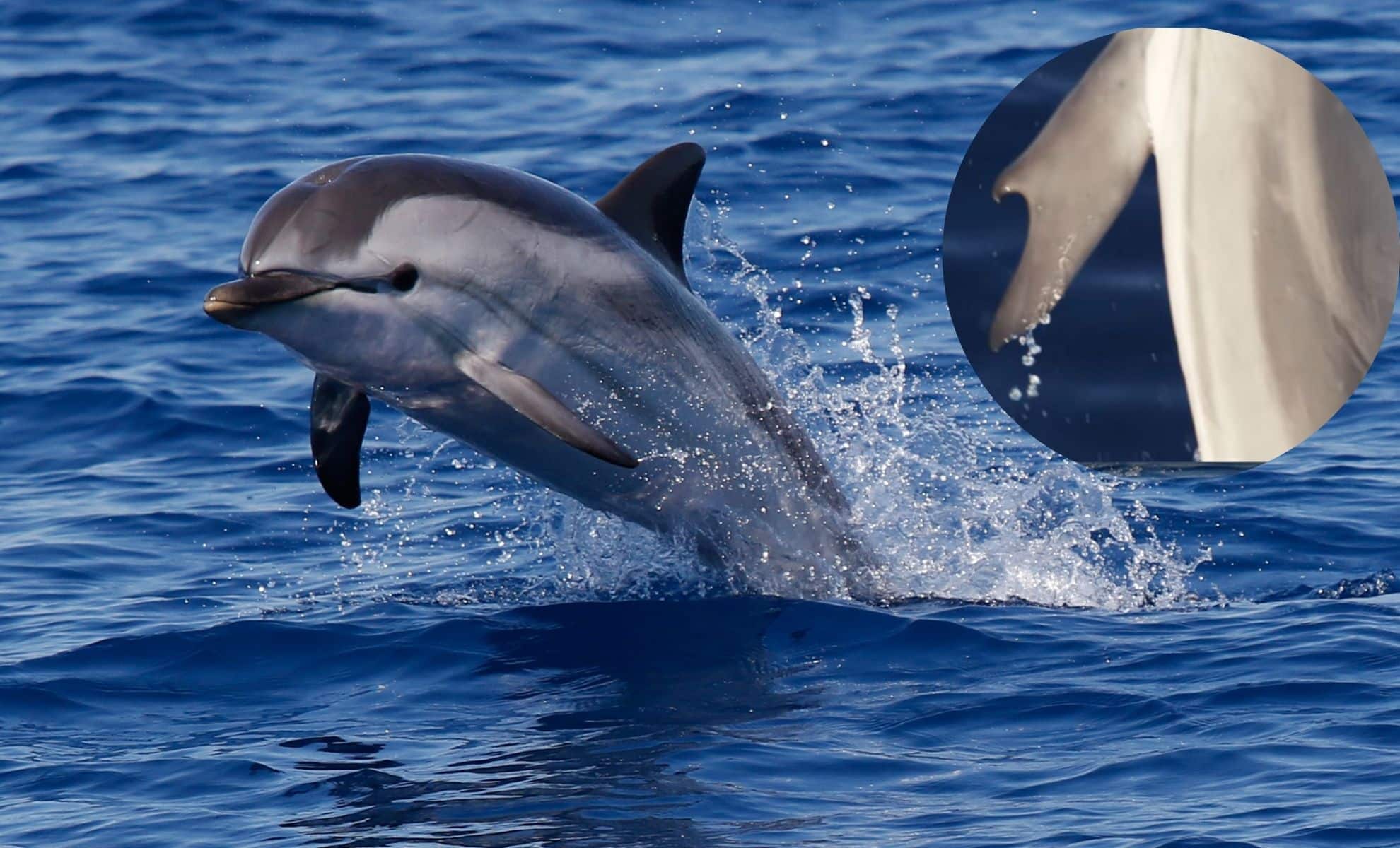
The striped dolphin, observed during surveys in the summer of 2023, is the first known example of this peculiar anomaly. Researchers from the Pelagos Cetacean Research Institute, who spotted the dolphin on two separate occasions, believe the unusual flipper deformity is the result of a genetic mutation that occurred during the dolphin’s development in the womb.
The Gulf of Corinth, a semi-enclosed area in the Ionian Sea, is home to a unique mix of dolphin species, including common dolphins, Risso’s dolphins, and striped dolphins. Despite decades of research in the region, this is the first time a dolphin with such distinctive flippers has been recorded. The sighting has raised questions about the potential genetic origins of the deformity, with experts suggesting it may be linked to the isolation of the local striped dolphin population.
A Genetic Oddity
The dolphin’s thumb-like flippers are believed to be the result of a genetic anomaly. According to Alexandros Frantzis, the scientific coordinator of the Pelagos Cetacean Research Institute, the flippers likely developed this way due to a rare genetic mutation during the dolphin’s early stages of development, reports Live Science.
The thumb-shaped protrusions, which appear as hook-like structures on both of the dolphin’s flippers, are not the result of injury or disease, Frantzis emphasized. Despite the deformity, the dolphin was seen swimming, leaping, and interacting normally with the rest of its pod, showing no signs of distress or impairment.

Marine anatomy experts, including Lisa Noelle Cooper, associate professor of mammalian anatomy and neurobiology, have suggested that the defect is genetic in nature. Cooper explained that the unusual shape of the dolphin’s flippers is likely due to an altered genetic program that directs the development of the animal’s forelimbs during its time in the womb.
Unlike most mammals, whose limbs develop with distinct finger-like structures, dolphins have flippers that are more akin to human hands in their skeletal structure, albeit encased in soft tissue. In this case, the flippers seem to have retained a part of this structure in a deformed form.
The Mystery of Dolphin Evolution
While cetaceans like dolphins, whales, and porpoises are known for having evolved distinct forelimbs, these structures are often much less pronounced than those of land mammals. Dolphins’ forelimbs are transformed into flippers that contain finger-like bones, but the cells between these bones typically die off before birth, leaving behind a soft tissue flipper.
In the case of this thumbed dolphin, however, it appears that the cells which would normally form the equivalent of the index and middle fingers died off prematurely during development. The result is a flipper with an unusual hook-like shape, which is not a functional thumb but rather a genetic quirk.
According to Bruna Farina, a doctoral student in paleobiology, this deformity highlights the complexities of dolphin evolution. While the dolphin’s flippers appear to have retained some form of ancestral characteristics, it is important to note that no cetaceans possess fully functional thumbs like humans. The thumb-like protrusions, while intriguing, are likely a non-functional remnant of the dolphin’s evolutionary history.
Significance for Research and Conservation
The discovery of this thumbed dolphin provides valuable insight into the genetic diversity of dolphin populations and raises important questions about the effects of inbreeding and isolation. The Gulf of Corinth’s striped dolphin population, which is geographically isolated from the larger Mediterranean population, may be more susceptible to genetic mutations due to a lack of genetic diversity.
The phenomenon of inbreeding, especially in small populations, can lead to unusual traits like this one, which may be harmless in the short term but could have long-term consequences for the health and stability of the population.
This finding also underscores the importance of continued research and monitoring of marine life, particularly in isolated ecosystems. The Pelagos Cetacean Research Institute has spent over three decades monitoring the dolphin populations in the Gulf of Corinth, tracking strandings and conducting boat surveys to better understand these creatures.