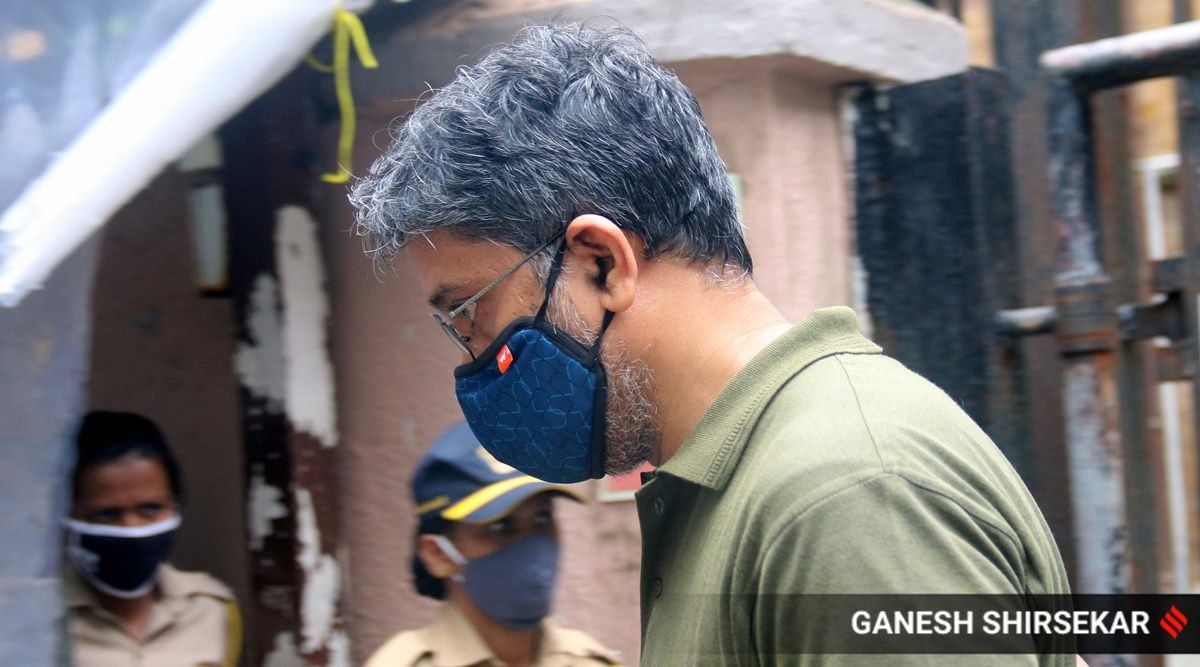
With former Delhi University professor Hany Babu granted bail by the Bombay High Court Thursday, only three of the 16 arrested by the Pune police and NIA in the Elgaar Parishad case remain behind bars.
In Hany Babu’s case, as in the case of some of the 11 others released on bail, the court cited long incarceration (up to more than seven years for some) without trial as the ground for relief. One of the accused, Stan Swamy, died in custody.

In January, the High Court had asked the special court in Mumbai hearing the case to expedite the proceedings and frame charges within nine months. That deadline too has passed, with charges yet to be framed. Once charges are framed, the court decides the Sections on which the accused can face proceedings based on prima facie evidence – and the trial can start.
The prosecution’s case is that the accused are members of the banned CPI (Maoist), and indulged in activities to further its cause. The accused have been booked under various Sections of the UAPA and IPC Sections 153A (promoting enmity), 121 (waging or attempting to wage a war or abetting) and 124 A (sedition). IPC Section 121 is punishable by death.
The Pune police and NIA’s case against the 16 accused is largely based on “incriminating documents” found in electronic devices belonging to some of them. The NIA has also claimed recovery of allegedly incriminatory letters.
Story continues below this ad
The accused have referred to independent forensic reports showing that the seized devices were infected with malware, to counter this.
Where is the case at
The NIA took over the case from the Pune police in 2020. Apart from the nine accused arrested by the police in 2018, it arrested seven others and named them in its chargesheet, in October 2020. In 2021, the NIA submitted the draft charges against the 16.
The special court in Mumbai where the trial is to happen is still hearing arguments on the discharge applications filed by the accused – most of these were filed in 2023 – and the NIA’s opposition to them. The arguments on behalf of the accused are complete and, at the last hearing on December 4, the court adjourned the proceedings to hear the NIA’s arguments. The NIA prosecutor is expected to begin making counter-submissions this month.

The court is likely to pass an order together on the discharge pleas after the completion of the arguments.
Most of the accused have sought discharge on the grounds that the electronic records against them cited by the NIA are dubious, and they should not be tried on such evidence.
While setting a deadline to frame charges, the High Court had noted in January that the prosecution had cited nearly 363 witnesses in its chargesheet, and at this rate, “the chances of completing the trial in the near future are bleak”.
The High Court has also remarked earlier that the chargesheet contains about 20,000 pages.
The accused, and the bail orders
February 2021: Arrested in 2018, Telugu poet P Varavara Rao, 82, was the first accused to be released on bail, let out on medical grounds for six months. Though his bail was extended from time-to-time, the High Court rejected his plea for permanent bail in April 2022.
In August 2022, the Supreme Court granted him bail on medical grounds since he had already spent over two years as an undertrial.
July 2021: Arrested in 2020, Stan Swamy, 84, a priest and Jharkhand-based tribal rights activist who was a patient of Parkinson’s, died in custody.
December 2021: Arrested in 2018, lawyer-activist Sudha Bharadwaj was granted default bail by the High Court.
November 2022: Arrested in 2020, former IIT professor Anand Teltumbde became the first accused to be granted bail in the case on merits. His bail order stated that based on prima facie material, “it cannot be concluded that appellant has indulged in a terrorist act”.
As proof against him, the NIA presented a letter purportedly addressed to him by one ‘Prakash’. The High Court said that since the letter was not recovered from Teltumbde, it could not be presumed that he was an active member of the CPI (Maoist).
Another allegation against Teltumbde is that he was secretly in touch with his brother Milind, a top Maoist leader who was killed in an encounter in November 2021.
The High Court noted that a document claiming “Anand T” had received Rs 90,000 from co-accused “Surendra (Gadling)” through Milind (Teltumbde) was unsigned. The court also said that merely being the elder brother of Milind could not be a sole ground to indict Teltumbde. It also termed the statement of one of the three witnesses as “hearsay”.
July 2023: Granting bail to activists Vernon Gonsalves and Arun Ferreira, arrested in 2018, a Supreme Court Bench stated that it was unable to accept the NIA’s contention that the duo “committed the offence relating to support given to a terrorist organisation”. The Supreme Court also said the letters submitted as evidence against them “have weak probative value or quality”.
December 2023: The High Court granted bail to activist-journalist Gautam Navlakha, arrested in 2020, saying no covert or overt terrorist act under the UAPA had been attributed to him. Bail was upheld by the Supreme Court in May 2024.
In its bail order, the High Court said the NIA’s submission of a “nexus” between Navlakha and Syed Gulam Nabi Fai, convicted by a US court in 2012 for links with Pakistani spy agency ISI, “has no correlation with the present crime”.
The court also termed as “hearsay piece of evidence” the letter submitted by the NIA, allegedly recovered from co-accused Gadling. The NIA cited it was written by one “Com. Gautam”, which it claimed was Navlakha.
The High Court also noted that Navlakha can be prima facie said to be a member of the CPI (Maoist), but this would attract Sections of the UAPA where the maximum punishment is 7-10 years, and not Sections dealing with terror acts.
April 2024: Bail was granted to former Nagpur University professor Shoma Sen by the Supreme Court on grounds of long incarceration. Sen was arrested in 2018.
January 2025: The High Court granted bail to activists Rona Wilson and Sudhir Dhawale, arrested in 2018, on grounds of long incarceration.
September 2025: Activist Mahesh Raut, arrested in 2018, had been granted bail by the High Court in September 2023, but remained behind bars after a stay on his release was ordered by the Supreme Court on the NIA’s appeal. Raut was finally released in September this year on interim bail on medical grounds, and this was extended by the Supreme Court last month, till the hearing on his regular bail.
In its bail order of September 2023, the High Court said that “there is no corroboration at all” that Raut had received money from co-accused belonging to the CPI (Maoist), or that a person had been recruited through him. Like in Navlakha’s case, the High Court said Raut could at best be tried for being a member of the CPI (Maoist).
November 2025: The Supreme Court granted interim bail to artist Jyoti Jagtap till the final hearing of her bail, scheduled in February 2026, noting the long time spent in jail without a trial. She was arrested in 2020.
December 2025: Hany Babu, arrested in 2020, was granted bail by the High Court. Babu had cited the inordinate delay in the trial and the facts that the prosecution was yet to respond to his discharge plea filed two years ago.
Still behind bars
Lawyer Surendra Gadling, arrested in June 2018; and cultural activists Sagar Gorkhe and Ramesh Gaichor, arrested in September 2020.
Gorkhe’s plea for bail is pending before the High Court.