
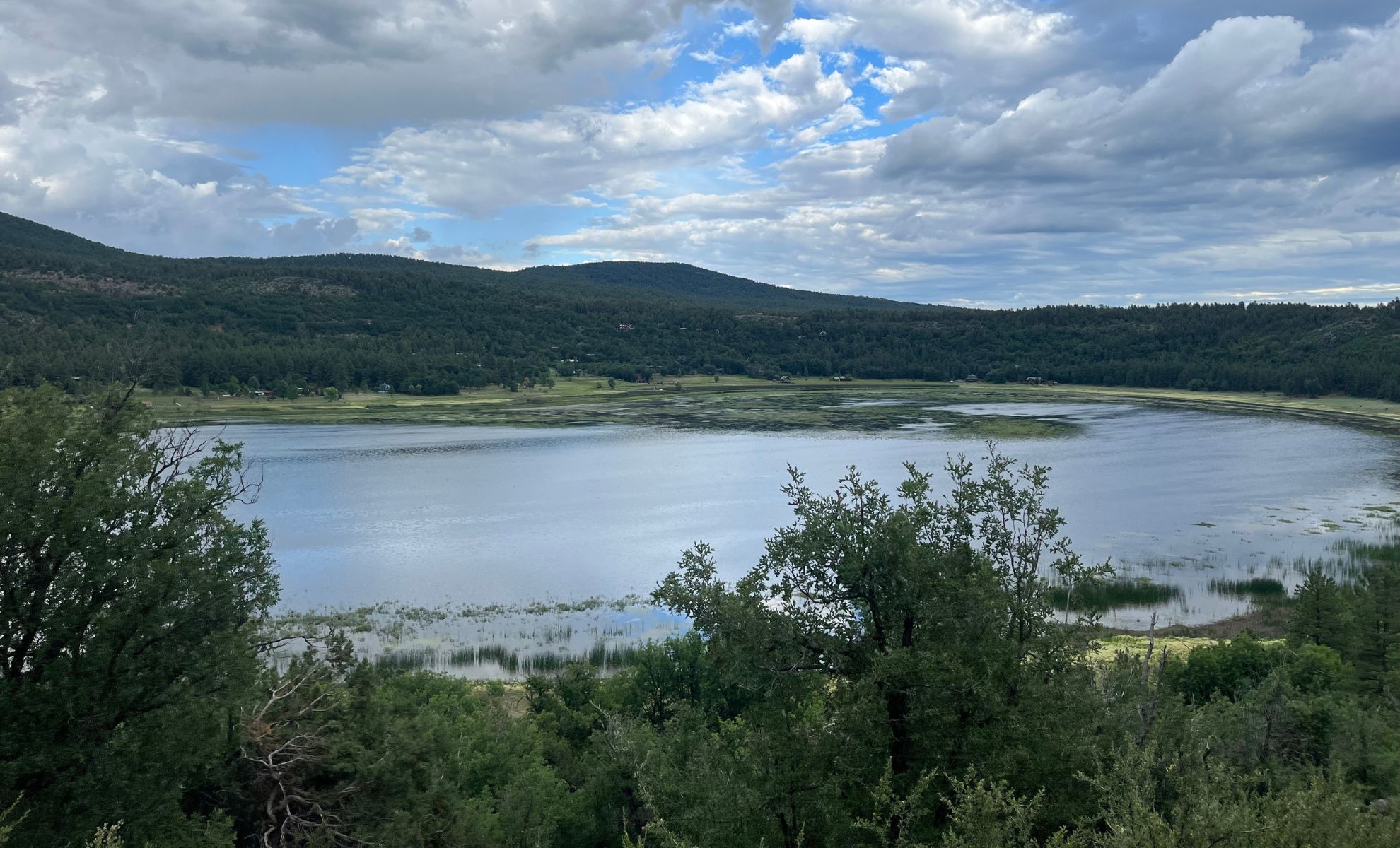
The study, published in Nature Communications, analyzes a sediment core from Stoneman Lake, which has been collecting dust and sediments for over a million years. By studying the accumulation of dust in the lakebed, scientists were able to track long-term environmental changes, including shifts in regional climate and vegetation. The findings suggest that the dynamics of dust emissions are more influenced by surface exposure and climate shifts than by aridity alone. The research also provides a baseline for understanding how human activities could impact atmospheric dust in the future.
Dust Emissions and Climate Cycles
Atmospheric dust plays a significant role in Earth’s climate system, affecting everything from cloud formation to precipitation patterns. According to Spencer Staley, Stoneman Lake has been an ideal natural archive for dust records because it has remained stable for hundreds of thousands of years, continuously recording environmental changes. Staley’s team found that dust emissions in the region were significantly higher during warmer interglacial periods than during the cooler ice ages, contradicting trends observed in other parts of the world.

The study suggests that during the ice ages, the Southwest’s climate was wetter, withlush plant life helping to stabilize the soil and prevent dust emissions. As the climate warmed, water sources dwindled, and landscapes became more prone to erosion, which increased the amount of dust in the atmosphere. This highlights that dust emissions are not simply a product of dry conditions but also of how the landscape is exposed and reshaped over time.
Lake Sediments as Climate Records
Lake sediment cores, like the one from Stoneman Lake, provide a detailed record of past climates. These cores accumulate dust and pollen over time, offering a glimpse into how ecosystems responded to climate shifts. In the case of Stoneman Lake, sediment samples revealed that much of the dust came from local sources, with fine-grained particles carried long distances by the wind. This contrasts with other global dust records, where the highest dust levels typically occurred during glacial periods.

The Stoneman Lake sediment core contains traces of volcanic ash and preserved pollen, allowing researchers to track both the history of dust emissions and the changing vegetation around the lake. This data provides an invaluable perspective on how the region’s climate and ecosystems evolved in response to long-term environmental changes. Understanding these past processes is crucial for scientists aiming to predict how future climate change and human activities might influence dust patterns.
The Role of Human Activity in Dust Emissions
While the study primarily focuses on natural climate shifts, it also provides a useful baseline for understanding the impact of human activities on dust emissions. Staley notes that recent increases in dust levels are often attributed to human-driven landscape disturbances, such as agriculture and urbanization. By comparing current dust levels to the historical record, the research offers a point of reference for assessing how much human activity is contributing to atmospheric dust.
The study found that dust emissions in the American Southwest were closely tied to regional climate and geomorphic changes, with dust levels rising dramatically during transitions from glacial to interglacial periods. As researchers continue to analyze the Stoneman Lake sediment core, they hope to expand their understanding of how these processes unfolded over the past million years, providing further insight into the future of dust emissions in a warming world.