
The removal of the Citizenship Act reference and Election Commissioner Sukhbir Singh Sandhu’s cautionary note are significant for two key reasons.
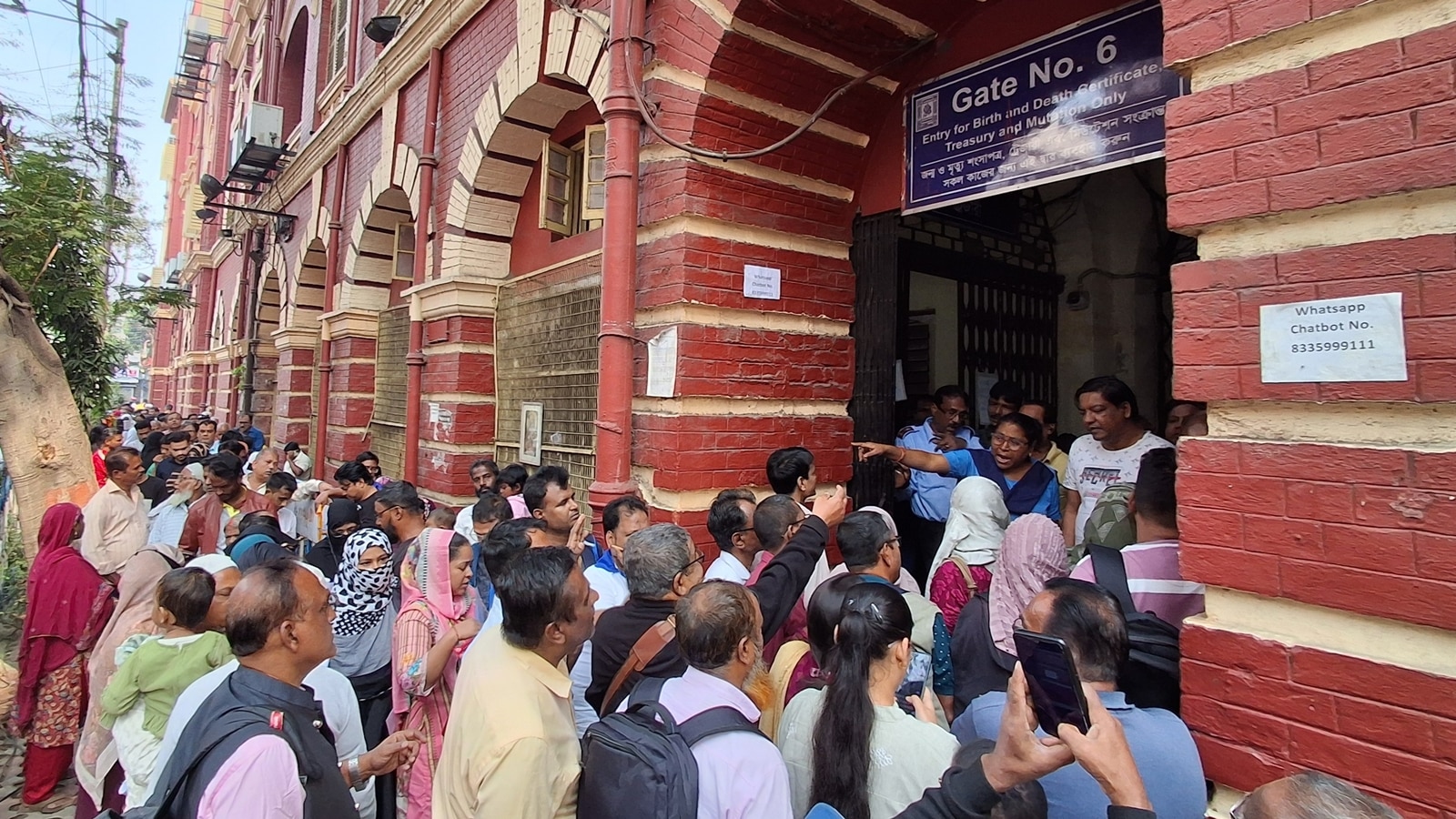
First, the Special Intensive Revision (SIR) in Bihar triggered concerns among voters and the Opposition about disenfranchisement and a backdoor route to a National Register of Citizens (NRC), the creation of which was mandated by the 2003 amendment to the Citizenship Act, 1955. As The Indian Express reported, there was widespread panic in the state as voters scrambled to get their papers in order.
Even though the reference to the Citizenship Act was deleted and did not reflect in the final order, official records bear out the Commission’s initial reasoning.
Second, Sandhu’s warning was prescient: the first week of rollout in Bihar saw chaos on the ground, a scramble for documents, and confusion among voters, leading the EC to tweak the process a few times. The EC had given an indicative list of 11 documents that electors could submit; importantly the list did not include Aadhaar, Voter ID and ration card, which are widely held.
The Supreme Court eventually ordered the EC to accept Aadhaar as an identity document. But this was after the enumeration phase and in the midst of the one-month claims and objections period when electors could submit documents.
The Commission had ordered the SIR on June 24, in a break from the practice of the last two decades, when electoral rolls have been revised annually and before Lok Sabha and Assembly elections by making additions and deletions to the existing list of electors.
In an intensive revision, the rolls are prepared afresh. Since electoral rolls were digitised about two decades ago, the commission has not felt the need to carry out an intensive revision till now.
The EC relied on Article 324 of the Constitution, from which it derives its powers, and Article 326, which entitles adult citizens to be registered as electors, in its June 24 order and in subsequent submissions before the Supreme Court while defending the SIR.
The exercise has faced questions and criticism for seemingly conducting a check of citizenship, akin to the government’s proposed National Register of Citizens.
The petitioners have argued that matters relating to citizenship fall under the Ministry of Home Affairs’ ambit under the Citizenship Act, and not the EC.
The Commission has countered that it is well within its powers to determine the citizenship status of those applying to be electors, relying on Article 324, Article 326 and the Representation of the People Act, 1950.
However, the draft order dated June 24, 2025, shows that the EC had initially invoked the Citizenship Act and cited the absence of any intensive revision since the 2003 amendment to justify launching a nationwide SIR.
Till the 2003 amendment to the Citizenship Act, anyone born in India between January 26, 1950 and July 1, 1987 was entitled to citizenship by birth, and those born after July 1, 1987 needed at least one parent to be a citizen at the time of their birth.
The 2003 amendment, brought by the Atal Bihari Vajpayee government, introduced the concept of an “illegal migrant” and made citizenship by birth for anyone born after December 2, 2004 contingent on either both parents being citizens or one parent being a citizen and the other not being an illegal migrant.
The Bihar SIR concluded on September 30 with the publication of the final electoral roll, which saw the electorate shrink by 6%. The EC on October 27 announced the SIR in Andaman and Nicobar Islands, Chhattisgarh, Goa, Gujarat, Kerala, Lakshadweep, Madhya Pradesh, Puducherry, Rajasthan, Tamil Nadu, Uttar Pradesh and West Bengal, with a total of 51 crore electors.
The exercise was to culminate with the publication of the electoral roll on February 7, but the EC on November 30 extended it by one week. The decision comes in the wake of the several reported deaths, including by suicide, of Booth Level Officers engaged in the exercise and slow progress of matching the electoral rolls to the last intensive revision rolls in some states. Hearing petitions seeking postponement of the exercise, the Supreme Court had on November 26 said it could order the EC to extend the deadline if a case is made out.