
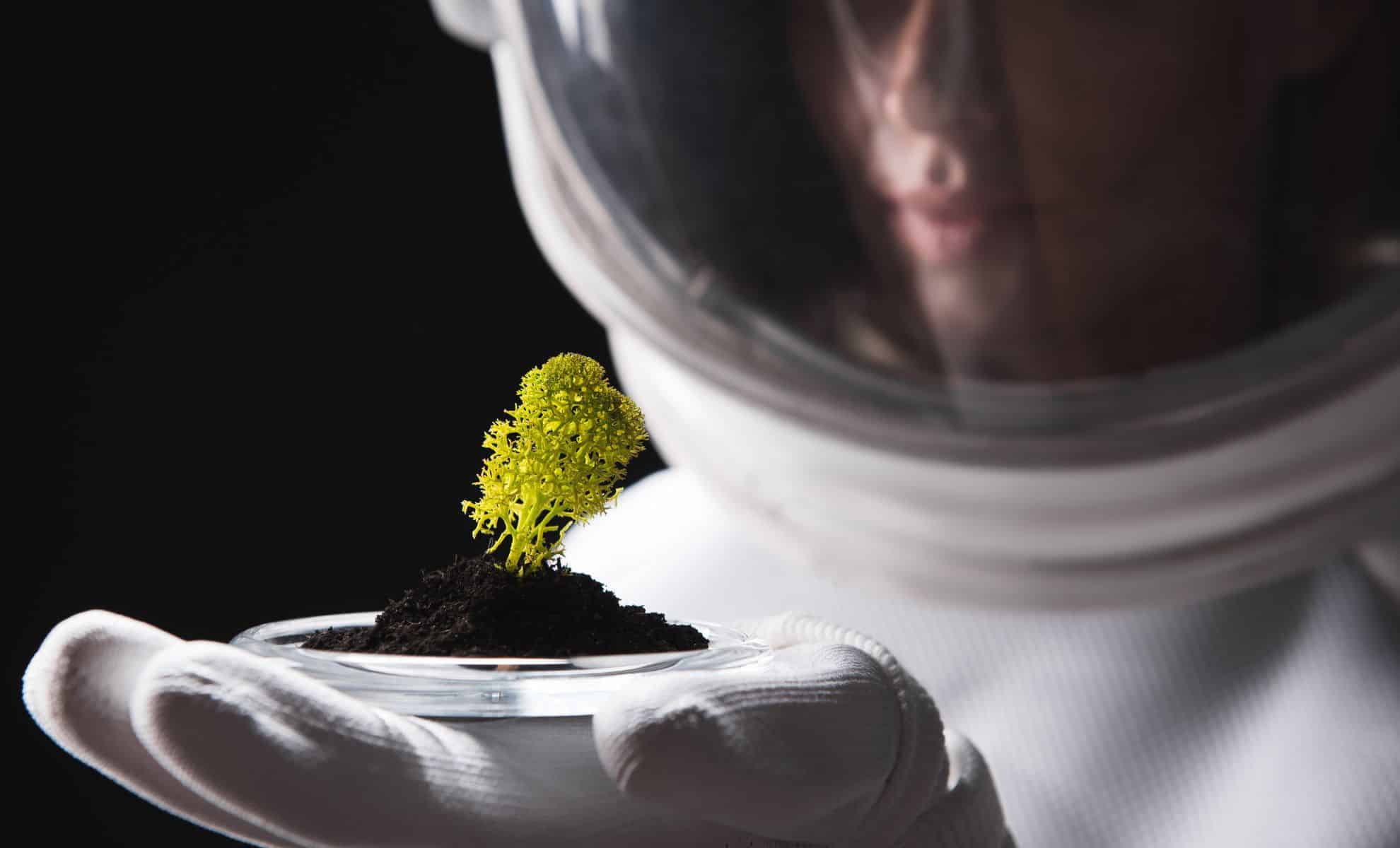
In a groundbreaking study published in iScience on November 20, 2025, researchers revealed that more than 80% of moss spores exposed to space conditions for 283 days retained their ability to germinate. The resilience of this ancient plant species to extreme temperatures, radiation, and vacuum conditions could pave the way for plant-based life support systems beyond our planet. Scientists had long wondered whether life forms that have adapted to Earth’s harshest environments could survive in space, and this experiment suggests that the answer may be yes.
An Unexpected Space Survival
Physcomitrium patens is known for its ability to endure extreme environments on Earth, including freezing temperatures and intense UV radiation. Researchers, led by Tomomichi Fujita from Hokkaido University, wanted to test if this resilience extended to the vacuum of space. In March 2022, spores of the moss were sent to the ISS as part of the Tanpopo-4 mission. Mounted on the exterior of the ISS, the spores were exposed to the full spectrum of space conditions, intense UV radiation, temperature fluctuations, and the vacuum of space, for nearly nine months.

The results shocked the research team: More than 80% of the spores survived the harsh conditions, and nearly all of them were able to germinate once they returned to Earth. The moss spores’ survival, despite being subjected to extremes that would be fatal to most other organisms, is a testament to the extraordinary adaptability of life on Earth.
The Key to Moss’s Resilience
The secret behind this moss’s remarkable survival lies in its spore structure. Unlike the moss’s juvenile and brood cell forms, which could not withstand the stress of space exposure, the spores, encased in a protective coating, proved highly resilient. This protective layer absorbs harmful UV rays and provides physical and chemical shielding, which may have been crucial for surviving space conditions.
Researchers believe this trait could explain why ancient mosses, which first colonized land around 500 million years ago, were able to adapt to terrestrial environments. The study’s findings suggest that the same mechanisms may have allowed the spores to endure space’s harsh conditions. The spores were able to withstand temperatures as low as -196°C and as high as 55°C, as well as prolonged exposure to intense UV radiation, far beyond the tolerance of other plant forms tested.

Implications for Space Agriculture
The success of moss spores in space also has profound implications for future space exploration. As humanity looks to establish long-term habitats on the Moon, Mars, or beyond, understanding which Earth organisms can survive in extraterrestrial environments becomes crucial. The study suggests that mosses, particularly Physcomitrium patens, could play an important role in future space agriculture.

These resilient plants could help create the necessary ecosystems to support human life in space by contributing to oxygen production, soil fertility, and food growth. The protective coating of moss spores also opens up new possibilities for using plants in closed-loop life support systems, providing vital resources like oxygen and food to astronauts.
While researchers continue to study these findings, the potential for expanding plant life in space may become more tangible. The possibility of cultivating simple plants in space not only supports the idea of sustainable extraterrestrial ecosystems but also brings us one step closer to making off-world agriculture a reality.