
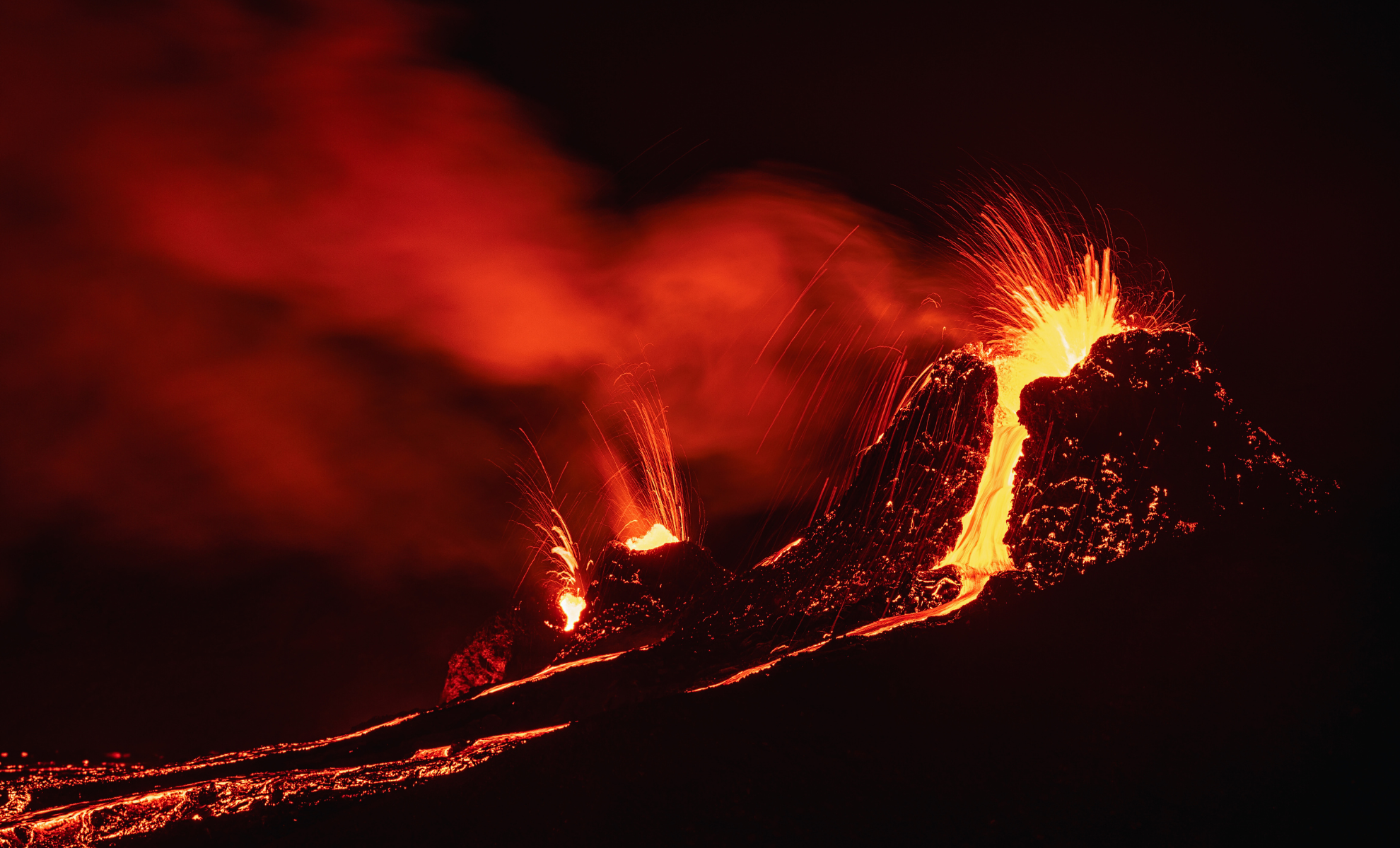
Volcanic eruptions have long fascinated scientists, who have studied them to better predict their behavior and minimize their devastating impact. A new breakthrough, published in Science, challenges previous understanding by identifying a hidden factor in volcanic explosions: shear forces within rising magma. Researchers have discovered that these forces can create gas bubbles earlier than previously thought, potentially leading to calmer eruptions or explosive bursts depending on how they form.
Shear Forces in Magma: A Game Changer in Volcanology
For decades, scientists believed that gas bubbles in volcanic magma formed primarily when the surrounding pressure dropped as magma ascended. As magma rises, pressure decreases, allowing dissolved gases to form bubbles. These bubbles reduce the magma’s density, causing it to move upward more quickly, which can lead to an explosive eruption if the magma fractures. The analogy of opening a bottle of champagne, where carbon dioxide gas forms bubbles when the bottle is unsealed, has often been used to explain this process.
However, recent research, published in Science, challenges this long-standing view by revealing that shear forces—frictional forces created by the movement of magma—can also trigger bubble formation. These forces are particularly strong near the edges of the volcanic conduit, where friction is greatest. This discovery is key to understanding why some volcanoes can release gas more gently, even when the magma is gas-saturated and potentially explosive.
As Olivier Bachmann, Professor of Volcanology and Magmatic Petrology at ETH Zurich, explains, “Our experiments showed that the movement in the magma due to shear forces is sufficient to form gas bubbles – even without a drop in pressure.” This new insight adds a layer of complexity to volcanic eruption behavior that had been previously overlooked.
The Role of Shear-Induced Gas Bubbles in Volcanic Behavior
Understanding how shear forces contribute to bubble formation adds a new dimension to how scientists assess the behavior of volcanoes. These forces are a natural consequence of how magma flows through volcanic conduits, which can differ significantly in viscosity and speed depending on the specific volcano and the nature of its magma.
The shear forces essentially “knead” the molten rock, creating bubbles in the process. The more gas the magma contains, the less shear is needed for these bubbles to form and grow. As Bachmann further clarifies,
“The more gas the magma contains, the less shear is needed for bubble formation and bubble growth.”
This observation helps explain why some volcanoes with gas-rich magma might erupt gently, as the early formation of bubbles can create pathways that allow the gas to escape gradually, preventing an explosive buildup.
By observing volcanic conduits more closely, scientists found that the formation of these bubbles could reduce the pressure inside the magma, allowing it to flow more gently and possibly preventing violent eruptions. This could lead to a shift in how we predict volcanic eruptions, especially in cases where volcanoes have thick, viscous magma that might have otherwise been expected to explode.
Explosive Eruptions and Gentle Lava Flows: Unraveling the Mystery
One of the key challenges in studying volcanic eruptions has been explaining why some gas-rich magmas lead to explosive eruptions, while others do not. The eruption of Mount St. Helens in 1980 is a prime example of this mystery. Despite having gas-rich magma capable of an explosive eruption, the volcano began with a slow-moving lava flow before an eventual explosion.
According to the new findings, shear forces inside the conduit played a crucial role in this behavior. “In the case of Mount St. Helens, strong shear forces acted on the magma, producing gas bubbles that allowed for an initial release of gas, preventing an explosive eruption,” explains Bachmann. Only after a landslide opened the volcanic vent and caused a sudden pressure drop did the eruption become explosive. This discovery suggests that shear forces can significantly alter the expected behavior of volcanoes with highly gas-charged magma.