
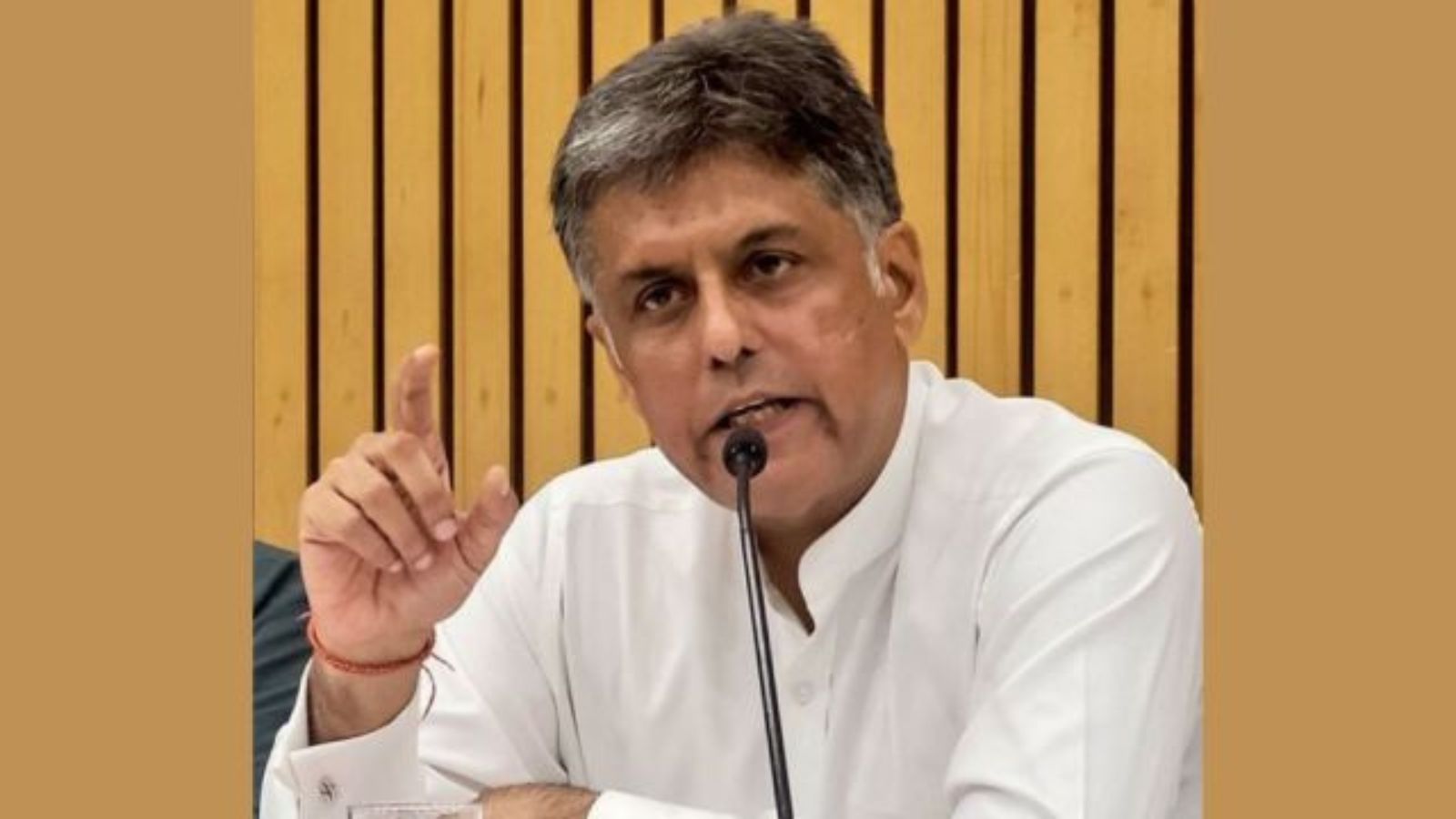
Senior Congress leader and Chandigarh MP Manish Tewari talks to The Indian Express about the Centre’s now-stalled plan to introduce a Bill that would have allowed it to directly govern the Union Territory. Tewari explains why no Constitutional arrangement for Chandigarh can discount its historical evolution. Excerpts:
I was quite bemused that a Constitutional amendment that requires a two-thirds majority of members present and voting in both Houses of Parliament was listed without any prior consultation with the stakeholders.
The fact that it appeared in part two of the bulletin that deals with the upcoming legislative business in the Winter Session of Parliament obviously wouldn’t have happened till the time a Bill had not been formulated and cleared within the Home Ministry, at least, if not the Union Cabinet. After all, it is, or was, a Constitutional Amendment. What I really wanted to see was the text of the Bill, especially the statement of objects and reasons as to what had impelled the government to bring this Constitutional amendment when they clearly do not have a two-thirds majority in both Houses. The proposed Bill also did not take into its purview the historical evolution of Chandigarh.
Was it an attempt to settle the political question of Chandigarh surreptitiously by incorporating it within the Constitutional remit of Article 240 without saying so upfront?
What is the political question regarding Chandigarh now?
Well, that’s the irony, because if you were to look at history, Chandigarh was conceived, conceptualised, and inaugurated as the capital of East Punjab between 1949 and 1953 as the replacement for Lahore, which was lost to Pakistan during the Partition.
Subsequently, when the merger of PEPSU (Patiala and East Punjab States Union) took place with East Punjab on November 1, 1956, Chandigarh became the capital of what was then called joint Punjab or undivided Punjab. From 1956 to 1966, it continued in that manner and Chandigarh was an Assembly constituency, number 10, in the Punjab Vidhan Sabha, represented by Sardar Niranjan Singh Talab who was also the minister in charge of the Punjab capital project, as Chandigarh was then known.
In 1966, the trifurcation of Punjab happened. Haryana was carved out of Punjab. Some parts of Punjab went to Himachal Pradesh. Chandigarh was designated as a Union Territory purely as an interim measure. Because the Shah Commission, which was responsible for the trifurcation of Punjab, had recommended on May 31, 1966, that Kharar Tehsil, which included Chandigarh, should be given to Haryana as it was predominantly Hindi-speaking. Now, this led to a huge uproar and agitation in Punjab between May 1966 and November 1966, which ultimately resulted in Chandigarh being made a Union Territory, as it remains even today predominantly Punjabi-speaking.
From 1966 to 1986, various attempts were made to settle the political question: the Indira Gandhi award of 1970, which gave Chandigarh to Punjab in lieu of Fazilka and Abohar going to Haryana. It subsequently did not get actioned. Then, on July 24, 1985, the Rajiv-Longowal accord again gave Chandigarh to Punjab and proposed that certain contiguous Hindi-speaking areas of Punjab should go to Haryana. Again, it did not get actioned. It was followed by the appointment of the Mathew Commission in January 1986 and the Venkatramaiah Commission, and the Desai Commission to give effect to the terms of the Rajiv-Longowal accord, but nothing really fructified. So far in the last 40 years, the issue has been lying in a deep freeze. And in the meanwhile, the governance structures of Chandigarh have become completely fossilised and are unable to either resolve pending administrative issues or even take a long view of the future developmental imperatives of Chandigarh.
Could this Bill have addressed those issues in any way, including developmental concerns?
No, and the reason for that is that no fresh Constitutional arrangement qua Chandigarh can really discount its historical evolution and the fact that it was never conceived as a UT to begin with, as was the case with some of the Part C and Part D states at the inception of the Constitution of India. Chandigarh only became a UT in November 1966 because its political status could not be resolved when Punjab was trifurcated.
Chandigarh was always conceived as the capital of Punjab due to the loss of Lahore. So, there are syncretic, cultural and linguistic realities that cannot be wished away when any Constitutional move is ever made with regard to Chandigarh.
Is the status quo the best option?
Ultimately, the political question of Chandigarh has to be settled one way or another. And the sooner the better. So, you have conflicting claims made by Punjab and Haryana. And now quixotically, even Himachal Pradesh is laying claim to 7.12% of Chandigarh as if it is some piece of real estate that needs to be carved up among the contesting claimants.
The fact is that there are aspirations of almost 1.5 million people in Chandigarh and their syncretic ethos is rooted in Punjab, Punjabi and Punjabiyat. There is also the fact that between 1966 and 1986, various initiatives taken by different governments led to Chandigarh being awarded to Punjab. Eventually, the Union Territory status that was supposed to be an interim measure got perpetuated into perpetuity. So, whenever an attempt is made to do anything with Chandigarh or with even Panjab University, which is in Chandigarh, there is an uproar. While it may be convenient to keep kicking this can down the road, statesmanship lies in biting the bullet and finally settling the political question once and for all.
Were you surprised by the timing of the government’s move?
The governance of Chandigarh is divided into two distinctive spheres. There is the Municipal Corporation, which is structurally weak, and there is an administration under the Governor of Punjab as the administrator that is structurally far more powerful. Ninety per cent of Chandigarh’s problems lie in the governance sphere administered by the Chandigarh administration.
So, there is a need to surmount legacy issues of governance that have been hanging fire for 25 years or more. Without conclusively settling the political question, any halfway house or tentative step cannot resolve the issues. But, for that, political will and conviction of courage need to be demonstrated. That has singularly been missing, going back six decades or more, across the tenures of different political dispensations. Convenience has triumphed over the imperative of a clear-cut and properly thought-out decision by consulting and evolving a consensus among all stakeholders.