
When it comes to the Oscars, typically the most high-profile categories get the attention. There are still discussions across the internet over the virtues of every 2000s best picture Oscar winner, for instance. Meanwhile, the most controversial Oscar jokes of all time remain discussed in hushed whispers across all corners of the world. While the biggest categories and divisive antics from the hosts and presenters get the lion’s share of endurance, there are other corners of the Academy Awards rife with intrigue. That includes the best visual effects category, a domain that often serves as the one place big action blockbusters can collect a token Oscar nomination.
Throughout the years, this category has housed victors who have changed the trajectory of cinema, including “Star Wars,” “Avatar,” and “The Matrix,” among others. However, that doesn’t mean the best visual effects category has solely housed all-time great pieces of filmmaking. Just like the five worst best picture Oscar winners, the 10 worst motion pictures to win the best visual effects award at the Academy Awards are a blight on the category’s larger legacy. Some of these films are infamous for their artistic shortcomings. Others are forgettable titles that have earned a legacy as despised because they beat out worthier films for the Oscar.
Whatever the reason for their terribleness, the 10 worst movies that won the best visual effects Oscar make it understandable why this category usually isn’t a go-to discussion topic for award season geeks.
Doctor Dolittle
The Mark Harris text “Pictures at a Revolution” chronicles, among other topics, how the 1967 musical “Doctor Dolittle” was a passion project for producer Arthur P. Jacobs. However, the film became an infamously tormented enterprise during principal photography. Even Jacobs couldn’t ignore the warning signs when cameras were rolling. Per “Revolution,” Jacobs reacted with dismay to the obviously artificial visual effects work used for a gigantic snail in the feature’s finale. “How is it possible to go so far wrong from what we saw in the prop shop?” Jacobs lamented.
Despite these challenges, “Doctor Dolittle” scored nine Oscar nominations, including one for best picture and a win in the best visual effects category. Allegations that “Dolittle” studio 20th Century Fox had wined and dined potential Oscar voters for the nominations weren’t the only thing tainting the feature’s reputation. “Doctor Dolittle” is just not a very good movie. In many ways, like “Paint Your Wagon,” it’s the epitome of bloated 1960s roadshow musicals. Leading man Rex Harrison isn’t delivering much in the way of either whimsy or personality in the lead role, while the storyline is bound to leave kids and adults checking to see how much of the runtime is left.
Even the visual effects aren’t compelling from a historical perspective. Jacobs wasn’t wrong; the various puppets, miniatures, and other techniques used to bring this story to life don’t dazzle on-screen. What a nightmare to see a passion project become something as disposable as “Doctor Dolittle.”
King Kong (1976)
Everyone knows the original 1933 “King Kong” movie. The MonsterVerse version of the gigantic ape is also ubiquitous in modern pop culture. Peter Jackson’s 2005 take on the character has similarly endured, and been beloved. Mostly lost to history, however, is the 1976 “King Kong” remake that starred Jeff Bridges and Jessica Lange. This feature, which took the “King Kong” story to the 1970s, used a variety of visual effects techniques to realize its primary ape protagonist. These were overseen by makeup artist legend Rick Baker, who was also the uncredited performer of King Kong by way of wearing a gorilla suit.
The book “King Kong: The History of a Movie Icon from Fay Wray to Peter Jackson” features Baker recalling his frustrations with how the visual effects work on “King Kong” turned out. He was specifically irritated that the grand ambitions for this project resulted in a version of the gargantuan critter that didn’t resonate as real or emotionally engaging. Coming out one year after “Jaws” and one year before “Star Wars,” the visual effects for this version of “Kong” stood out as underwhelming in a revolutionary age for spectacle.
Despite those shortcomings, “King Kong” (along with “Logan’s Run”) won the best visual effects Oscar at the 49th Academy Awards. However, that award season glory hasn’t guaranteed the feature an enduring presence in pop culture. Even without so many other “Kong” movies, 1976’s “King Kong” would struggle to stand out.
The Curious Case of Benjamin Button
Every great filmmaker has one unabashedly bad movie. For Steven Spielberg, it’s “The Lost World: Jurassic Park,” for Richard Linklater it’s “Where’d You Go, Bernadette”. And for David Fincher, that title came with his costly 2008 feature “The Curious Case of Benjamin Button.” A hybrid of the time-spanning scope of “Forrest Gump” and the doomed romantic angle of “Titanic,” “Button” lacks the energy and creativity of Fincher’s better works. It’s also a film way too reliant on digital de-aging, which is used to realize its titular lead, Benjamin Button (Brad Pitt), aging backwards.
The process still looks funky in recent movies like “Tron: Ares” and “The Adam Project.” Back in 2008, “Buttons” use of the technique became one of the many times de-aging technology missed the mark in movies. So many supposedly heartbreaking intimate scenes in “Benjamin Button” are undercut by Pitt looking like a rubbery guy ripped straight out of a 2000s Robert Zemeckis movie. This gets extra frustrating with later scenes that don’t require digital effects work, like an encounter with Benjamin Button aged into a child. Why couldn’t they just use an adolescent performer for this scene? Why is the child’s face a fake-looking digital creation?
The barrage of CG work in “The Curious Case of Benjamin Button” was enough to procure an Oscar win for best visual effects. However, leaning so hard on digital wizardry has ensured the title aged poorly.
The Golden Compass
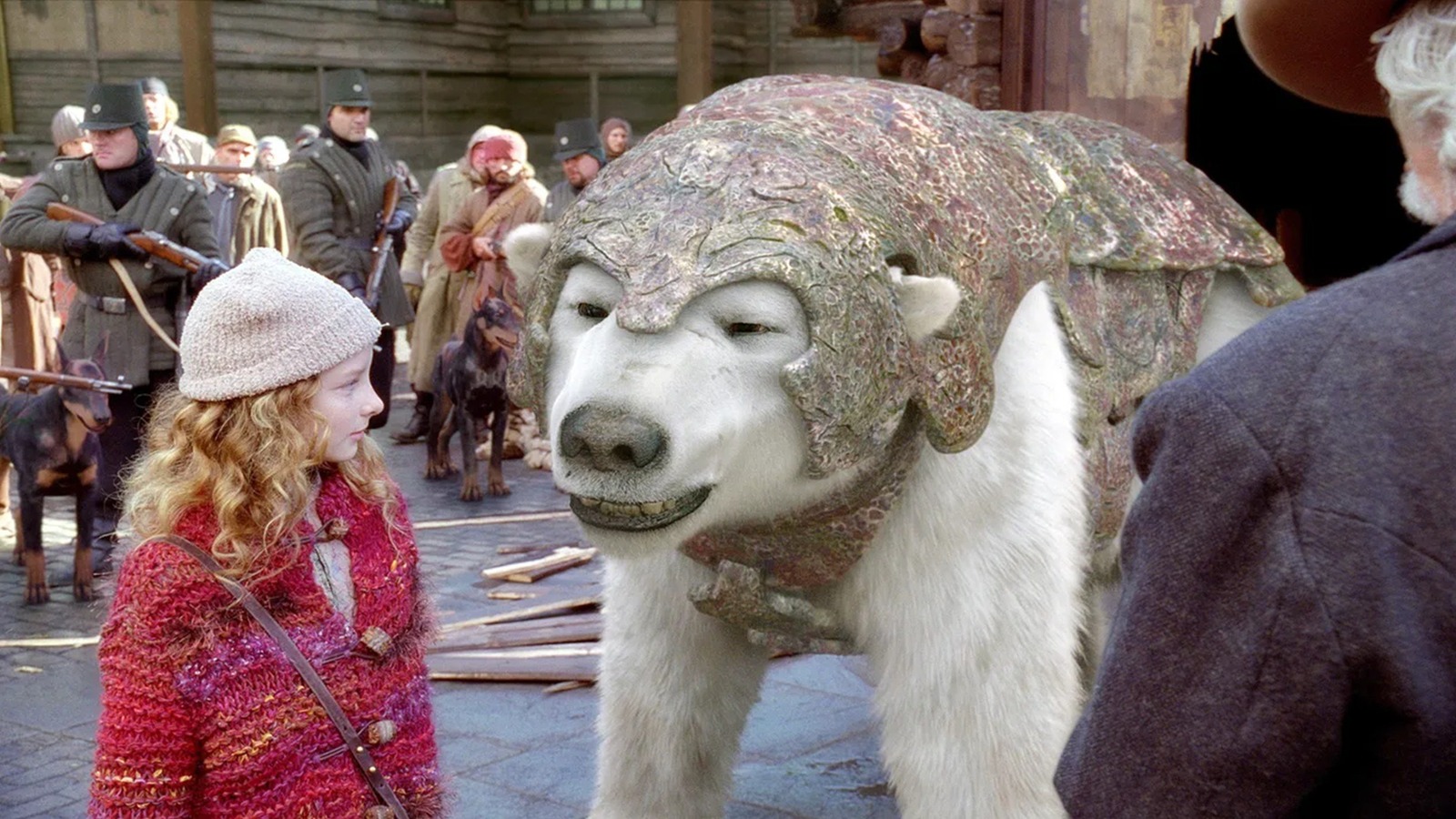
In December 2007, writer/director Chris Weitz’s “The Golden Compass,” an adaptation of the first novel in author Philip Pullman’s “His Dark Materials” saga, hit theaters. Costing a whopping $180 million to make, the feature contained lots of big-name actors (including Nicole Kidman and Daniel Craig) and a bevy of CG animals (many of them appearing as a dæmon, an important part of this universe’s mythos). All those furry polar bears, ferrets, and monkeys inhabiting live-action environments required extensive work from an army of visual effects artists. Yet all that effort couldn’t move the needle on “The Golden Compass” at the box office. The feature tanked financially and killed off distributor New Line Cinema’s hopes for another “Lord of the Rings-“sized franchise.
It’s no surprise “Golden Compass” failed to enchant audiences, since it’s simply not a very good movie. The whole enterprise is difficult to connect to or invest in emotionally, particularly when it comes to the thinly-sketched characters. Meanwhile, back in 2007, the digital beasties couldn’t cut the mustard in terms of believability. Iorek Byrnison and his polar bear comrades never stopped looking like they wandered away from a Coca-Cola commercial. Shockingly, these CG entities led “Golden Compass” to a best visual effects Oscar win at the 80th Academy Awards.
For some unholy reason, this is the movie that beat out “Transformers” and “Pirates of the Caribbean: At World’s End” for the prize. Today, “The Golden Compass” is easily one of the most forgettable winners of the best effects category.
Marooned
The 1969 film “Marooned” is a space-set feature starring Gregory Peck and Gene Hackman going through their own version of “The Martian” as astronauts stuck in outer space. Combining that premise with this stellar cast should result in a movie people still chatter about to this day. Instead, “Marooned,” which garnered mixed reviews upon its debut, has largely faded into obscurity. Among the chief complaints about this 134-minute film, from the few who’ve seen it, is sluggish pacing plaguing what should be a propulsive storyline.
Countless great rescue mission movies grab viewers with urgent atmospheres and grand storytelling. “Marooned,” meanwhile, left many frustrated with its cold and clinical aesthetic. The most interesting element about “Marooned” is how it reflects the weird point that visual effects-heavy movies were stuck in around 1969. In a pre-“Jaws” and “Star Wars” world, there weren’t countless VFX-dominated motion pictures like there are today. Titles like “2001: A Space Odyssey,” “Fantastic Voyage,” or the various James Bond titles were anomalies, not the norm in an era where “The Odd Couple” was one of 1968’s highest-grossing movies.
Thus, there was minimal competition against titles like “Marooned” when it came time to award the best visual effects Oscar. Of course, that status quo would soon get upended in the ’70s. Considering these historical trends can be fascinating, and they certainly give one more to chew on than the frustratingly glacial cosmic exploits of “Marooned.”
The Hindenburg
In the 1970s, disaster movies were all the rage, even becoming Oscar darlings; a situation unthinkable for many big-budget blockbusters today. Part of their appeal lay in how these projects secured so many famous faces for their respective casts. While modern disaster movies are headlined by Gerard Butler and Dwayne Johnson, these top shelf entries had Ava Gardner, Paul Newman, Steve McQueen, Olivia de Havilland, and Jimmy Stewart, among others. 1975’s “The Hindenburg” kept this tradition alive with its deployment of names like George C. Scott, Anne Bancroft, and Charles Durning for a historical drama that was all about lavish spectacle and big objects exploding.
Even back when it first came out, “The Hindenburg” was lambasted by critics for squandering all its talent on a limp script and equally lifeless filmmaking. Only the visual effects, which included lots of miniature models and matte paintings, scored any admiration. Like several other ’70s disaster films, “The Hindenburg” had enough extravagant pageantry to win the Oscar for best visual effects. Even today, its practical effects work still garners praise, particularly how director Robert Wise fused archival footage and newly shot material together.
Those accomplishments haven’t been enough, though, to save “The Hindenburg” from largely going down in critical flames in the long run. In a decade when movies like “Jaws” and “Star Wars” changed visual effects work forever, this disaster film, despite its starry cast, was destined to become a footnote.
Thunderball
Believe it or not, the James Bond movies, despite their notoriety, have rarely been nominated for, let alone won, the best visual effects Oscar. Only a handful of flashier, more heightened installments, like “Moonraker” and “No Time to Die,” have secured placement in the category. Even back in the ’60s, when massive blockbusters were scarce, 007 was a spy out in the cold for visual effects recognition, save for one installment. The 1965 feature “Thunderball” beat out “The Greatest Story Ever Told” for the win at the 38th Academy Awards.
Despite the high-profile award, “Thunderball'” stands among Bond fans as a poor memory. Today, the feature is mostly remembered for its wooden performances and limp tension, along with its more outlandish impulses. The massive scope that helped put its visual effects work on the radar of Academy voters also garnered criticism for reveling in excessive bloat. Even back when it debuted, “Thunderball” was criticized for delivering a narrative heavy on both explosions and incoherence. Those flaws haven’t gotten better with age; ditto for the once-groundbreaking visual effects work.
When ranking every James Bond movie from worst to best, there are certainly entries in the saga worse than “Thunderball.” However, its glaring shortcomings make it puzzling that this is the rare 007 adventure to have an Oscar win to its name. Surely there were better installments in Bond’s exploits to represent him at the Oscars than a movie called “Thunderball.”
What Dreams May Come
In the ’90s, the best visual effects category at the Oscars was hopping. Thanks to titles like “Jurassic Park,” the potential of visual effects inspired a slew of highly lucrative and groundbreaking motion pictures that could also contend at the Oscars. Projects like “Forrest Gump” and “Titanic” pushed the boundaries of blockbuster cinema, ensuring the Oscars would bestow at least one trophy on the biggest movies of any given year. Smushed in between productions like “Titanic” and “The Matrix,” whose ripple effects on visual effects work are still being felt to this day, was the Robin Williams star vehicle “What Dreams May Come.”
This project, which utilized extensive visual effects work to conjure up a vision of heaven, was the best visual effects victor at the 71st Academy Awards, beating out “Armageddon” and “Mighty Joe Young” for the honor. While many Robin Williams movies have become stone-cold classics cherished by all ages, “What Dreams May Come” has retained a mixed to downright negative reputation. While Williams’ work and some of the visual effects techniques are still praised, many continue to dismiss the project as ceaseless, unearned sentimentality.
Getting released in an era of far more high-profile showcases for Earth-shattering visual effects work has also led to “What Dreams May Come” slipping away from people’s minds. Existing in the same age as “Jurassic Park” didn’t help bolster this best visual effects Oscar winner’s reputation.
Earthquake
Six months before “Jaws” would change summer audience expectations, director Mark Robson’s “Earthquake” hit theaters. Armed with a screenplay co-written by “The Godfather” author Mario Puzo, this feature had as starry a cast as any ’70s disaster movie, following Los Angeles denizens navigating a horrific new reality after an earthquake devastates the city. Though largely forgotten today, “Earthquake” made a pretty penny upon its initial 1974 theatrical release. It also procured five Oscar nominations, including winning a special achievement award for best visual effects work.
When “Earthquake” began rumbling in theaters, critical reception was chilly, though legends like Pauline Kael were quick to praise the special effects work used to render Los Angeles shaken (literally) by natural forces. However, critics generally gave the project a hearty thumbs down, thanks to how uninteresting the characters are. A bunch of beloved movie stars couldn’t get people invested in their fictional lives due to how empty their roles were. In the long haul, the film’s visual effects accomplishments have also struggled to stand out, simply because there were so many other similar disaster movies in the ’70s.
While “The Matrix” was a singular achievement even against other ’90s blockbusters, it’s hard to differentiate the spectacle of “Earthquake” from the likes of “The Towering Inferno.” Granted, all that razzle-dazzle made Universal Pictures a nice mint back in 1974. However, it wasn’t enough to keep “Earthquake” from being one of the weakest movies to win a visual effects Oscar.
Cleopatra
There are tormented movie productions, and then there’s the champion of all tortured blockbusters: 1963’s “Cleopatra.” This Elizabeth Taylor/Richard Burton star vehicle was plagued by endless issues at every stage of production. That included costly challenges in realizing the film’s grand visual effects work and expansive storytelling scope. Getting massive crowds organized, creating gigantic sets, and working around the central cast’s individual hurdles eventually produced a budget that would amount to roughly $350+ million when adjusted for inflation. All these cost overruns nearly ensured the destruction of 20th Century Fox and cemented the status of “Cleopatra” as a punchline for years to come.
However, all that money ensured there was plenty of eye candy and towering pageantry on screen. That proved effective in clutching “Cleopatra” a best visual effects Oscar win, one of nine Academy Award categories the feature was nominated in that year. Such high-profile awards attention failed to diminish the scathing reviews that greeted the bloated epic. While many lauded the effort put into the production and costume design, the exceeding tediousness of the film prevented most from enjoying it. Some modern assessments of “Cleopatra” have been kinder to its ambitiousness, but this legendary boondoggle still hasn’t evaded its most passionate critics.
When ranking the most expensive movies ever from worst to best, “Cleopatra” is bound to be at the bottom of the list. That’s just as true when comparing it to other, mostly superior movies that also won the best visual effects Oscar.