
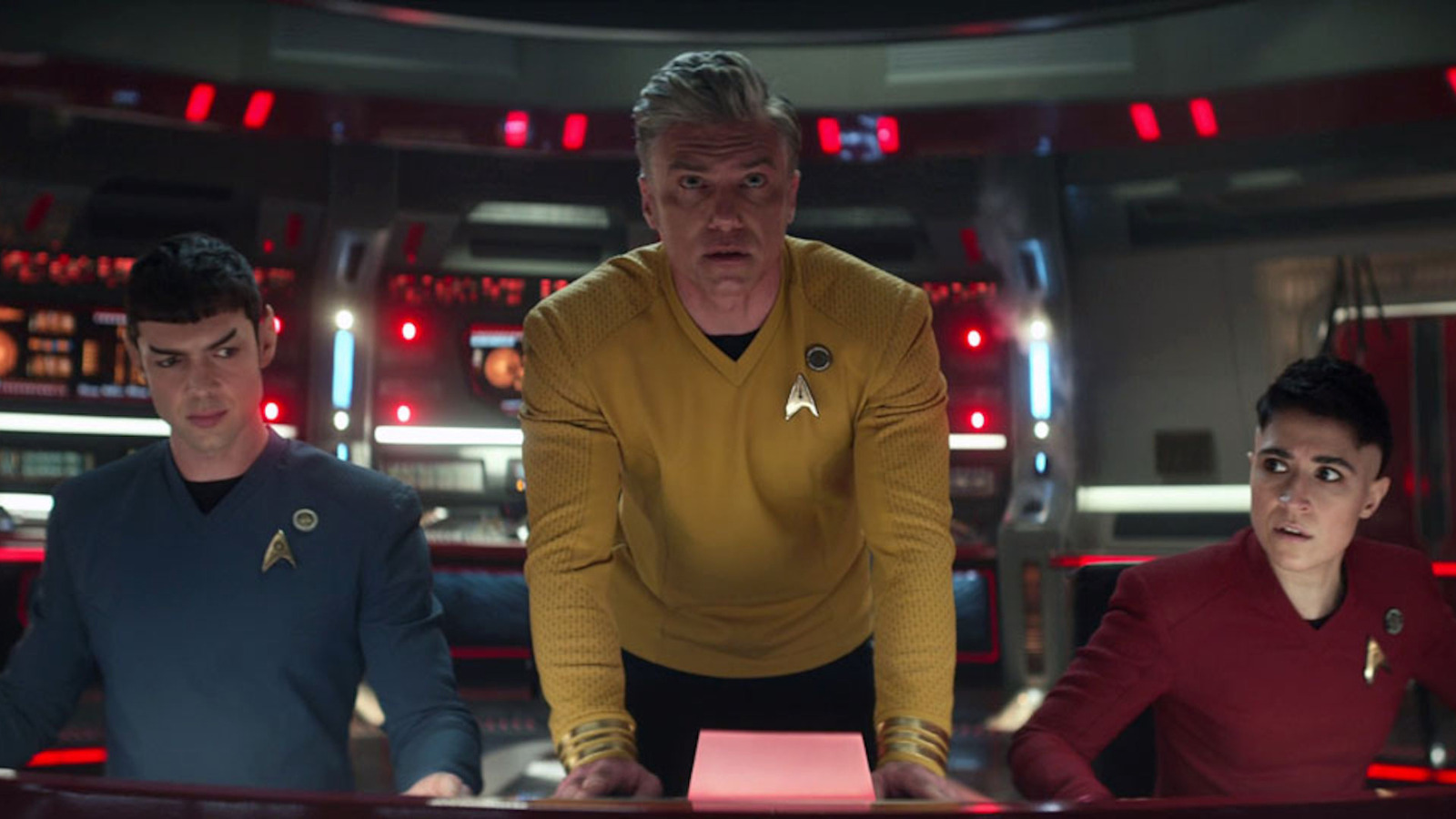
From “Flash Gordon” to “Rick & Morty,” science fiction has evolved over the last hundred years, and each new entry adds something unique to the genre. But travel back to 1966, and you’ll find that the state of science fiction was very different from what we know today. One might rightly say that it was “Star Trek” — one of the biggest and best sci-fi franchises ever conceived — that built the foundation for the genre as we know it now. Because the series, its spin-offs, and its many feature films, weren’t just boldly going in space — they were boldly taking risks and forging a new path for science fiction as a whole.
Over the course of the last 60 years, in fact, “Star Trek” has earned a reputation as a franchise unafraid to take chances. It pushed the boundaries of what sci-fi could be, especially on television, and became famous for its trailblazing tendencies. One might even argue that without “Star Trek,” science fiction might not be one of the biggest genres in media today, where the likes of the MCU, “Star Wars” and “Avatar” reign supreme. Some might shrug at that statement, but there’s a real case to be made. To bolster it, we’ve collected a list of 10 big risks that “Star Trek” dared to take that other sci-fi franchises had never attempted.
Star Trek took science fiction seriously
It’s hard to imagine now, especially for audiences born after “Star Trek” already became of the biggest franchises in the world, but before it debuted in 1966, the science fiction genre on television was almost exclusively aimed at kids. Classics like “Flash Gordon,” “Tom Corbett, Space Cadet,” and even “Doctor Who” were designed to appeal to younger audiences, featuring lightweight space adventures and episodic stories, often with little continuity between them. “Star Trek” changed that.
Created by prolific TV writer Gene Roddenberry, who’d honed his skills on dramas like “The Lieutenant,” his 1966 sci-fi series wasn’t for children. Despite its colorful cast of characters, “Star Trek” told mature, thoughtful stories with real dramatic weight. The show’s writers, producers, and actors took the material seriously, too, even as science fiction was still seen by many as kiddie fare. The series was billed as a sci-fi show that went “where no program has ever gone before” in early advertisements, but they weren’t just talking about the far reaches of the galaxy. They were also referring to the show’s dramatic thrust, which changed science fiction as we’d seen it.
In fact, “Empire Strikes Back” producer Gary Kurtz said, in an interview for the documentary “Trek Nation,” that the franchise in a galaxy far, far away “stood on the shoulders of giants” (per TrekMovie). Kurtz attributed much of the success of “Star Wars” to “Star Trek” for paving the way for adult sci-fi. Especially when it was made with a combination of cutting-edge VFX, and stories that could be enjoyed by adults as much as kids.
Star Trek tackled sensitive subject matter
Because most sci-fi on television was designed to appeal to kids, most of the stories told on shows like “Captain Z-Ro” and “Space Patrol” weren’t narratively compelling beyond some fun action adventure. But “Star Trek,” with its aim to entertain adults, flipped the script. That didn’t just mean telling more dramatic and mature adventures. “Trek” went even further, telling stories that got seriously political, and often tackling subject matter that was controversial in its day.
While shows like “Doctor Who” in the early ’60s were telling educational stories, tales that helped children learn about history, science, and culture, “Star Trek” was telling stories with hard-hitting, often unsubtle, social allegory. Early episodes like “Arena” taught us that we should try to understand our enemies, “The Cloud Minders” explored the class divide, and of course, “Let That Be Your Last Battlefield” was an unapologetically anti-racist story that used an alien planet to examine the Civil Rights movement at the time.
Sure, long before “Star Trek,” sci-fi literature and even movies like “The Day the Earth Stood Still” were exploring Earth’s worst problems through the lens of science fiction. But on TV, few sci-fi adventures had dared to tell controversial tales, and “Star Trek” led the way for other shows to do the same. Since that time, telling stories about controversial subjects is part and parcel of sci-fi franchises. That really did start with “Star Trek” boldly going where no one had gone before.
Star Trek’s spin-off bonanza
“Star Trek” changed sci-fi television when it debuted in 1966, but the franchise wasn’t done altering the landscape. Though not the first TV show to head to the big screen — “Doctor Who” is among the long list of TV shows that released a movie in the middle of its run — “Star Trek” was the first franchise to have long-lasting movie success, with 14 films as of 2025. But in 1987, it did something no sci-fi TV series had ever done. It released a revival TV series: “Star Trek: The Next Generation.”
Seen as a risk at the time, “The Next Generation” wasn’t a sure thing, despite the success of the “Star Trek” movies. Not just a continuation of the franchise, it was essentially a reboot. “Generation” featured an all-new cast, a new Enterprise, and was set almost a century after the days of Kirk (William Shatner) and Spock (Leonard Nimoy). What made the situation even more unique was that the movies were still going.
Before long, as “The Next Generation” found success, “Trek” launched “Star Trek: Deep Space Nine,” and “Star Trek: Voyager,” blazing a trail for science fiction franchises by running multiple TV spin-offs at the same time. That’s fairly routine today, with hits like “The Walking Dead” and “The Boys” having two or more shows going. But in 1993, when “DS9” debuted, it was almost unheard of — and no science fiction series had ever attempted it. In its wake, of course, “The X-Files” and “Stargate” both featured multiple spin-offs. No longer was it a territory no one had gone before.
Star Trek offered serialized storylines
For decades, television operated on a primarily episodic format. Shows began and ended with a status quo, with events of one story rarely impacting the next. The appeal is that it allowed viewers to watch episodes in any order, and not feel lost if they missed one. Back then, if you wanted serialization, that was the domain of the daytime soap opera.
“Star Trek” in 1966 followed the standard format, but “Star Trek: The Next Generation” experimented with ongoing stories, like the saga of Lt. Worf’s (Michael Dorn) excommunication from the Klingon Empire. The story of Data’s (Brent Spiner) legal rights became an ongoing issue, too. Then came “Star Trek: Deep Space Nine,” which doubled down on serialization in a way no sci-fi franchise had attempted. (“Babylon 5” was taking serialization mainstream as well, but it was the new kid, not a franchise.)
While the show’s Dominion War arc gets most of the attention when it comes to serialization, even the first season of “DS9” put an emphasis on the journey of Commander Sisko (Avery Brooks) and his relationship to the Bajoran gods. That’s a story that continued throughout the series, concluding in the finale. No longer could episodes be watched in any order, and if you missed an episode, you might even feel confused. Watching the show every week became a must, and diehard fans made the show into a weekly appointment. It was also among the first series to spawn a relationship between the fans and the writers (yes, along with “Babylon 5”), with series scribe Ronald D. Moore engaging in regular online Q&As via AOL chat rooms.
An interconnected universe of stories
These days, every studio wants an interconnected world, so much so that there’s a whole host of failed cinematic universes in addition to the successful ones. But long before the likes of Marvel, DC, and “Star Wars” were creating their galactic mashups, “Star Trek” was quietly pioneering the concept. In 1987, with the premiere of “Star Trek: The Next Generation,” they had a canonical fictional universe comprised of the 1966 series, a 1974 cartoon, four movies, and a TV spin-off. That’s not even touching the sheer amount of non-canon comics and books available.
It isn’t that these different projects were set in the same fictional world. They were strongly connected, with Dr. McCoy (DeForest Kelley) showing up in the pilot of “TNG.” Spock’s return in the show’s fifth season, meanwhile, referenced the events of “Star Trek VI: The Undiscovered Country.” That film was still a few weeks away from its theatrical bow when the “Unification” storyline aired. Scotty (James Doohan) would appear, too.
When “Deep Space Nine” launched in 1993, a crossover brought Picard’s (Patrick Stewart) Enterprise to Commander Sisko’s station. Later series “Voyager” also included the Maquis, a faction that originated on “DS9” (the group was soft-launched but unnamed on “TNG” with “Journey’s End”).
Cameos and guest appearances across the shows and movies were fairly routine, too, with Lt. Barclay (Dwight Schultz) and Deanna Troi (Marina Sirtis) from “The Next Generation” both recurring on “Voyager,” while “TNG” star Worf joined the cast of “Deep Space Nine” (the series already featured Colm Meaney as Miles O’Brien) in its fourth season. While fans often point to Marvel or DC’s animated universes in the ’90s, the reality is that “Star Trek” was the first sci-fi franchise to create a true universe of interconnected adventures.
Shocking main character deaths
Before “Trek,” television shows thrived on stability. It was rare for a series to kill off a main character. Networks wanted a show to be as accessible as possible, and that often meant not shocking audiences. Sci-fi franchises on TV in particular, even after 1966, weren’t known for killing off characters. But two big “Star Trek” stories in the ’80s changed that.
The first was 1981’s “Star Trek II: The Wrath of Khan.” Though a movie — where surprise deaths were more common — killing off Mr. Spock in the film’s climax was a game-changer for the genre. And while Spock was resurrected in the next film, the jaw-dropping decision to kill off a main character from an ongoing series stunned audiences who thought such an eventuality was near-impossible.
It was seven years later that “Star Trek” really opened the door to major character deaths. In the “Star Trek: The Next Generation” Season 1 episode “Skin of Evil,” they did the unthinkable, killing off a main cast member: Lt. Tasha Yar (Denise Crosby), one of several “Trek” characters who died too soon.
They did it again in 1998, killing off “Deep Space Nine” regular Lt. Dax (Terry Farrell). Though prompted by both actors” request to leave, their deaths told the audience that anything was possible and nobody was truly safe. In the 2000s, shows like “Lost,” “The Walking Dead,” and “Game of Thrones” thrived on their instability, but before all of them, only “Star Trek” had the guts to kill off a beloved regular character more than once.
Star Trek’s Kelvin Timeline boldly went where no franchise had gone before
Reboots are nothing new, nor were they when J.J. Abrams revived “Star Trek” for the big screen. His film, simply titled “Star Trek,” brought back the crew of the original 1966 series, but with all-new actors. It was also outside the continuity of the show and its many spin-offs. It was a bold idea, but what made it truly unique is that it didn’t actually overwrite the previous canon as most reboots do — it used a time travel story to create a new timeline, with Leonard Nimoy’s Spock even playing a major part in the timey-wimey goodness.
Such a time travel device had never been used to aid in a reboot like this, but Abrams’ narrative solution changed sci-fi franchises forever. In the wake of Abrams’ success, the “Terminator” franchise did the same thing with “Terminator: Genisys.” Meanwhile the “X-Men” series was emboldened to use time travel to cross over multiple generations of casts in a similar fashion when it adapted and updated the classic “Days of Future Past” comic storyline.
It wasn’t just the use of time travel. With newer shows set firmly in the Prime Timeline, the J.J. Abrams universe takes place in an alternate timeline running side-by-side with the Prime Timeline. This officially turned “Star Trek” into a multiverse of movies and TV shows set in different universes. This concept has since been adopted by other on-screen franchises, most notably Marvel, which united three alternate realities in “Spider-Man: No Way Home.”
Star Trek: Discovery completely overhauled its entire premise
As we’ve discussed, television used to rely on its relative stability, providing audiences a safe space to relax at the end of a long day. And because TV revenue often relies on lucrative syndicated reruns, shows didn’t like making big changes unless they really had to. Though that mentality was gone by 2017, when “Star Trek” returned to television with its first streaming series, no sci-fi show had ever taken the risk of so radically altering its premise as “Star Trek: Discovery” did in its third season.
When it debuted on CBS All Access (now known as Paramount+), “Discovery” was controversial among fans, many of whom didn’t like its new, darker tone. Many didn’t like that it was a prequel, either, which in their minds created problems by restricting storytelling and creating potential continuity problems. By the end of Season 2, producers must have agreed, because at the conclusion of the season, they sent the USS Discovery nearly 1000 years into a far-off future. There, beginning with Season 4, the series stops being about Starfleet’s exploration of the galaxy in the days before Kirk and Spock. Instead, it becomes a gritty adventure series set in a dystopian time where the United Federation of Planets has crumbled and outlaws rule the galaxy.
Despite being done to improve the series after a divisive early reaction, the choice to change “Discovery” so drastically is something no sci-fi show has dared to do — before or since.
Broadening their demographic
In the mid-’80s, “Star Wars” debuted its first cartoon spin-offs, “Ewoks” and “Droids,” which were specifically aimed at young children. Believe it or not, though, it wasn’t the first time that a sci-fi franchise tried to diversify its offerings to attract younger viewers. It was a decade earlier that “Star Trek,” a prime-time sci-fi adult drama, expanded the franchise with its very first spin-off — a bizarre ’70s Saturday morning cartoon known today as “Star Trek: The Animated Series.”
Before “Star Trek,” sci-fi franchises — movies or television — stuck to one demographic. If it was a franchise for kids, all the offerings were for kids, and the same for more adult franchises. There was no grim and gritty “Flash Gordon” movie, nor Saturday morning spin-offs of “2001: A Space Odyssey.” Thanks to “Star Trek,” though, providing different kinds of shows for different kinds of audiences became more routine. From “Star Wars” to “Doctor Who,” and even “RoboCop” (which released a Saturday morning cartoon based on an R-rated movie) it wasn’t uncommon for a sci-fi franchise to court other demographics — something that’s almost expected nowadays.
Long after “Star Trek: The Animated Series,” meanwhile, the franchise has continued its cross-generation appeal with shows like “Star Trek: Prodigy” for kids, “Star Trek: Strange New Worlds” for adults young and otherwise, and the upcoming “Starfleet Academy” aimed squarely at teens. In 2025, they even launched a YouTube series aimed at toddlers. “Star Trek Scouts” is another youthful first for the franchise.
Diversity, equality, and inclusion
We’ll cap off our list with something “Star Trek” was world-famous for: diversity. The original “Star Trek” was unique for its ensemble cast, which included a Black woman on the comms panel, an Japanese-American pilot, and a Russian navigator. Leonard Nimoy also drew on his Jewish heritage to help bring Vulcan culture to life. Though it wasn’t the first TV show with a multicultural cast, it was the first sci-fi show to put diversity front and center. Peers like “Doctor Who” and “Lost in Space” had less diverse casts, and even later sci-fi franchises like “Star Wars” were infamous for how white they often looked.
Some sci-fi franchises did try to broaden their casts, to better follow in the footsteps of “Star Trek.” “Battlestar Galactica” featured a Black man in its main cast in 1978 (Herbert Jefferson Jr. as Boomer), and “Red Dwarf” had a multicultural group of actors, too. Surprisingly, diversity didn’t hit mainstream sci-fi until the ’90s. In that decade, “The X-Files” had a woman in the lead (Gillian Anderson as Scully), while shows like “Sliders” and “Stargate SG-1” boasted freshly diverse casting. As common as it is today, “Star Trek” paved the way for them all.
Of course, we’d be remiss if we didn’t also mention the fact that “Star Trek” is likely to have featured the first interracial kiss on American television, in an episode that saw Kirk and Uhura lock lips — and “Deep Space Nine” featured one of the first same-gender kisses, too. With racial and sexual issues forming the core of stories decades old, there’s a lot we can thank “Star Trek” for. It brought new worlds, indeed, but no longer strange. With “Trek,” everyone could find a familiar home.